
Pulp Fiction, 1860 · page 39 of 130
Beadle's Dime Novels No. 3: Myra, the Child of Adoption — page 39: what you’re looking at
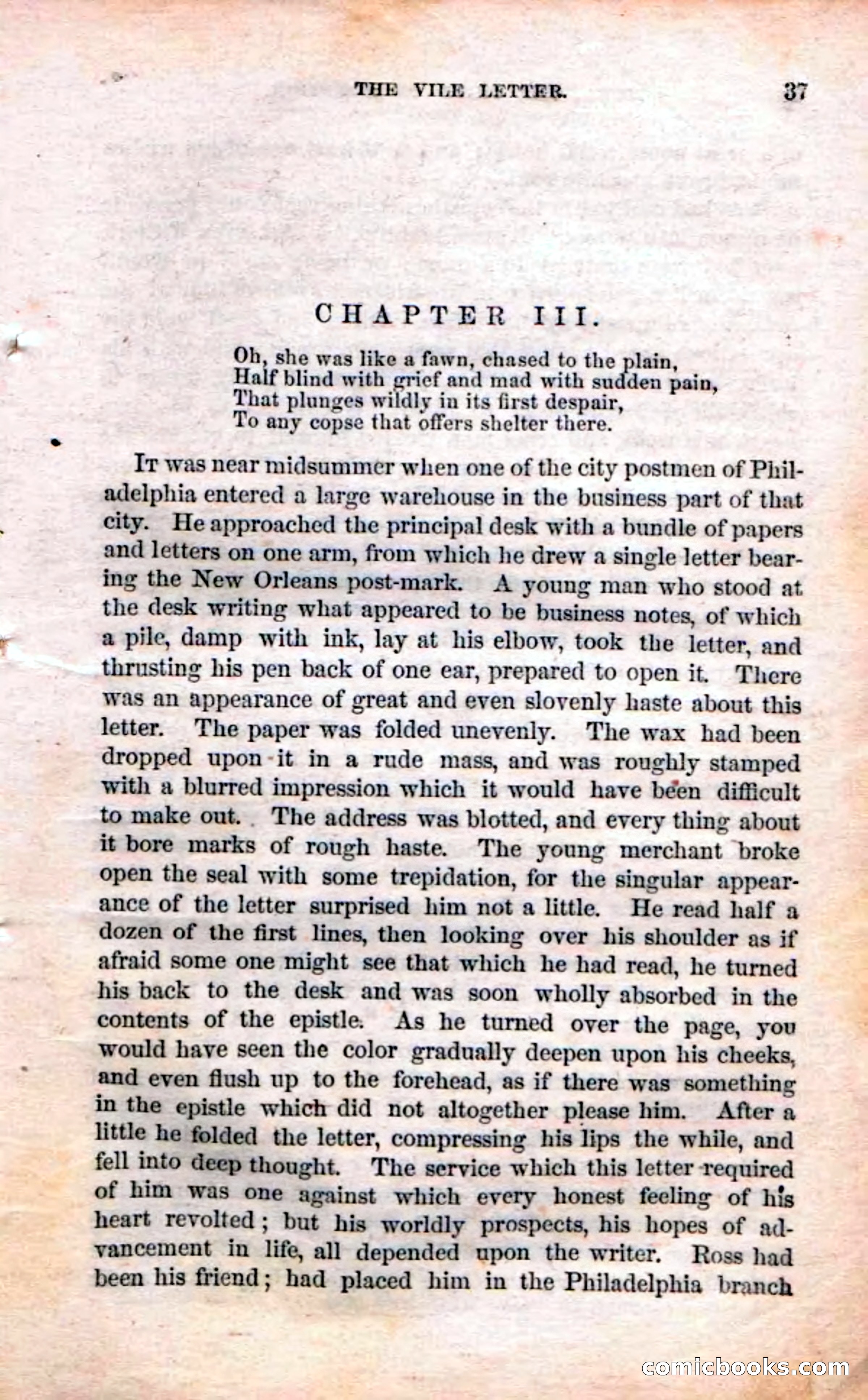
A restored page from Pulp Fiction, 1860. Page through the whole issue in the reader above.
📄 Transcribed text from this page (OCR, searchable)
Machine-transcribed from the original scan — historical spelling and the odd misread are preserved.
THE VILE LETTER. 37 CHAPTER III. Oh, she was like a fawn, chased to the plain, Half blind with gat and mad with sudden pain, That plunges wildly in its first despair, To any copse that offers shelter there. It was near midsummer when one of the city postmen of Phil- adelphia entered a large warehouse in the business part of that city. He approached the principal desk with a bundle of papers and letters on one arm, from which he drew a single letter bear- ing the New Orleans post-mark. A young man who stood at the desk writing what appeared to be business notes, of which a pile, damp with ink, lay at his elbow, took the letter, and thrusting his pen back of one ear, prepared to open it. There was an appearance of great and even slovenly haste about this letter. The paper was folded unevenly. The wax had been dropped upon-it in a rude mass, and was roughly stamped with a blurred impression which it would have béen difficult to make out.. The address was blotted, and every thing about it bore marks of rough haste. The young merchant broke open the seal with some trepidation, for the singular appear- ance of the letter surprised him not a little. He read half a dozen of the first lines, then looking over his shoulder as if afraid some one might see that which he had read, he turned his back to the desk and was soon wholly absorbed in the contents of the epistle. As he turned over the page, you would have seen the color gradually deepen upon his cheeks, and even flush up to the forehead, as if there was something in the epistle which did not altogether please him. After a little he folded the letter, compressing his lips the while, and fell into deep thought. The service which this letter required of him was one against which every honest feeling of his heart revolted; but his worldly prospects, his hopes of ad- vancement in life, all depended upon the writer. Ross had been his friend; had placed him in the Philadelphia branch comicbooks, or