
Pulp Fiction, 1871 · page 14 of 100
Beadle's Dime Novels No. 226: The Mustang-Hunters — page 14: what you’re looking at
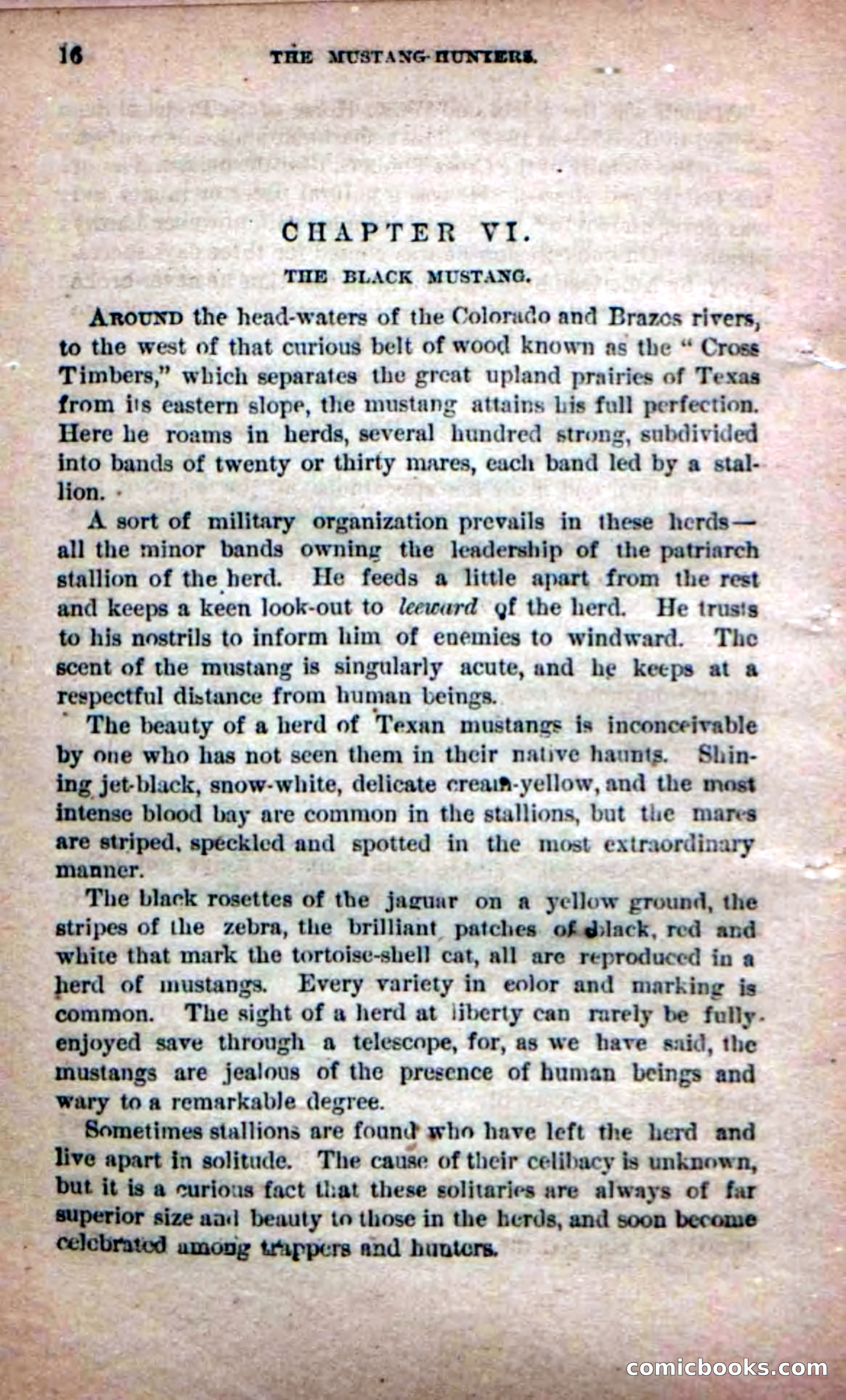
A restored page from Pulp Fiction, 1871. Page through the whole issue in the reader above.
📄 Transcribed text from this page (OCR, searchable)
Machine-transcribed from the original scan — historical spelling and the odd misread are preserved.
; - Miia.) ©, A % ~ ™4 d= es : ‘bat it ee curious fact that these solitaries are always of far CHAPTER VI. THE BLACK MUSTANG. - Anounp the head-waters of the Colorado and Brazos rivers, to the west of that curious belt of wood known as the “ Cross Timbers,” which separates the great upland prairies of Texas from i's eastern slope, the mustang attains his full perfection. Here he roams in herds, several hundred strong, subdivided into bands of twenty or thirty mares, each band led by a stal- lion. - A sort of military organization prevails in these herds— all the minor bands owning the leadership of the patriarch stallion of the herd. He feeds a little apart from the rest and keeps a keen look-out to leeward gf the herd. He trusts to his nostrils to inform him of enemies to windward. The scent of the mustang is singularly acute, and he keeps at a respectful distance from human beings. The beauty of a herd of Texan mustangs is inconceivable by one who has not seen them in their native haunts. Shin- ing jet-black, snow-white, delicate creaif-yellow, and the most intense blood bay are common in the stallions, but the mares are striped, speckled and spotted in the most extraordinary manner. The black rosettes of the jaguar on a yellow ground, the stripes of the zebra, the brilliant patches. ofgblack, red and white that mark the tortoise-shell cat, all are reproduced in a herd of mustangs. Every variety in eolor and marking is common. The sight of a herd at liberty can rarely be fully. enjoyed save through a telescope, for, as we have said, the _ mustangs are jealous of the presence of human beings and pear to a remarkable degree. ‘Sometimes stallions are found who have left the herd and apart in solitude. The cause of their celibacy is unknown,