
Pulp Fiction, 1870 · page 33 of 100
Beadle's Dime Novels No. 208: The Ocean Outlaw — page 33: what you’re looking at
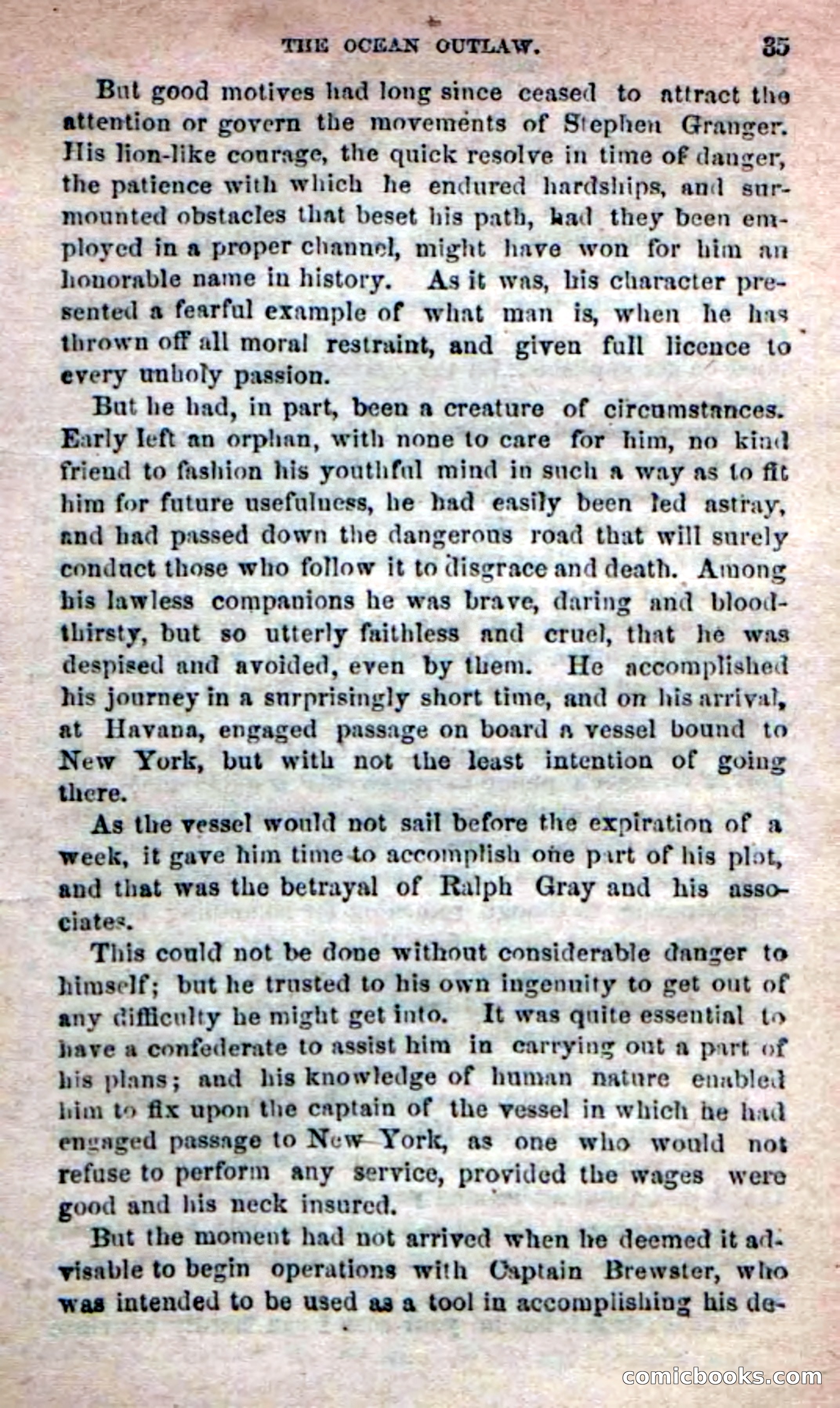
A restored page from Pulp Fiction, 1870. Page through the whole issue in the reader above.
📄 Transcribed text from this page (OCR, searchable)
Machine-transcribed from the original scan — historical spelling and the odd misread are preserved.
Pee a ~ = _ ~4 mm, “= r - e lla et eee a] . = ~ —— - a OCEAN But good motives had long since ceased to attract the attention or govern the movements of Stephen Granger. His lion-like courage, the quick resolve in time of danger, the patience with which he endured hardships, and sur- mounted obstacles that beset his path, had they been em- ployed in a proper channel, might have won for him an honorable name in history. As it was, bis character pre- sented a fearful example of what man is, when he has thrown off all moral restraint, and given full licence to— every unholy passion. But he had, in part, been a creature of circumstances. Early left an orphan, with none to care for him, no kind friend to fashion his youthfal mind in such a way as to fit him for future usefulness, he bad easily been Ted astray, and had passed down the dangerous road that will surely conduct those who follow it to disgrace and death. Among his lawless companions he was brave, daring and blooi- thirsty, but so utterly faithless and cruel, that he was despised and avoided, even by them. He accomplished his journey in a surprisingly short time, and on his arrival, at Havana, engaged passage on board a vessel bound to New York, but with not the least intention of going there. As the vessel would not sail before the expiration of a week, it gave him timeto accomplish ote part of his plot, and that was the betrayal of Ralph Gray and his asso- ciates. This could not be done without considerable danger to himself; but he trusted to his own ingennity to get out of any Cifficulty he might getinto. It was quite essential to have a confederate to assist him in carrying ont a part of his plans; and his knowledge of human nature enabled him to fix upon the captain of the vessel in which he had enzaged passage to New-York, as one who would not refuse to perform any service, provided the wages were good and his neck insured. But the moment had not arrived when he deemed it ad- visable to begin operations with Captain Brewster, who was intended to be used as a tool in accomplishing his de- commiclooolkks. com,