
Pulp Fiction, 1950 · page 120 of 132
Avon Fantasy Reader No. 12 — page 120: what you’re looking at
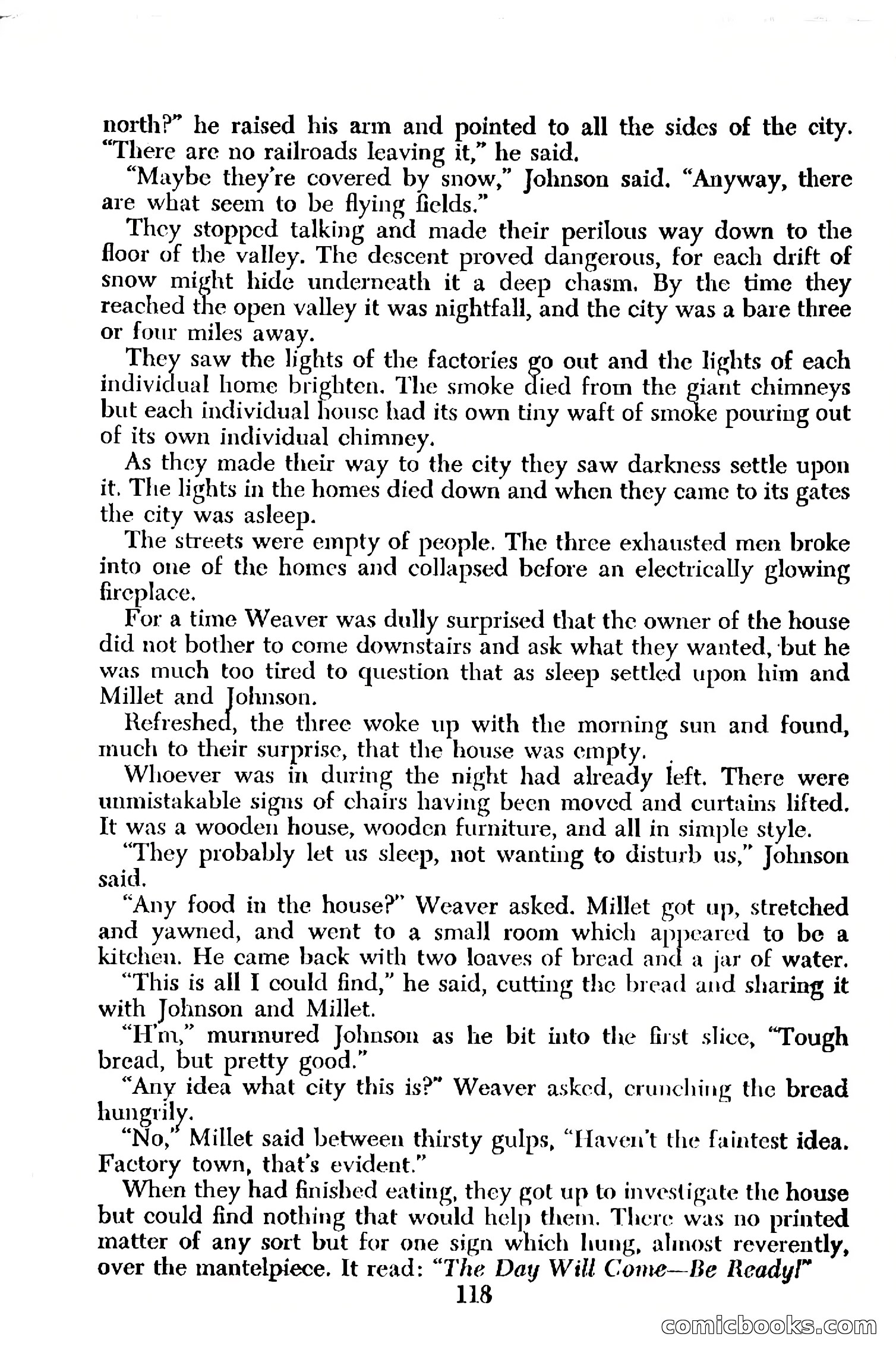
A restored page from Pulp Fiction, 1950. Page through the whole issue in the reader above.
📄 Transcribed text from this page (OCR, searchable)
Machine-transcribed from the original scan — historical spelling and the odd misread are preserved.
north?” he raised his arm and pointed to all the sides of the city. “There are no railroads leaving it,” he said. “Maybe they're covered by snow,” Johnson said. “Anyway, there are what seem to be flying ficlds.” They stopped talking and made their perilous way down to the floor of the valley. The descent proved dangerous, for each drift of snow might hide underneath it a deep chasm. By the time they reached the open valley it was nightfall, and the city was a bare three or four miles away. They saw the lights of the factories go out and the lights of each individual home brighten. The smoke Fed from the giant chimneys but each individual housc had its own tiny waft of smoke pouring out of its own individual chimney. As they made their way to the city they saw darkness settle upon it. The lights in the homes died down and when they came to its gates the city was asleep. The streets were empty of people. The three exhausted men broke into one of the homes and collapsed before an electrically glowing fireplace. For a time Weaver was dully surprised that the owner of the house did not bother to come downstairs and ask what they wanted, but he was much too tired to question that as sleep settled upon him and Millet and Johnson. Refreshed, the three woke up with the morning sun and found, much to their surprise, that the house was empty. Whoever was in during the night had already left. There were unmistakable signs of chairs having been moved and curtains lifted. It was a wooden house, wooden furniture, and all in simple style. “They probably let us sleep, not wanting to disturb us,” Johnson said, “Any food in the house?” Weaver asked. Millet got up, stretched and yawned, and went to a small room which appeared to be a kitchen. He came back with two loaves of bread and a jar of water. “This is all I could find,” he said, cutting the bread and sharing it with Johnson and Millet. “Hm,” murmured Johnson as he bit imto the first slice, “Tough bread, but pretty good.” “Any idea what city this is?” Weaver asked, crunching the bread hungrily. “No. Millet said between thirsty gulps, “Haven't the faintest idea. Factory town, that’s evident.” When they had finished eating, they got up to investigate the house but could find nothing that would help them. There was no printed matter of any sort but for one sign which hung, almost reverently, over the mantelpiece. It read: “The Day Will Come—Be Ready!” 118 comicibooks.com