
Pulp Fiction, 1948 · page 96 of 132
Avon Fantasy Reader No. 8 — page 96: what you’re looking at
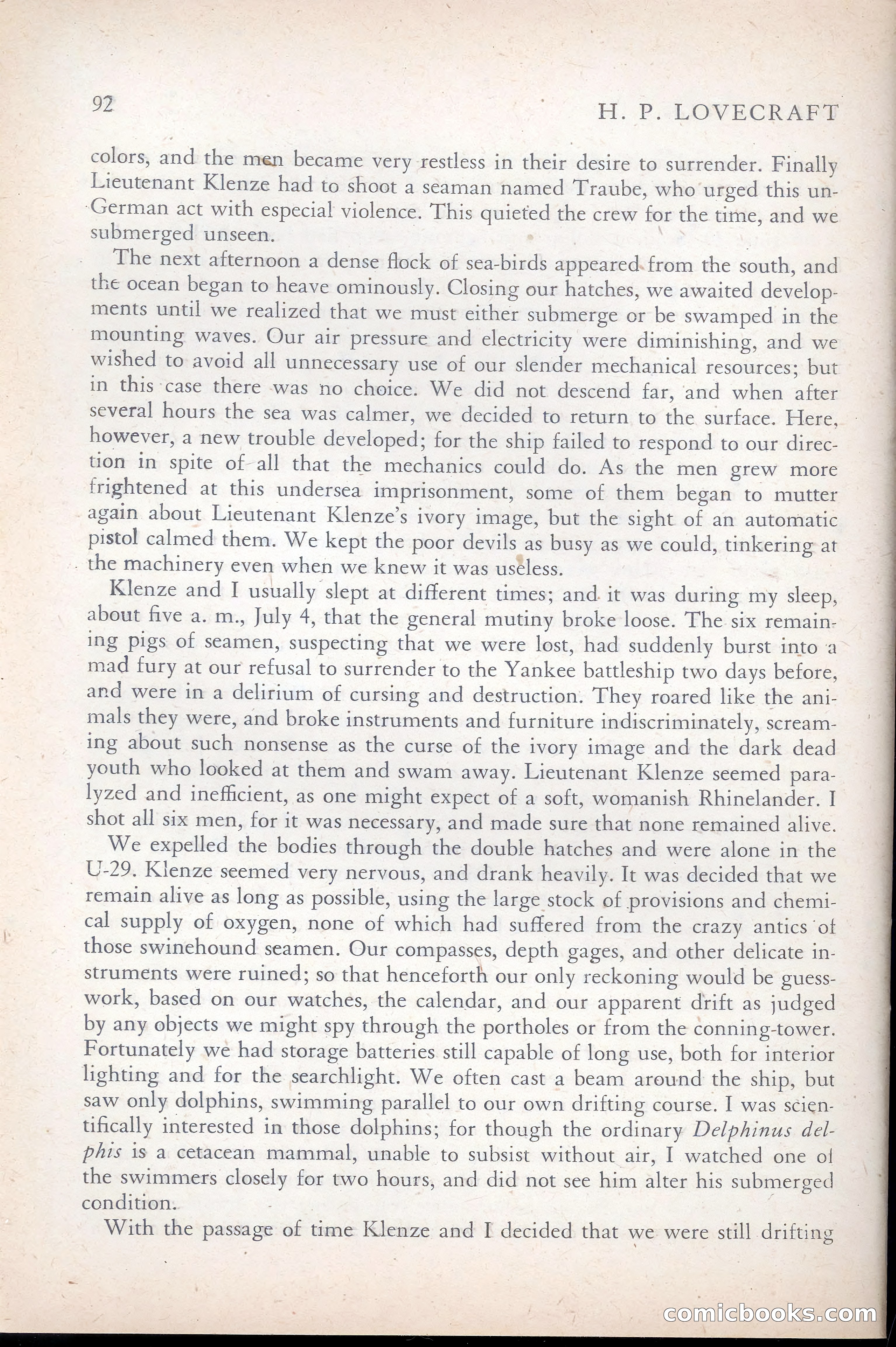
A restored page from Pulp Fiction, 1948. Page through the whole issue in the reader above.
📄 Transcribed text from this page (OCR, searchable)
Machine-transcribed from the original scan — historical spelling and the odd misread are preserved.
92 | OH PoLOWECR Ape colors, and the men became very restless in their desire to surrender. Finally Lieutenant Klenze had to shoot a seaman named Traube, who urged this un- ‘German act with especial violence. This quieted the crew for the time, and we submerged unseen. 3 ee The next afternoon a dense flock of sea-birds appeared. from the south, and the ocean began to heave ominously. Closing our hatches, we awaited develop- ments until we realized that we must either submerge or be swamped in the mounting waves. Our air pressure and electricity were diminishing, and we wished to avoid all unnecessary use of our slender mechanical resources; but in this case there was no choice. We did not descend far, and when after several hours the sea was calmer, we decided to return to the surface. Here, however, a new trouble developed; for the ship failed to respond to our direc- tion in spite of-all that the mechanics could do. As the men grew more frightened at this undersea imprisonment, some of them began to mutter again about Lieutenant Klenze’s ivory image, but the sight of an automatic pistol calmed them. We kept the poor devils as busy as we could, tinkering at . the machinery even when we knew it was useless. Klenze and I usually slept at different times; and. it was during my sleep, about five a. m., July 4, that the general mutiny broke loose. The six remain- ing pigs of seamen, suspecting that we were lost, had suddenly burst into a mad fury at our refusal to surrender to the Yankee battleship two days before, and were in a delirium of cursing and destruction. They roared like the ani- mals they were, and broke instruments and furniture indiscriminately, scream- ing about such nonsense as the curse of the ivory image and the dark dead youth who looked at them and swam away. Lieutenant Klenze seemed para- lyzed and ineflicient, as one might expect of a soft, womanish Rhinelander. I shot all six men, for it was necessary, and made sure that none remained alive. We expelled the bodies through the double hatches and were alone in the U-29. Klenze seemed very nervous, and drank heavily. It was decided that we _ remain alive as long as possible, using the large stock of provisions and chemi- cal supply of oxygen, none of which had suffered from the crazy antics of those swinchound seamen. Our compasses, depth gages, and other delicate in- struments were ruined; so that henceforth our only reckoning would be guess- work, based on our watches, the calendar, and our apparent drift as judged by any objects we might spy through the portholes or from the conning-tower. Fortunately we had storage batteries still capable of long use, both for interior lighting and for the searchlight. We often cast a beam around the ship, but saw only dolphins, swimming parallel to our own drifting course. I was scien- tifically interested in those dolphins; for though the ordinary Delphinus del- phis is a cetacean mammal, unable to subsist without air, I watched one ol the swimmers closely for two hours, and did not see him alter his submerged condition. nee With the passage of time Klenze and I decided that we were still drifting CEoMmicloOoks.€o