
Pulp Fiction, 1948 · page 112 of 132
Avon Fantasy Reader No. 8 — page 112: what you’re looking at
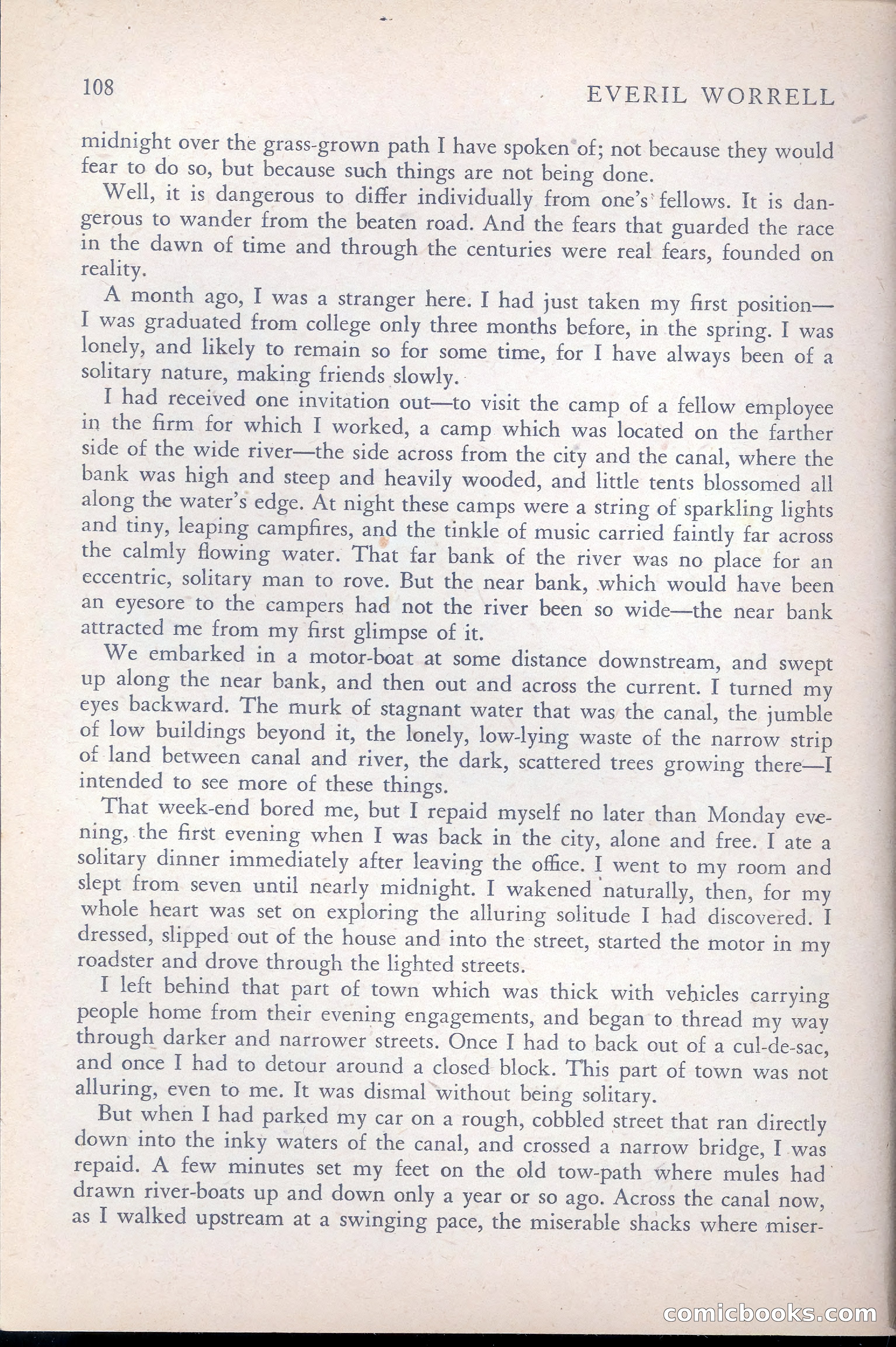
A restored page from Pulp Fiction, 1948. Page through the whole issue in the reader above.
📄 Transcribed text from this page (OCR, searchable)
Machine-transcribed from the original scan — historical spelling and the odd misread are preserved.
108 3 EVERIL WORRELL midnight over the grass-grown path I have spoken ‘of; not because they would fear to do so, but because such things are not being done. Well, it is dangerous to differ individually from one’s’ fellows. It is dan- gerous to wander from the beaten road. And the fears that guarded the race in the dawn of time and through the centuries were real fears, founded on reality. A month ago, I was a stranger here: I had just taken my first position— I was graduated from college only three months before, in the spring. I was lonely, and likely to remain so for some time, for I have always been of a solitary nature, making friends slowly. : I had received one invitation out—to visit the camp of a fellow employee in the firm for which I worked, a camp which was located on the farther side of the wide river—the side across from the city and the canal, where the bank was high and steep and heavily wooded, and little tents blossomed all along the water’s edge. At night these camps were a string of sparkling lights and tiny, leaping campfires, and the tinkle of music carried faintly far across the calmly flowing water. That far bank of the river was no place for an eccentric, solitary man to rove. But the near bank, which would have been an eyesore to the campers had not the river been so wide—the near bank attracted me from my first glimpse of it. We embarked in a motor-boat at some distance downstream, and swept up along the near bank, and then out and across the current. I turned my eyes backward. The murk of stagnant water that was the canal, the jumble of low buildings beyond it, the lonely, low-lying waste of the narrow strip of land between canal and river, the dark, scattered trees growing there—I intended to see more of these things. 7 _ That week-end bored me, but I repaid myself no later than Monday eve- ning, the first evening when I was back in the city, alone and free. I ate a solitary dinner immediately after leaving the office. I went to my room and slept from seven until nearly midnight. I wakened ‘naturally, then, for my whole heart was set on exploring the alluring solitude I had discovered. I dressed, slipped out of the house and into the street, started the motor in my roadster and drove through the lighted streets. I left behind that part of town which was thick with vehicles carrying people home from their evening engagements, and began to thread my way through darker and narrower streets. Once I had to back out of a cul-de-sac, and once I had to detour around a closed block. This part of town was not alluring, even to me. It was dismal without being solitary. : But when I had parked my car on a rough, cobbled street that ran directly down into the inky waters of the canal, and crossed a narrow bridge, I was repaid. A few minutes set my feet on the old tow-path where mules had’ drawn river-boats up and down only a year or so ago. Across the canal now, as | walked upstream at a swinging pace, the miserable shacks where miser- Q ee a ee eee Comicbook s.com