
Pulp Fiction, 1948 · page 111 of 132
Avon Fantasy Reader No. 8 — page 111: what you’re looking at
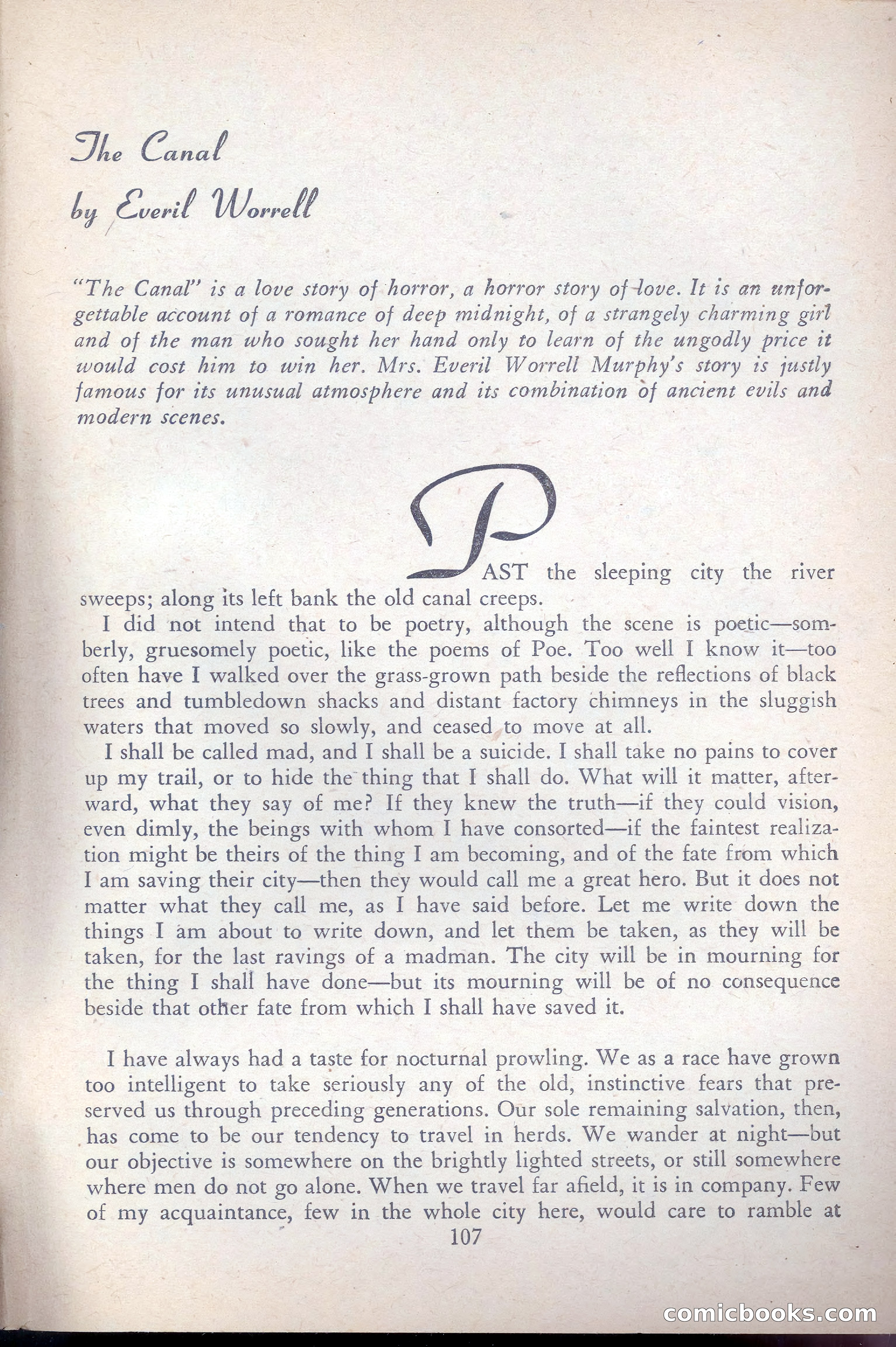
A restored page from Pulp Fiction, 1948. Page through the whole issue in the reader above.
📄 Transcribed text from this page (OCR, searchable)
Machine-transcribed from the original scan — historical spelling and the odd misread are preserved.
ji. Cat by Evert Wiel! “The Canal’ is a love story of horror, a horror story of tove. It 1s an unfor- gettable account of a romance of deep midnight, of a strangely charming girl and of the man who sought her hand only to learn of the ungodly price it would cost him to win her. Mrs. Everil Worrell Murphy's story 1s justly famous for its unusual atmosphere and its combination of 4 ancient evils and modern scenes. ams AST the sleeping city the river sweeps; sitet its left bank the old cael creeps. I did not intend that to be poetry, although the scene is poetic—som- berly, gruesomely poetic, like the poems of Poe. Too well I know it—too often have I walked over the grass-grown path beside the reflections of black trees and tumbledown shacks and distant factory chimneys in the sluggish waters that moved so slowly, and ceased.to move at all. I shall be called mad, and I shall be a suicide. I shall take no pains to cover up my trail, or to hide the thing that I shall do. What will it matter, after- ward, what they say of me? If they knew the truth—if they could vision, even ee the beings with whom I have consorted—if the faintest realiza- tion might be theirs of the thing I am becoming, and of the fate from which I am saving their city—then they would call me a great hero. But it does not matter what they call me, as I have said before. Let me write down the things I am about to write down, and let them be taken, as they will be taken, for the last ravings of a madman. The city will be in mourning for the thing I shall have done—but its mourning will be of no consequence beside that other fate from which I shall have saved it. I have always had a taste for nocturnal prowling. We as a race have grown too intelligent to take seriously any of the old, instinctive fears that pre- served us through preceding generations. Our sole remaining salvation, then, has come to be our tendency to travel in herds. We wander at night—but our objective is somewhere on the brightly lighted streets, or still somewhere where men do not go alone. When we travel far afield, it is in company. Few of my acquaintance, few in the whole city here, meds care to ramble at 107 €omicbooks.co