
Pulp Fiction, 1956 · page 84 of 164
Authentic Science Fiction Monthly No. 71 — page 84: what you’re looking at
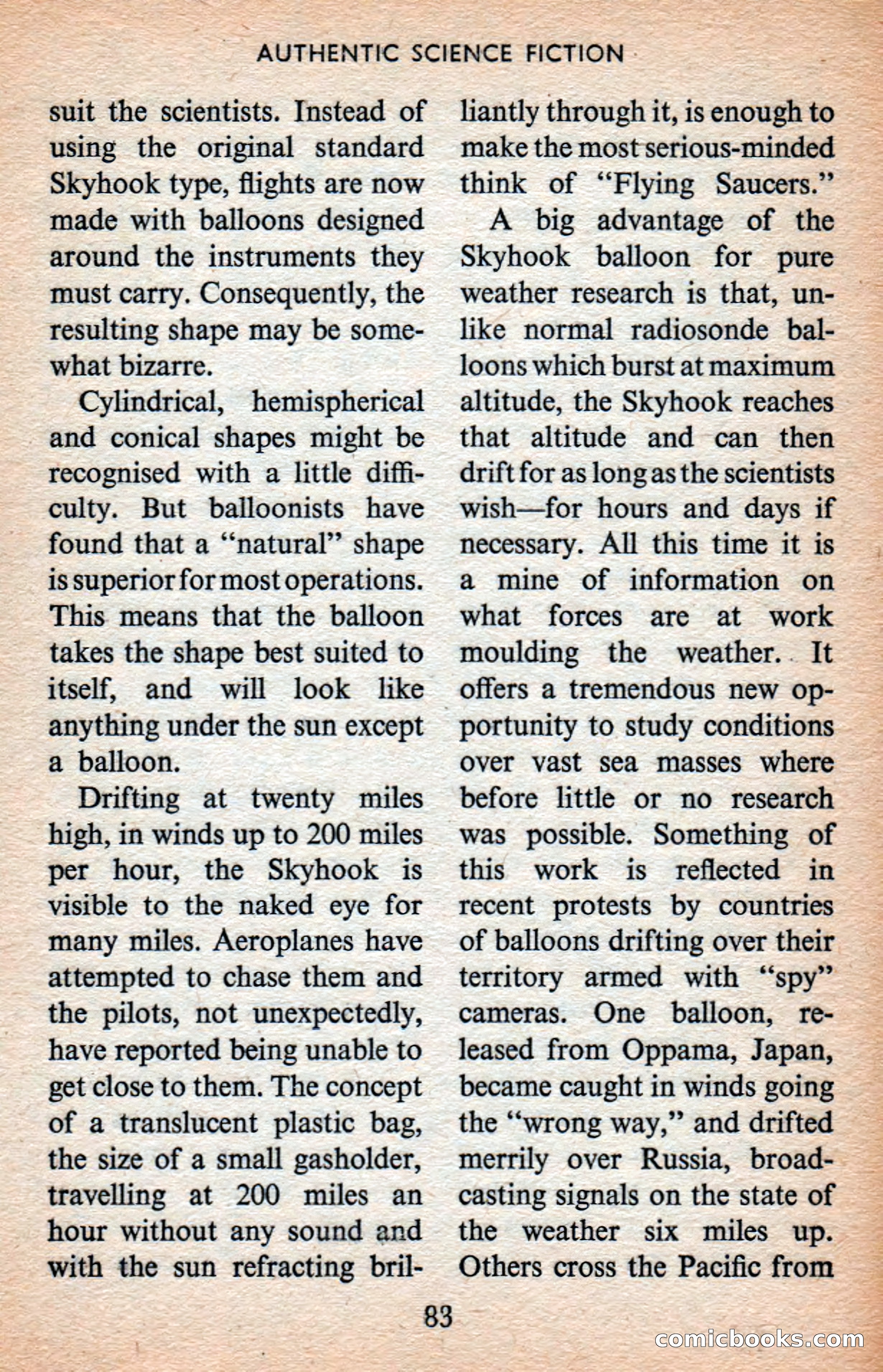
A restored page from Pulp Fiction, 1956. Page through the whole issue in the reader above.
📄 Transcribed text from this page (OCR, searchable)
Machine-transcribed from the original scan — historical spelling and the odd misread are preserved.
AUTHENTIC SCIENCE FICTION - suit the scientists. Instead of using the original standard Skyhook type, flights are now made with balloons designed around the instruments they must carry. Consequently, the resulting shape may be some- what bizarre. Cylindrical, hemispherical and conical shapes might be recognised with a little diffi- culty. But balloonists have found that a “natural” shape is superior for most operations. This means that the balloon takes the shape best suited to itself, and will look like anything under the sun except a balloon. Drifting at twenty miles high, in winds up to 200 miles per hour, the Skyhook is visible to the naked eye for many miles. Aeroplanes have attempted to chase them and the pilots, not unexpectedly, have reported being unable to get close to them. The concept of a translucent plastic bag, the size of a small gasholder, travelling at 200 miles an hour without any sound and with the sun refracting bril- 83 liantly through it, is enough to make the most serious-minded think of ‘Flying Saucers.” A big advantage of the Skyhook balloon for pure weather research is that, un- — like normal radiosonde bal- loons which burst at maximum altitude, the Skyhook reaches that altitude and can then drift for as long as the scientists wish—for hours and days if necessary. All this time it is a mine of information on what forces are at work moulding the weather.. It offers a tremendous new op- portunity to study conditions over vast sea masses where before little or no research was possible. Something of this work is reflected in recent protests by countries of balloons drifting over their territory armed with “spy” cameras. One balloon, re- leased from Oppama, Japan, became caught in winds going the “‘wrong way,” and drifted merrily over Russia, broad- casting signals on the state of the weather six miles up. Others cross the Pacific from commiciooks.conus Me \ Dia tae! ahs bat