
Pulp Fiction, 1956 · page 81 of 164
Authentic Science Fiction Monthly No. 71 — page 81: what you’re looking at
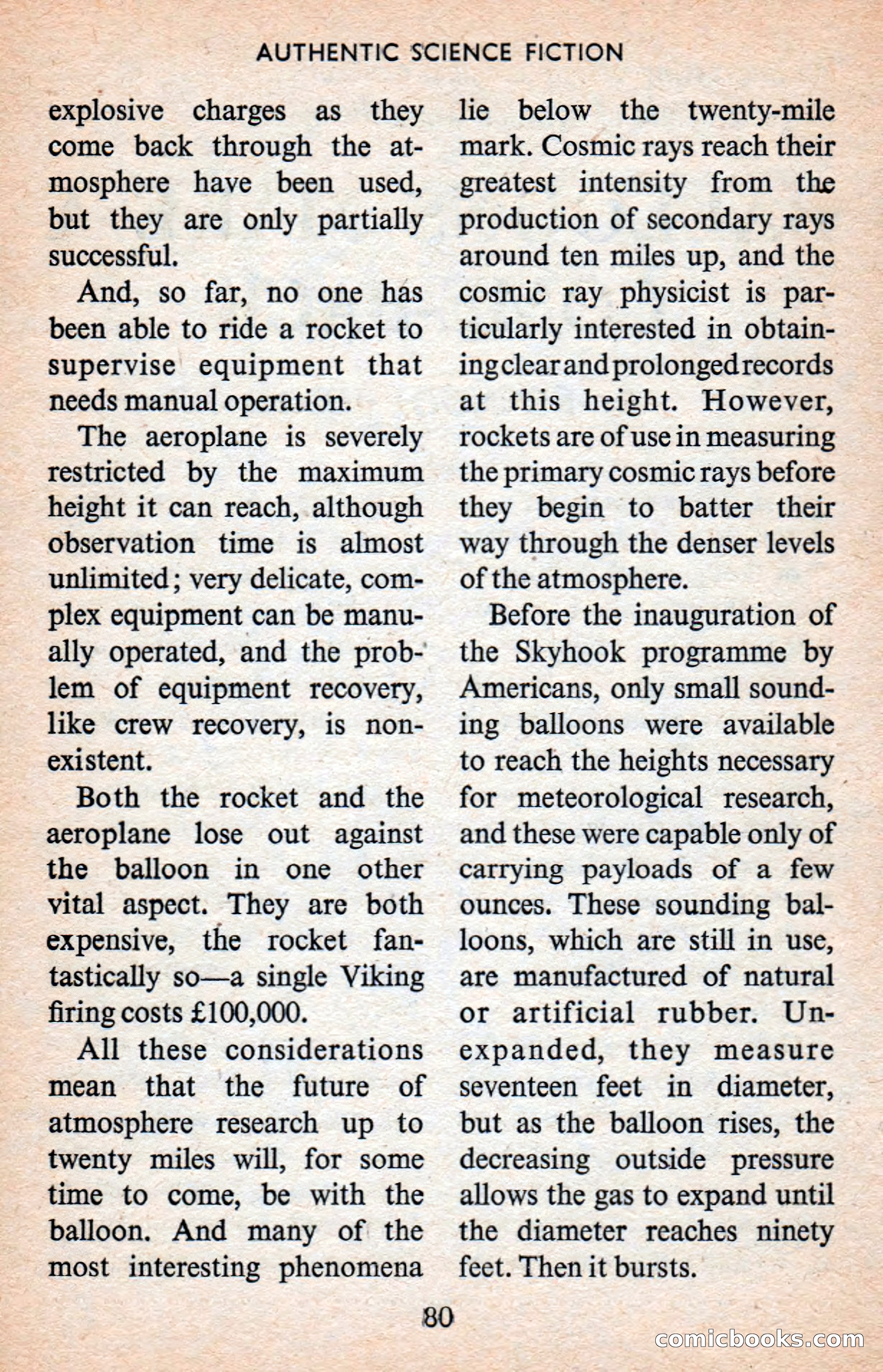
A restored page from Pulp Fiction, 1956. Page through the whole issue in the reader above.
📄 Transcribed text from this page (OCR, searchable)
Machine-transcribed from the original scan — historical spelling and the odd misread are preserved.
AUTHENTIC SCIENCE FICTION explosive charges as they come back through the at- mosphere have been used, but they are only partially successful. And, so far, no one has been able to ride a rocket to supervise equipment that needs manual operation. The aeroplane is severely restricted by the maximum height it can reach, although observation time is almost unlimited ; very delicate, com- plex equipment can be manu- ally operated, and the prob- lem of equipment recovery, like crew recovery, is non- existent. Both the rocket and the aeroplane lose out against the balloon in one other vital aspect. They are both expensive, the rocket fan- tastically so—a single Viking firing costs £100,000. All these considerations mean that the future of atmosphere research up to twenty miles will, for some time to come, be with the balloon. And many of the most interesting phenomena 80 lie below the twenty-mile mark. Cosmic rays reach their greatest intensity from the production of secondary rays around ten miles up, and the cosmic ray physicist is par- ticularly interested in obtain- ingclearand prolongedrecords at this height. However, rockets are of use in measuring the primary cosmic rays before they begin to batter their way through the denser levels of the atmosphere. Before the inauguration of the Skyhook programme by Americans, only small sound- ing balloons were available to reach the heights necessary for meteorological research, and these were capable only of carrying payloads of a few ounces. These sounding bal- loons, which are still in use, are manufactured of natural or artificial rubber. Un- expanded, they measure seventeen feet in diameter, but as the balloon rises, the decreasing outside pressure allows the gas to expand until the diameter reaches ninety feet. Then it bursts. conmiclsooks.com