
Pulp Fiction, 1956 · page 79 of 162
Authentic Science Fiction Monthly, No. 66 — page 79: what you’re looking at
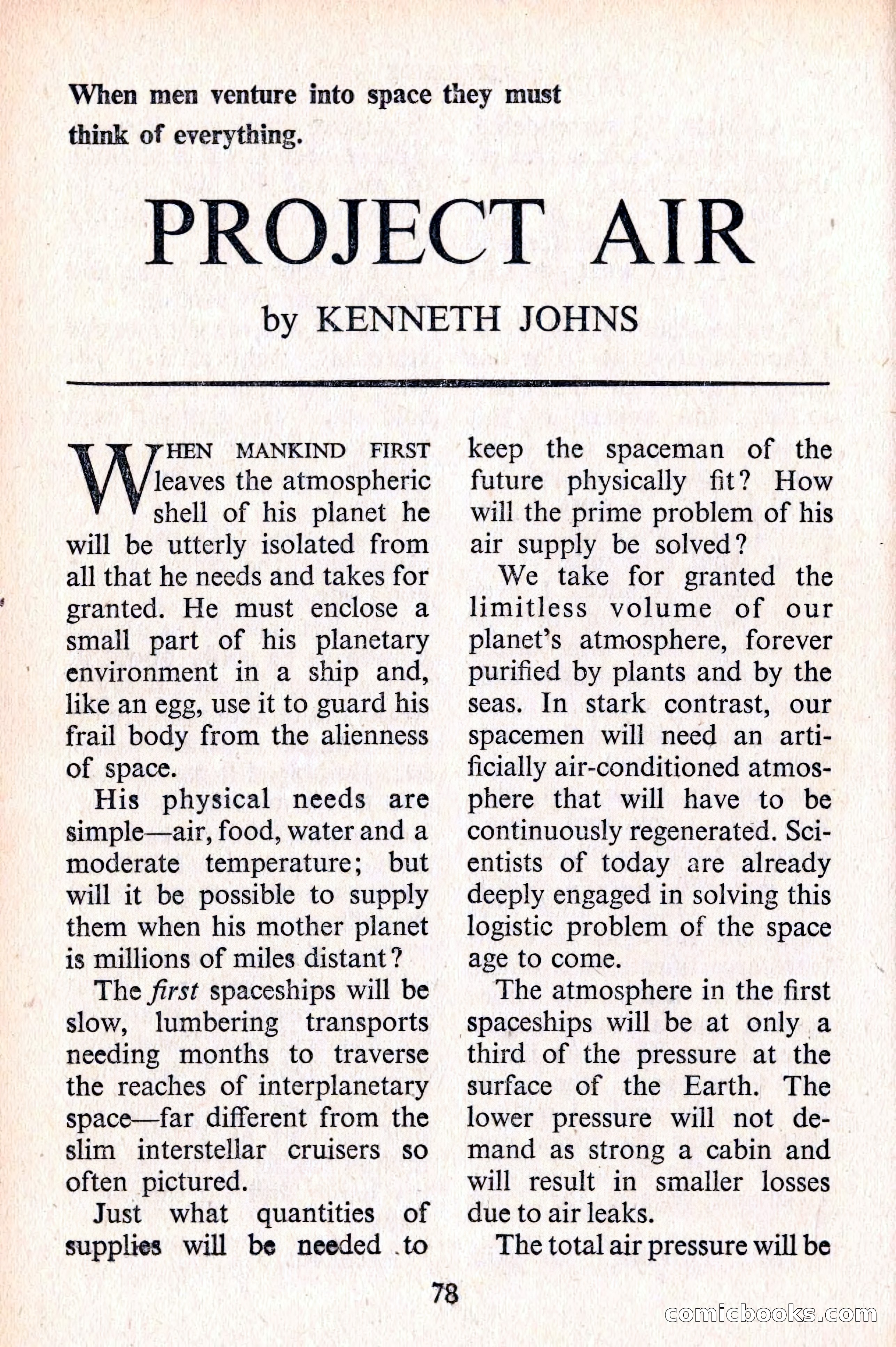
A restored page from Pulp Fiction, 1956. Page through the whole issue in the reader above.
📄 Transcribed text from this page (OCR, searchable)
Machine-transcribed from the original scan — historical spelling and the odd misread are preserved.
When men venture into space they must think of everything. PROJECT AIR by KENNETH JOHNS HEN MANKIND FIRST \ \ leaves the atmospheric shell of his planet he will be utterly isolated from all that he needs and takes for granted. He must enclose a small part of his planetary environment in a ship and, like an egg, use it to guard his frail body from the alienness of space. His physical needs are simple—air, food, water and a moderate temperature; but will it be possible to supply them when his mother planet is millions of miles distant? The first spaceships will be slow, lumbering transports needing months to traverse the reaches of interplanetary space—far different from the slim interstellar cruisers so often pictured. Just what quantities of supplies will be needed .to 78 keep the spaceman of the future physically fit? How will the prime problem of his air supply be solved? We take for granted the limitless volume of our planet’s atmosphere, forever purified by plants and by the seas. In stark contrast, our spacemen will need an arti- ficially air-conditioned atmos- phere that will have to be continuously regenerated. Sci- entists of today are already deeply engaged in solving this logistic problem of the space age to come. The atmosphere in the first spaceships will be at only a third of the pressure at the surface of the Earth. The lower pressure will not de- mand as strong a cabin and will result in smaller losses due to air leaks. The total air pressure will be comiclooks.conn