
Pulp Fiction, 1956 · page 120 of 162
Authentic Science Fiction Monthly, No. 65 — page 120: what you’re looking at
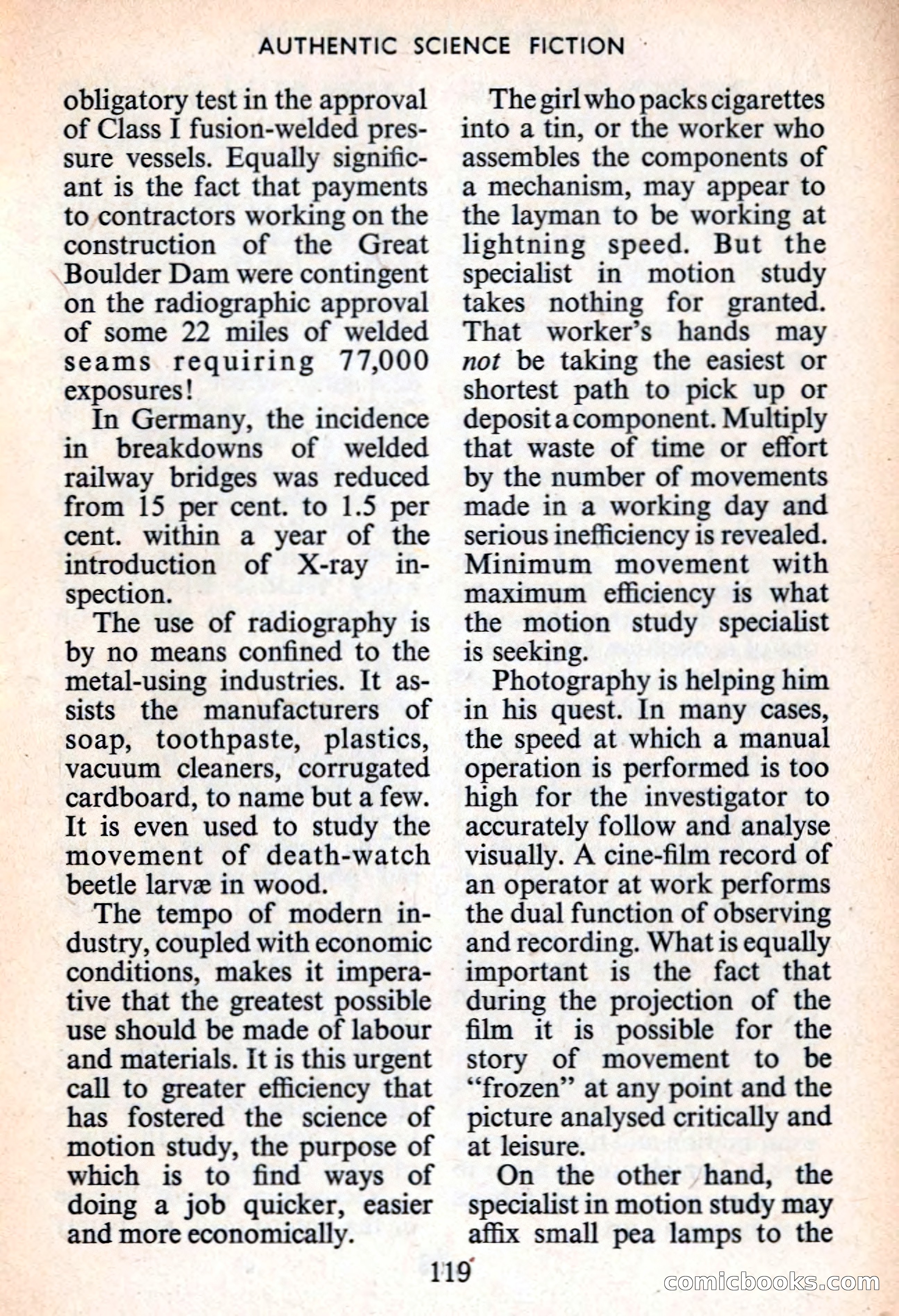
A restored page from Pulp Fiction, 1956. Page through the whole issue in the reader above.
📄 Transcribed text from this page (OCR, searchable)
Machine-transcribed from the original scan — historical spelling and the odd misread are preserved.
AUTHENTIC SCIENCE FICTION © obligatory test in the approval of Class I fusion-welded pres- sure vessels. Equally signific- ant is the fact that payments to contractors working on the construction of the Great Boulder Dam were contingent on the radiographic approval of some 22 miles of welded seams requiring 77,000 exposures! In Germany, the incidence in breakdowns of welded railway bridges was reduced from 15 per cent. to 1.5 per cent. within a year of the introduction of X-ray in- spection. The use of radiography is by no means confined to the metal-using industries. It as- sists the manufacturers of soap, toothpaste, plastics, vacuum cleaners, corrugated cardboard, to name but a few. It is even used to study the movement of death-watch beetle larve in wood. The tempo of modern in- dustry, coupled with economic conditions, makes it impera- tive that the greatest possible use should be made of labour and materials. It is this urgent call to greater efficiency that has fostered the science of motion study, the purpose of which is to find ways of doing a job quicker, easier and more economically. 119 The girl who packs cigarettes into a tin, or the worker who assembles the components of a mechanism, may appear to the layman to be working at lightning speed. But the specialist in motion study takes nothing for granted. That worker’s hands may not be taking the easiest or shortest path to pick up or deposit acomponent. Multiply that waste of time or effort by the number of movements made in a working day and serious inefficiency is revealed. Minimum movement with maximum efficiency is what the motion study specialist is seeking. Photography is helping him in his quest. In many cases, the speed at which a manual operation is performed is too high for the investigator to accurately follow and analyse visually. A cine-film record of an operator at work performs the dual function of observing and recording. What is equally important is the fact that during the projection of the film it is possible for the story of movement to be “frozen” at any point and the picture analysed critically and at leisure. On the other hand, the specialist in motion study may affix small pea lamps to the comicloooks.conm