
Pulp Fiction, 1955 · page 83 of 146
Authentic Science Fiction Monthly No. 54 — page 83: what you’re looking at
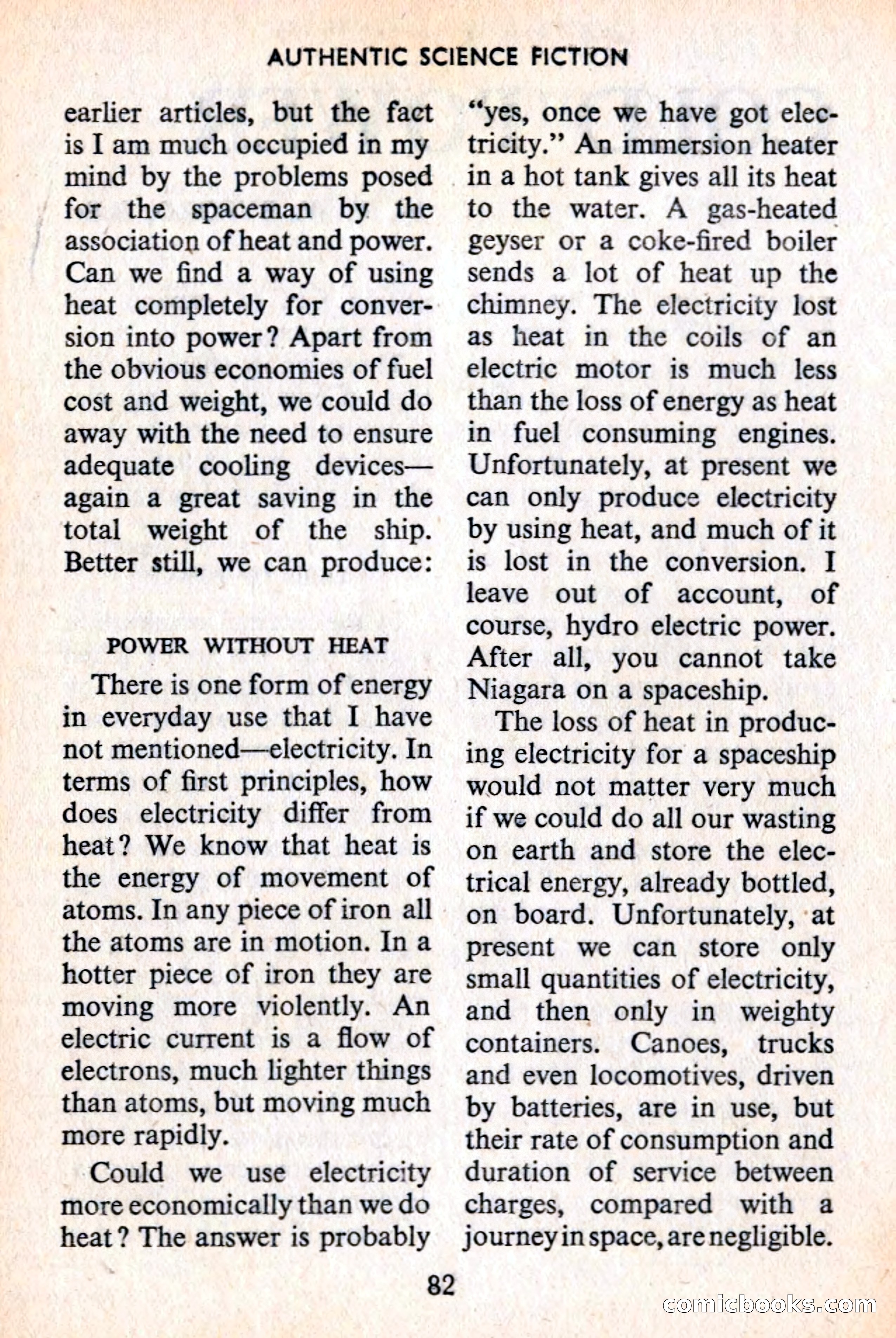
A restored page from Pulp Fiction, 1955. Page through the whole issue in the reader above.
📄 Transcribed text from this page (OCR, searchable)
Machine-transcribed from the original scan — historical spelling and the odd misread are preserved.
AUTHENTIC SCIENCE FICTION earlier articles, but the fact is lam much occupied in my mind by the problems posed for the spaceman by the association of heat and power. Can we find a way of using heat completely for conver- sion into power? Apart from the obvious economies of fuel cost and weight, we could do away with the need to ensure adequate cooling devices— again a great saving in the total weight of the ship. Better still, we can produce: POWER WITHOUT HEAT There is one form of energy in everyday use that I have not mentioned—electricity. In terms of first principles, how does electricity differ from heat? We know that heat is the energy of movement of atoms. In any piece of iron all the atoms are in motion. Ina hotter piece of iron they are moving more violently. An electric current is a flow of electrons, much lighter things than atoms, but moving much more rapidly. Could we use electricity more economically than we do heat? The answer is probably 82 “tyes, once we have got elec- tricity.” An immersion heater in a hot tank gives all its heat to the water. A gas-heated geyser or a coke-fired boiler sends a lot of heat up the chimney. The electricity lost as heat in the coils of an electric motor is much less than the loss of energy as heat in fuel consuming engines. Unfortunately, at present we can only produce electricity by using heat, and much of it is lost in the conversion. I leave out of account, of course, hydro electric power. After all, you cannot take Niagara on a spaceship. The loss of heat in produc- ing electricity for a spaceship would not matter very much if we could do all our wasting on earth and store the elec- trical energy, already bottled, on board. Unfortunately, at present we can store only small quantities of electricity, and then only in weighty containers. Canoes, trucks and even locomotives, driven by batteries, are in use, but their rate of consumption and duration of service between charges, compared with a journey in space, are negligible. comicloooks.conn