
Pulp Fiction, 1954 · page 113 of 146
Authentic Science Fiction Monthly, No. 51 — page 113: what you’re looking at
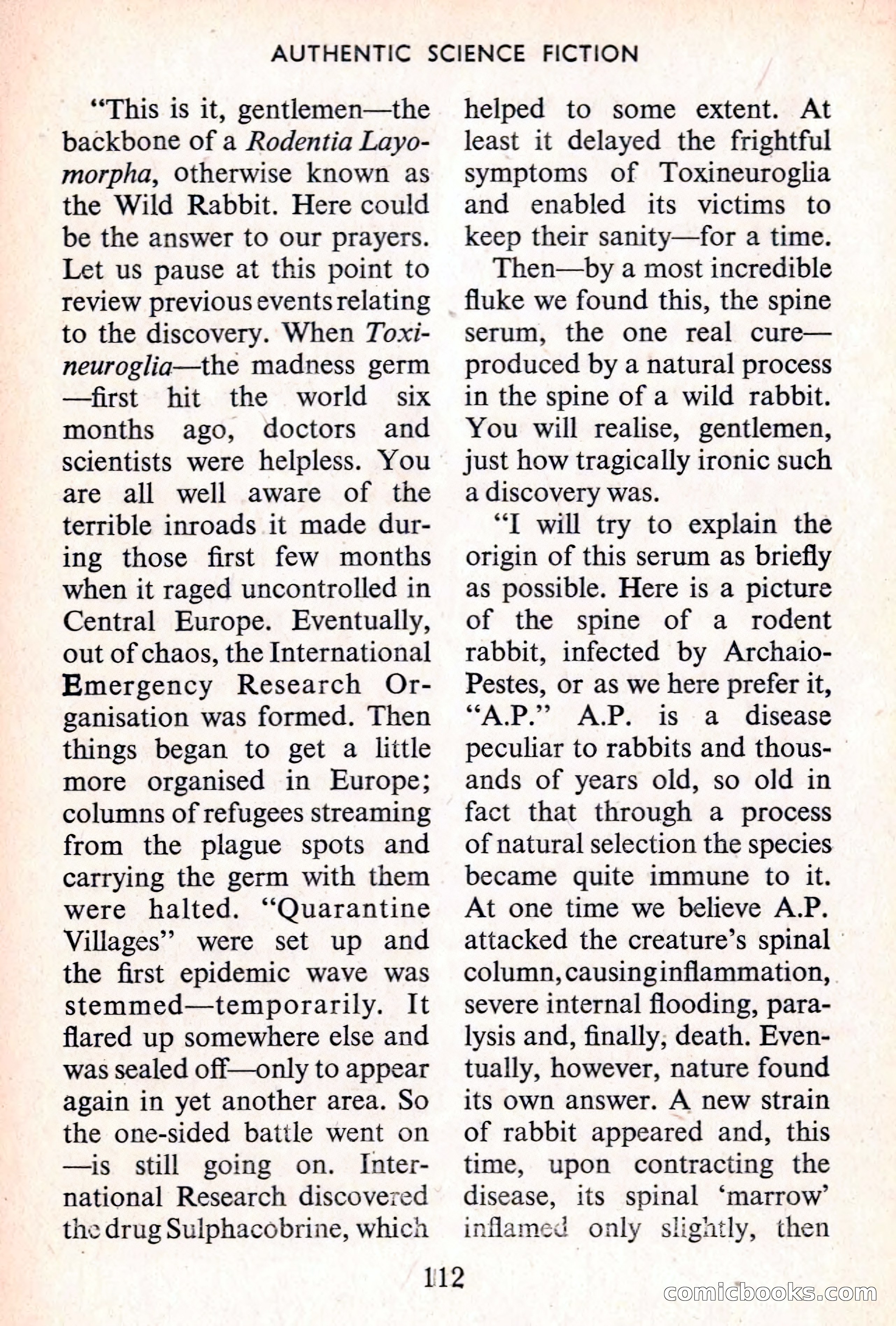
A restored page from Pulp Fiction, 1954. Page through the whole issue in the reader above.
📄 Transcribed text from this page (OCR, searchable)
Machine-transcribed from the original scan — historical spelling and the odd misread are preserved.
AUTHENTIC SCIENCE FICTION “This is it, gentlemen—the backbone of a Rodentia Layo- morpha, Otherwise known as the Wild Rabbit. Here could be the answer to our prayers. Let us pause at this point to review previous events relating to the discovery. When Toxi- neuroglia—the madness germ —first hit the world six months ago, doctors and scientists were helpless. You are all well aware of the terrible inroads it made dur- ing those first few months when it raged uncontrolled in Central Europe. Eventually, out of chaos, the International Emergency Research Or- ganisation was formed. Then things began to get a little more organised in Europe; columns of refugees streaming from the plague spots and carrying the germ with them were halted. “‘Quarantine Villages’”’ were set up and the first epidemic wave was stemmed—temporarily. It flared up somewhere else and was sealed off—only to appear again in yet another area. So the one-sided batile went on —is still going on. Inter- national Research discovered the drug Sulphacobrine, which 112 helped to some extent. At least it delayed the frightful symptoms of Toxineuroglia and enabled its victims to keep their sanity—for a time. Then—by a most incredible fluke we found this, the spine serum, the one real cure— produced by a natural process in the spine of a wild rabbit. You will realise, gentlemen, just how tragically ironic such a discovery was. “IT will try to explain the origin of this serum as briefly as possible. Here is a picture of the spine of a rodent rabbit, infected by Archaio- Pestes, or as we here prefer it, “AP.” A.P. is -a . disease peculiar to rabbits and thous- ands of years old, so old in fact that through a process of natural selection the species became quite immune to it. At one time we believe A.P. attacked the creature’s spinal column, causinginflammation, severe internal flooding, para- lysis and, finally; death. Even- tually, however, nature found its own answer. A new strain of rabbit appeared and, this time, upon contracting the disease, its spinal ‘marrow’ inflamed only slightly, then comiclbooks.cormn