
Pulp Fiction, 1954 · page 8 of 162
Authentic Science Fiction Monthly No. 46 — page 8: what you’re looking at
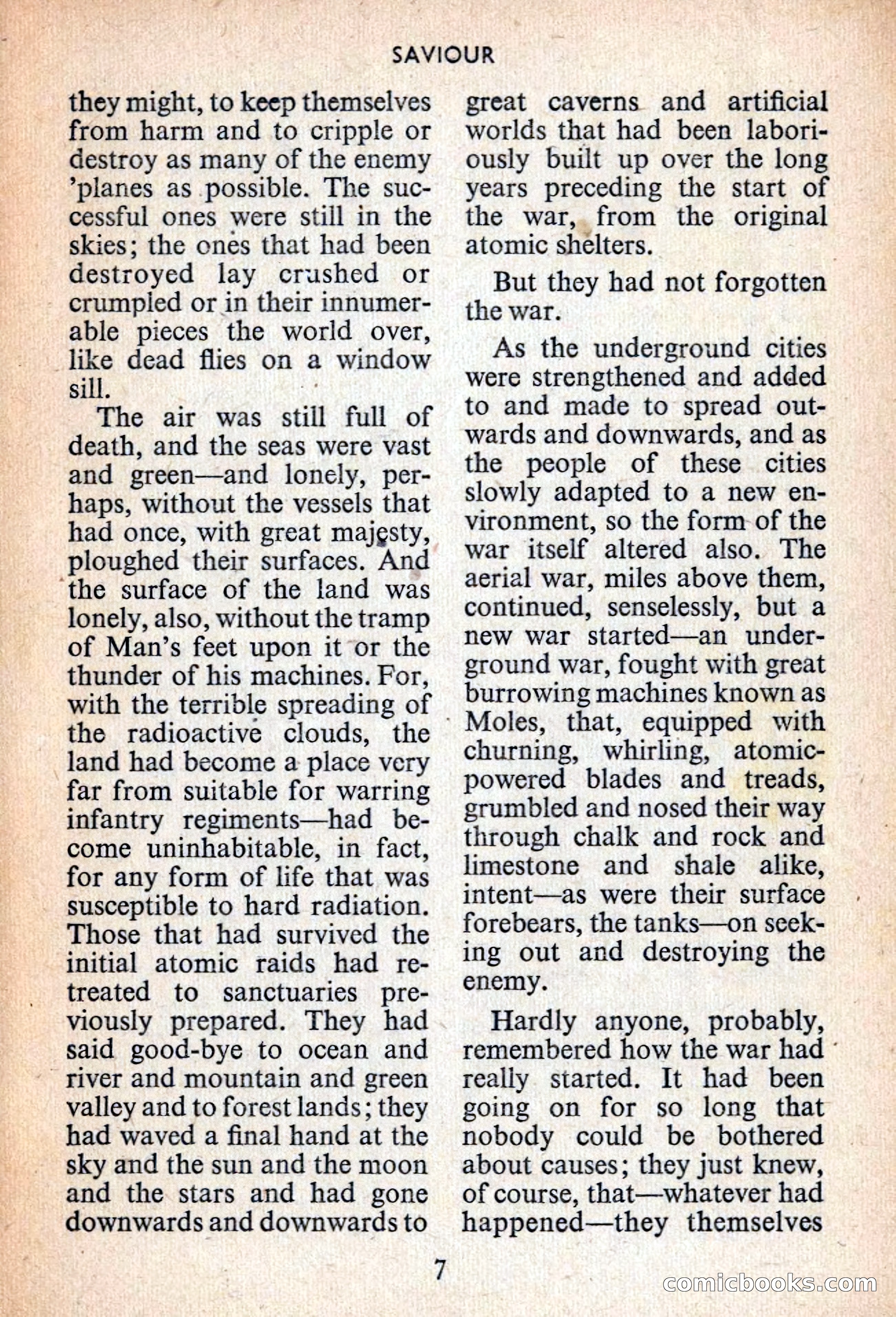
A restored page from Pulp Fiction, 1954. Page through the whole issue in the reader above.
📄 Transcribed text from this page (OCR, searchable)
Machine-transcribed from the original scan — historical spelling and the odd misread are preserved.
SAVIOUR they might, to keep themselves from harm and to cripple or destroy as many of the enemy *planes as possible. The suc- cessful ones were still in the skies; the ones that had been destroyed lay crushed or - crumpled or in their innumer- able pieces the world over, like dead flies on a window sill. sf The air was still full of death, and the seas were vast and green—and lonely, per- haps, without the vessels that had once, with great majesty, ploughed their surfaces. And ‘the surface of the land was lonely, also, without the tramp of Man’s feet upon it or the thunder of his machines. For, with the terrible spreading of the radioactive clouds, the land had become a place very far from suitable for warring infantry regiments—had be- come uninhabitable, in fact, for any form of life that was susceptible to hard radiation. Those that had survived the initial atomic raids had re- treated to sanctuaries pre- viously prepared. They had said good-bye to ocean and river and mountain and green valley and to forest lands; they had waved a final hand at the sky and the sun and the moon and the stars and had gone downwards and downwards to great caverns and artificial worlds that had been labori- ously built up over the long years preceding the start of the war, from the original atomic shelters. But they had not forgotten the war. As the underground cities were strengthened and added to and made to spread out- wards and downwards, and as the people of these cities slowly adapted to a new en- vironment, so the form of the war itself altered also. The aerial war, miles above them, continued, senselessly, but a new war started—an under- ground war, fought with great burrowing machines known as ‘ Moles, that, equipped with churning, whirling, atomic- powered blades and treads, grumbled and nosed their way through chalk and rock and limestone and shale alike, intent—as were their surface forebears, the tanks—on seek- ing out and destroying the enemy. Hardly anyone, probably, remembered how the war had ° really started. It had been going on for so long that nobody could be bothered about causes; they just knew, of course, that—whatever had happened—they themselves comicloooks.com