
Pulp Fiction, 1954 · page 7 of 162
Authentic Science Fiction Monthly No. 46 — page 7: what you’re looking at
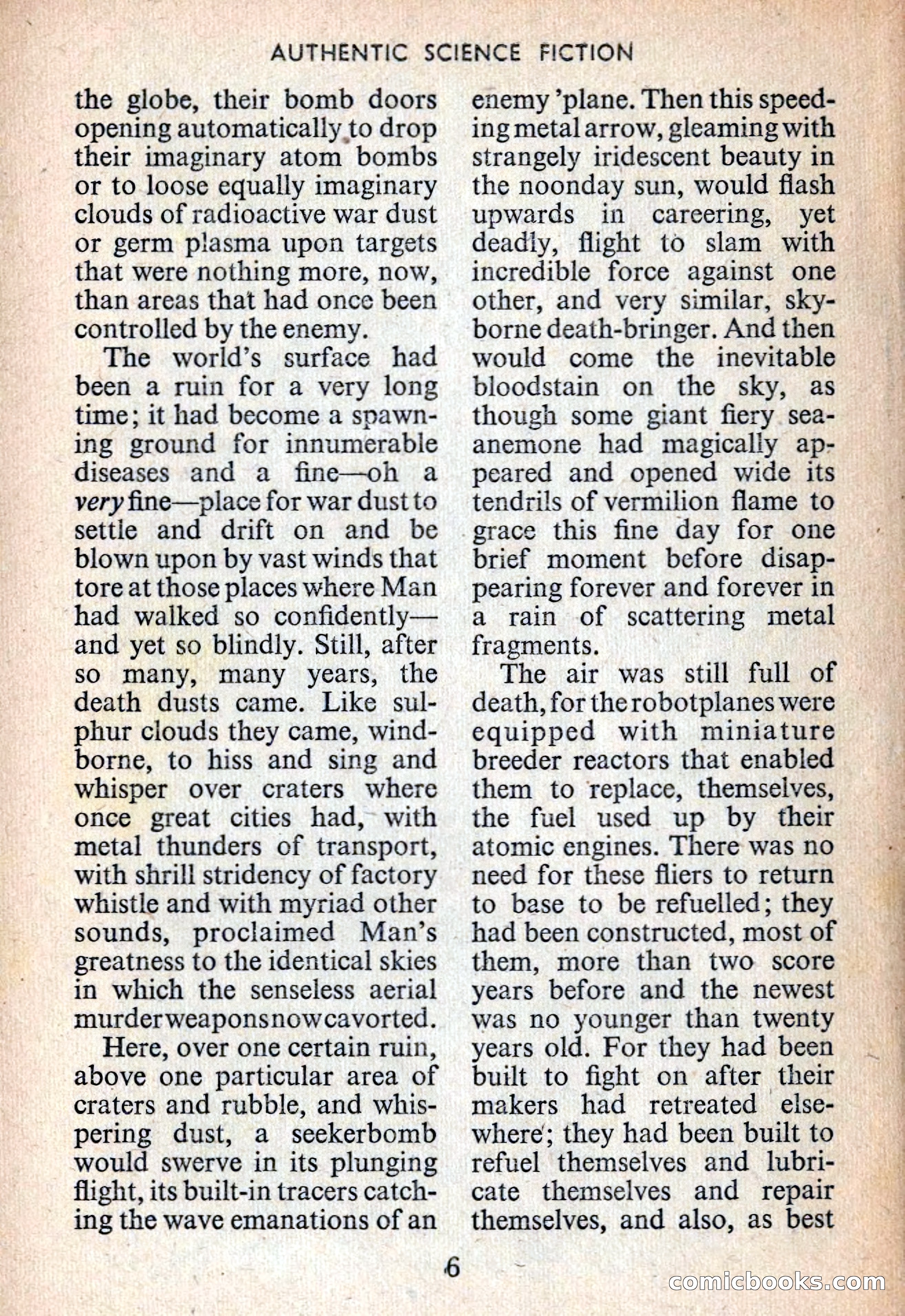
A restored page from Pulp Fiction, 1954. Page through the whole issue in the reader above.
📄 Transcribed text from this page (OCR, searchable)
Machine-transcribed from the original scan — historical spelling and the odd misread are preserved.
AUTHENTIC SCIENCE FICTION the globe, their bomb doors opening automatically to drop their imaginary atom bombs or to loose equally imaginary clouds of radioactive war dust or germ p!asma upon targets that were nothing more, now, than areas that had once been controlled by the enemy. The world’s surface had been a ruin for a very long time; it had become a spawn- ing ground for innumerable diseases and a fine—oh a very fine—place for war dust to settle and drift on and be blown upon by vast winds that tore at those places where Man had walked so confidently— and yet so blindly. Still, after sO many, many years, the death dusts came. Like sul- phur clouds they came, wind- borne, to hiss and sing and whisper over craters where once great cities had, with metal thunders of transport, with shrill stridency of factory whistle and with myriad other sounds, proclaimed Man’s greatness to the identical skies in which the senseless aerial murder weaponsnowcavorted. Here, over one certain ruin, above one particular area of craters and rubble, and whis- pering dust, a seekerbomb would swerve in its plunging flight, its built-in tracers catch- ing the wave emanations of an enemy "plane. Then this speed- ing metal arrow, gleaming with strangely iridescent beauty in the noonday sun, would flash upwards in careering, yet deadiy, flight to slam with incredible force against one other, and very similar, sky- borne death-bringer. And then would come the inevitable bloodstain on the sky, as though some giant fiery sea- anemone had magically ap- peared and opened wide its tendrils of vermilion flame to grace this fine day for one brief moment before disap- pearing forever and forever in a rain of scattering metal fragments. The air was still full of — death, for the robotplanes were equipped with miniature breeder reactors that enabled them to replace, themselves, the fuel used up by their atomic engines. There was no need for these fliers to return to base to be refuelled; they had been constructed, most of them, more than two score years before and the newest was no younger than twenty years old. For they had been built to fight on after their makers had retreated else- where; they had been built to refuel themselves and lubri- cate themselves and repair themselves, and also, as best Oe a Oe ee re eee we a, x oe i . ae = i Pie a mcd Ae LO a Tae *. r £ = r ie ee ta eS ] a) te oe ee a Fe) Ft Ot oy ee ee, eee COMICIOOKSHEOM,