
Pulp Fiction, 1954 · page 147 of 162
Authentic Science Fiction Monthly No. 46 — page 147: what you’re looking at
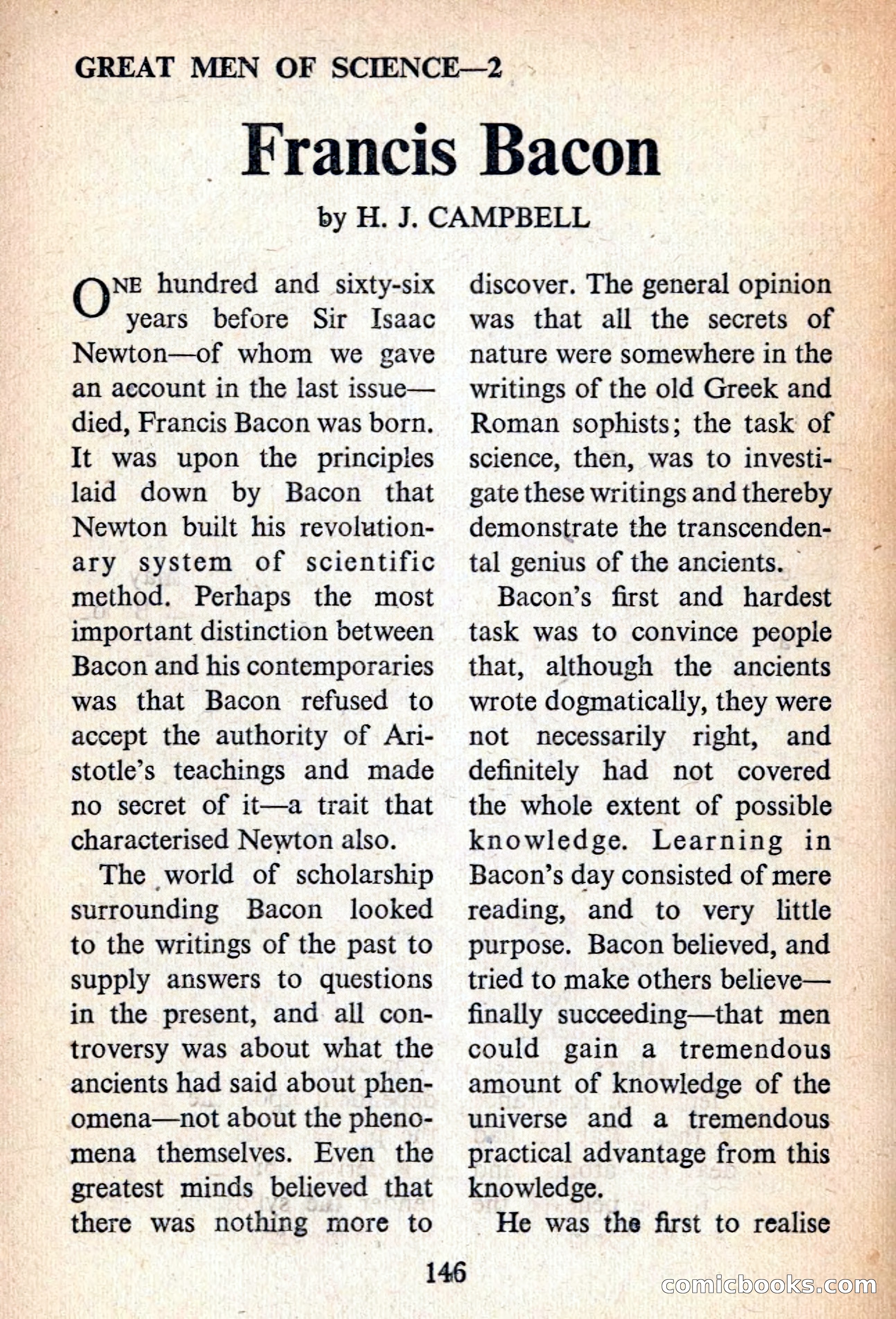
A restored page from Pulp Fiction, 1954. Page through the whole issue in the reader above.
📄 Transcribed text from this page (OCR, searchable)
Machine-transcribed from the original scan — historical spelling and the odd misread are preserved.
GREAT MEN OF SCIENCE—2 Francis Bacon by H. J. CAMPBELL Ou hundred and sixty-six years before Sir Isaac Newton—of whom we gave an account in the last issue— died, Francis Bacon was born. It was upon the principles laid down by Bacon that Newton built his revolution- ary system of scientific method. Perhaps the most important distinction between Bacon and his contemporaries was that Bacon refused to accept the authority of Ari- stotle’s teachings and made no secret of it—a trait that characterised Newton also. The world of scholarship surrounding Bacon looked to the writings of the past to supply answers to questions in the present, and all con- troversy was about what the ancients had said about phen- omena—not about the pheno- mena themselves. Even the greatest minds believed that there was nothing more to 146 discover. The general opinion was that all the secrets of nature were somewhere in the writings of the old Greek and Roman sophists; the task of science, then, was to investi- — gate these writings and thereby demonstrate the transcenden- tal genius of the ancients. — Bacon’s first and hardest task was to convince people that, although the ancients wrote dogmatically, they were not necessarily right, and definitely had not covered the whole extent of possible knowledge. Learning in Bacon’s day consisted of mere reading, and to very little purpose. Bacon believed, and tried to make others believe— finally succeeding—that men could gain a tremendous amount of knowledge of the universe and a tremendous practical advantage from this knowledge. He was the first to realise ¢ comichooks.con * “