
Pulp Fiction, 1954 · page 125 of 162
Authentic Science Fiction Monthly No. 46 — page 125: what you’re looking at
A restored page from Pulp Fiction, 1954. Page through the whole issue in the reader above.
📄 Transcribed text from this page (OCR, searchable)
Machine-transcribed from the original scan — historical spelling and the odd misread are preserved.
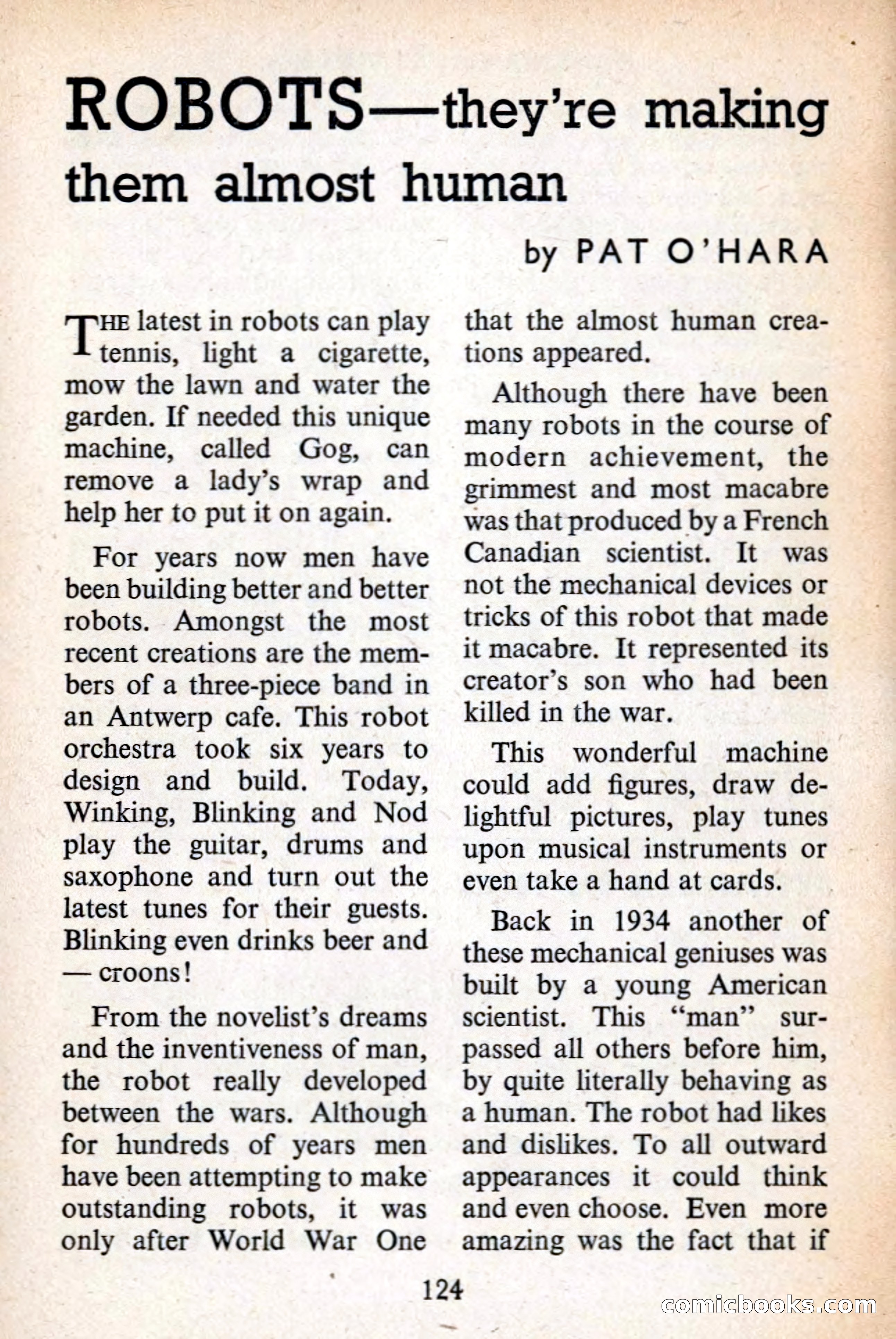
ROBOTS—they’re making them almost human = latest in robots can play tennis, light a cigarette, mow the lawn and water the garden. If needed this unique machine, called Gog, can remove a lady’s wrap and help her to put it on again. For years now men have been building better and better robots. Amongst the most recent creations are the mem- bers of a three-piece band in an Antwerp cafe. This robot orchestra took six years to design and build. Today, Winking, Blinking and Nod play the guitar, drums and saxophone and turn out the latest tunes for their guests. Blinking even drinks beer and — croons! From the novelist’s dreams and the inventiveness of man, the robot really developed between the wars. Although for hundreds of years men have been attempting to make outstanding robots, it was only after World War One 124 by PAT O’HARA that the almost human crea- tions appeared. Although there have been many robots in the course of modern achievement, the grimmest and most macabre was that produced by a French Canadian scientist. It was not the mechanical devices or tricks of this robot that made it macabre. It represented its creator’s son who had been killed in the war. This wonderful machine could add figures, draw de- lightful pictures, play tunes upon musical instruments or = _ even take a hand at cards. Back in 1934 another of these mechanical geniuses was built by a young American scientist. This “man” sur- passed all others before him, by quite literally behaving as a human. The robot had likes and dislikes. To all outward appearances it could think and even choose. Even more amazing was the fact that if comlilcloooks. conn -