
Pulp Fiction, 1954 · page 56 of 162
Authentic Science Fiction Monthly No. 44 — page 56: what you’re looking at
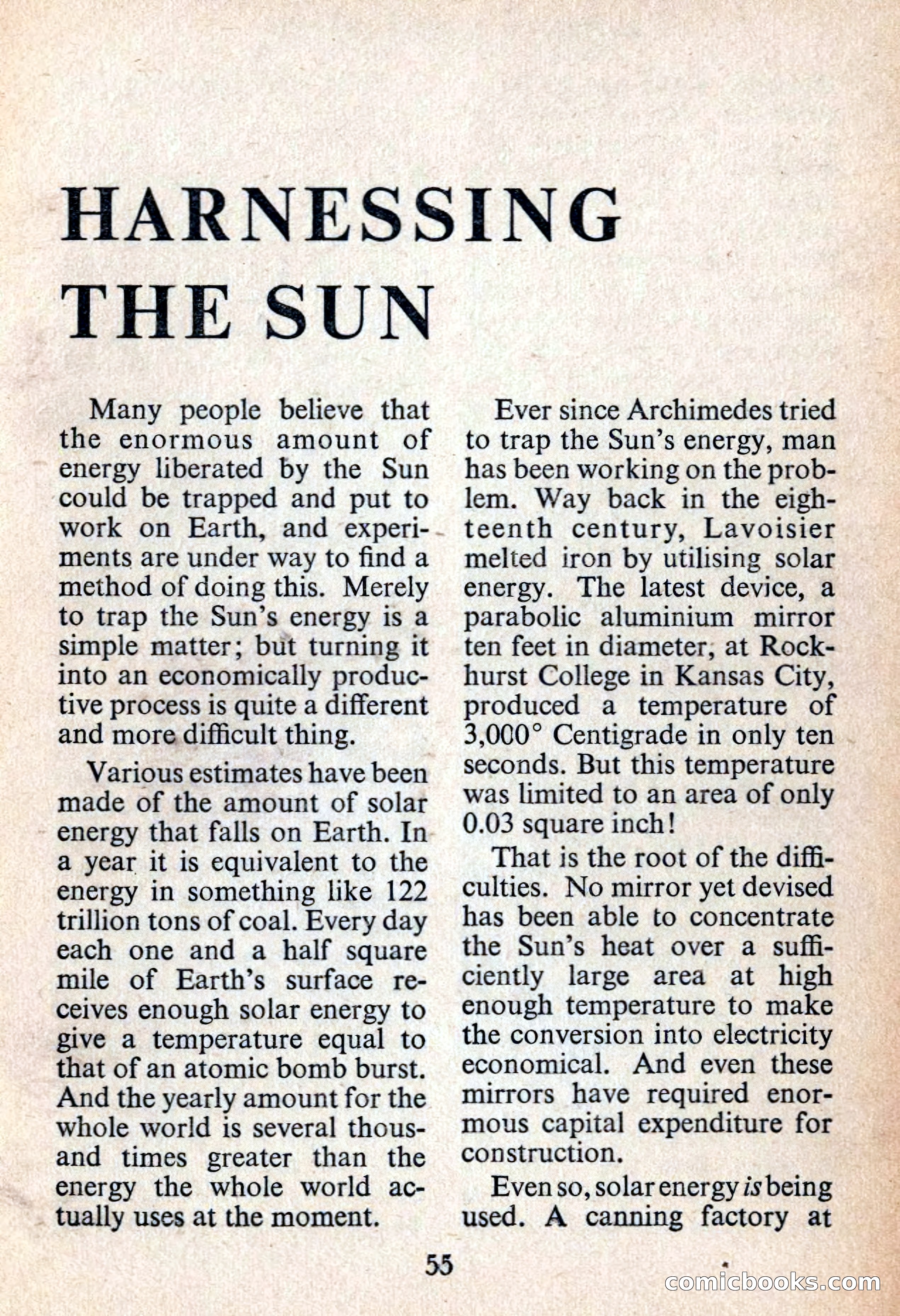
A restored page from Pulp Fiction, 1954. Page through the whole issue in the reader above.
📄 Transcribed text from this page (OCR, searchable)
Machine-transcribed from the original scan — historical spelling and the odd misread are preserved.
HARNESSING THE SUN Many people believe that the enormous amount of energy liberated by the Sun could be trapped and put to work on Earth, and experi- - ments are under way to find a method of doing this. Merely to trap the Sun’s energy is a simple matter; but turning it into an economically produc- tive process is quite a different and more difficult thing. Various estimates have been made of the amount of solar energy that falls on Earth. In a year it is equivalent to the energy in something like 122 trillion tons of coal. Every day each one and a half square mile of Earth’s surface re- ceives enough solar energy to give a temperature equal to that of an atomic bomb burst. And the yearly amount for the whole world is several thous- and times greater than the energy the whole world ac- _ tually uses at the moment. 55 Ever since Archimedes tried to trap the Sun’s energy, man has been working on the prob- lem. Way back in the eigh- teenth century, Lavoisier melted iron by utilising solar energy. The latest device, a parabolic aluminium mirror ten feet in diameter; at Rock- hurst College in Kansas City, produced a temperature of 3,000° Centigrade in only ten seconds. But this temperature was limited to an area of only 0.03 square inch! That is the root of the diffi- culties. No mirror yet devised has been able to concentrate the Sun’s heat over a suffi- ciently large area at high enough temperature to make the conversion into electricity economical. And even these mirrors have required enor- mous capital expenditure for construction. Even so, solar energy is being used. A canning factory at Comichbooks. com *