
Pulp Fiction, 1954 · page 151 of 162
Authentic Science Fiction Monthly No. 44 — page 151: what you’re looking at
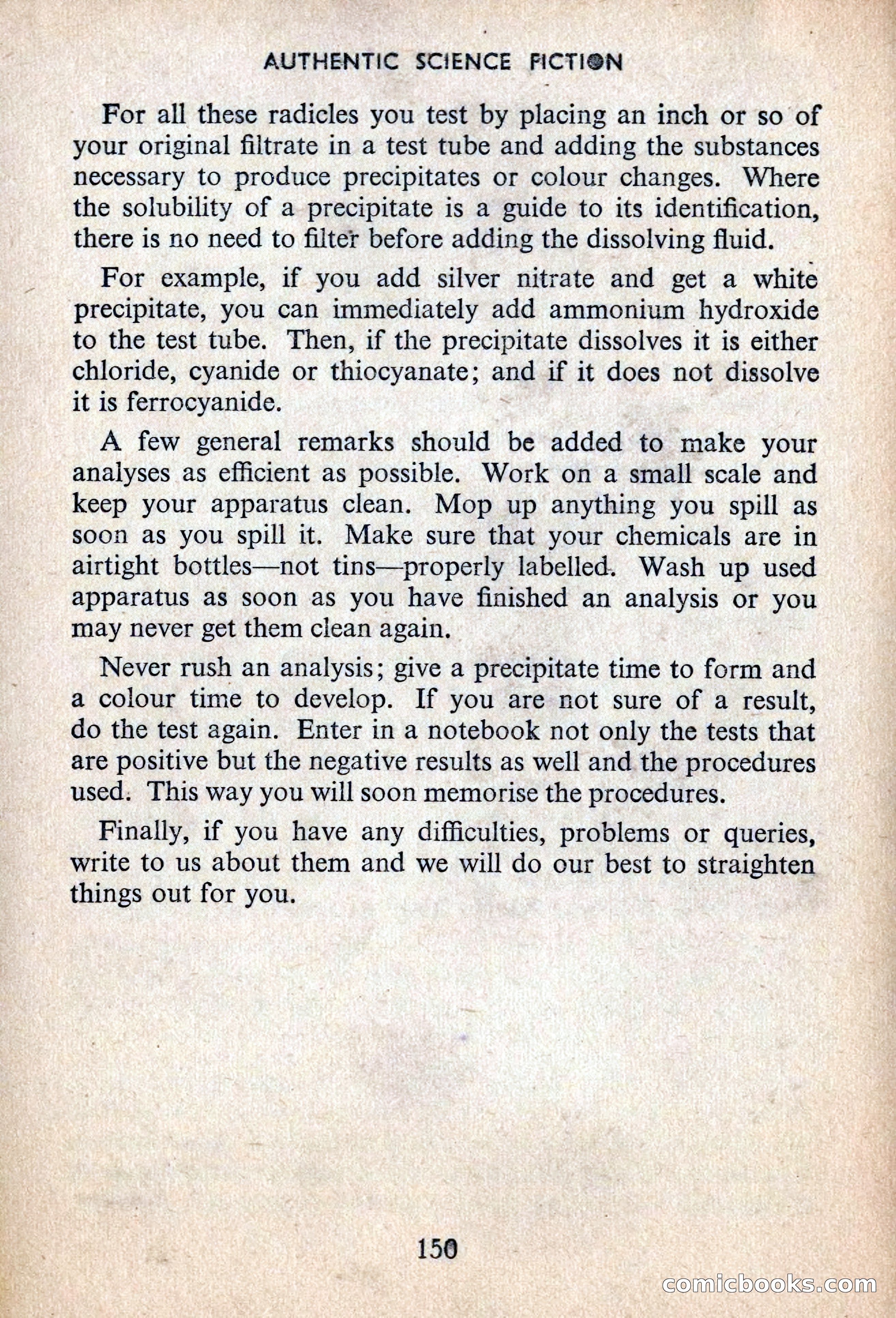
A restored page from Pulp Fiction, 1954. Page through the whole issue in the reader above.
📄 Transcribed text from this page (OCR, searchable)
Machine-transcribed from the original scan — historical spelling and the odd misread are preserved.
AUTHENTIC SCIENCE FICTION For all these radicles you test by placing an inch or so of your original filtrate in a test tube and adding the substances necessary to produce precipitates or colour changes. Where the solubility of a precipitate is a guide to its identification, there is no need to filter before adding the dissolving fluid. For example, if you add silver nitrate and get a white precipitate, you can immediately add ammonium hydroxide to the test tube. Then, if the precipitate dissolves it is either chloride, cyanide or thiocyanate; and if it does not dissolve it is ferrocyanide. A few general remarks should be added to make your analyses as efficient as possible. Work on a small scale and keep your apparatus clean. Mop up anything you spill as soon as you spill it. Make sure that your chemicals are in airtight bottles—not tins—properly labelled. Wash up used apparatus as soon as you have finished an analysis or i may never get them clean again. Never rush an analysis; give a precipitate time to form and a colour time to develop. If you are not sure of a result, do the test again. Enter in a notebook not only the tests that are positive but the negative results as well and the procedures used: This way you will soon memorise the procedures. Finally, if you have any difficulties, problems or queries, write to us about them and we will do our best to ‘Straighten things out for you. 156 conmmicoooks.comn