
Pulp Fiction, 1954 · page 145 of 162
Authentic Science Fiction Monthly No. 42 — page 145: what you’re looking at
A restored page from Pulp Fiction, 1954. Page through the whole issue in the reader above.
📄 Transcribed text from this page (OCR, searchable)
Machine-transcribed from the original scan — historical spelling and the odd misread are preserved.
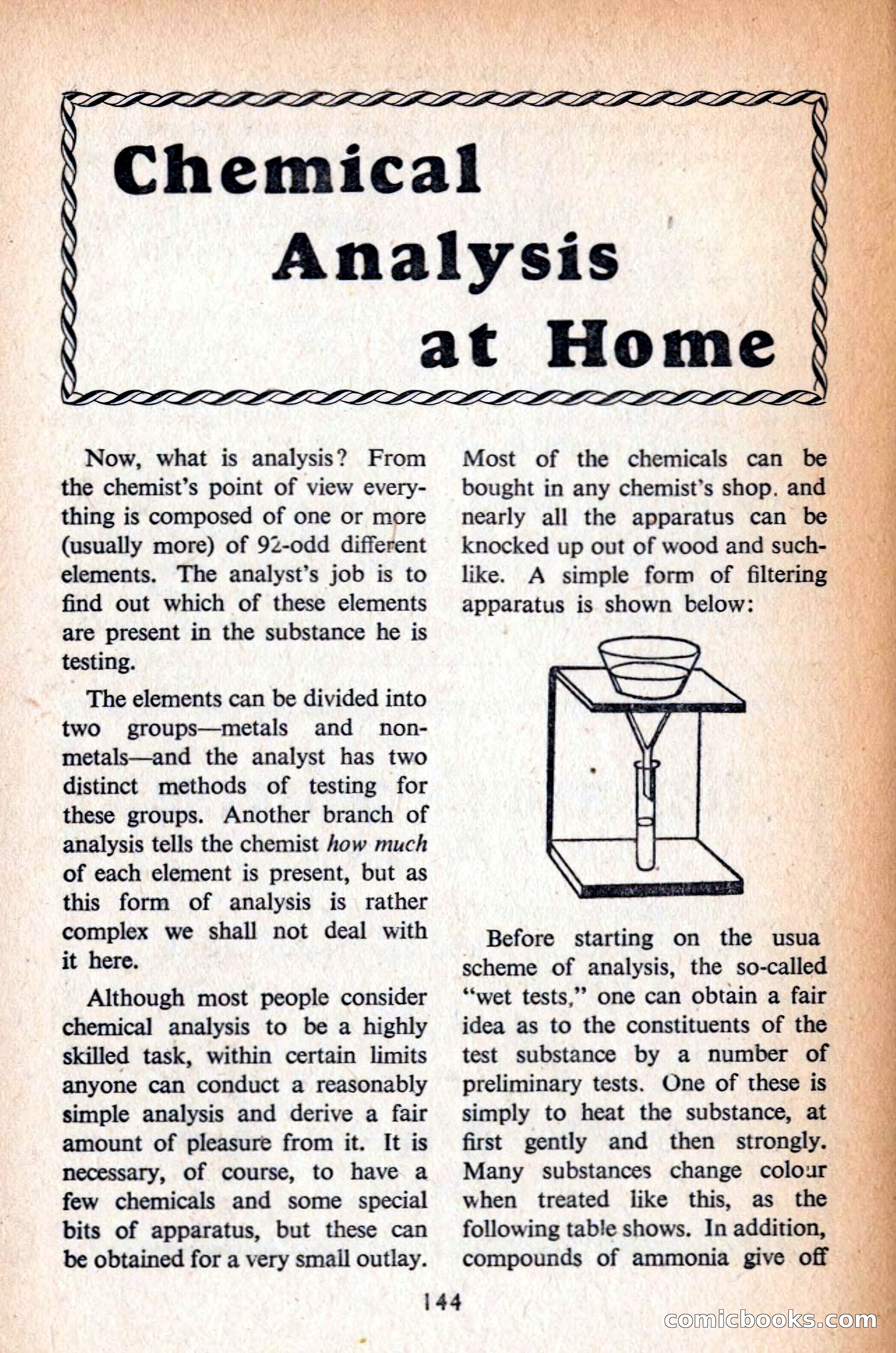
Chemical Analysis at Home Now, what is analysis? From the chemist’s point of view every- thing is composed of one or more (usually more) of 9z-odd different elements. The analyst’s job is to find out which of these elements are present in the substance he is testing. The elements can be divided into two groups—metals and non- metals—and the analyst has two distinct methods of testing for these groups. Another branch of analysis tells the chemist how much of each element is present, but as this form of analysis is rather complex we shall not deal with it here. Although most people consider chemical analysis to be a highly skilled task, within certain limits anyone can conduct a reasonably simple analysis and derive a fair amount of pleasure from it. It is necessary, of course, to have a few chemicals and some special bits of apparatus, but these can be obtained for a very small outlay. 144 Most of the chemicals can bel if Re 3 bought in any chemist’s shop. and — ‘ nearly all the apparatus can be — knocked up out of wood and such- like. A simple form of filtering apparatus is shown below: Before starting on the usua scheme of analysis, the so-called a: “‘wet tests,” one can obtain a fair idea as to the constituents of the test substance by a number of preliminary tests. One of these is simply to heat the substance, at first gently and then strongly. Many substances change colour — when treated like this, as the following table shows. In addition, compounds of ammonia give off — comlicbooks.<onn * ‘ete