
Pulp Fiction, 1954 · page 106 of 132
Astounding Science Fiction, British Edition — page 106: what you’re looking at
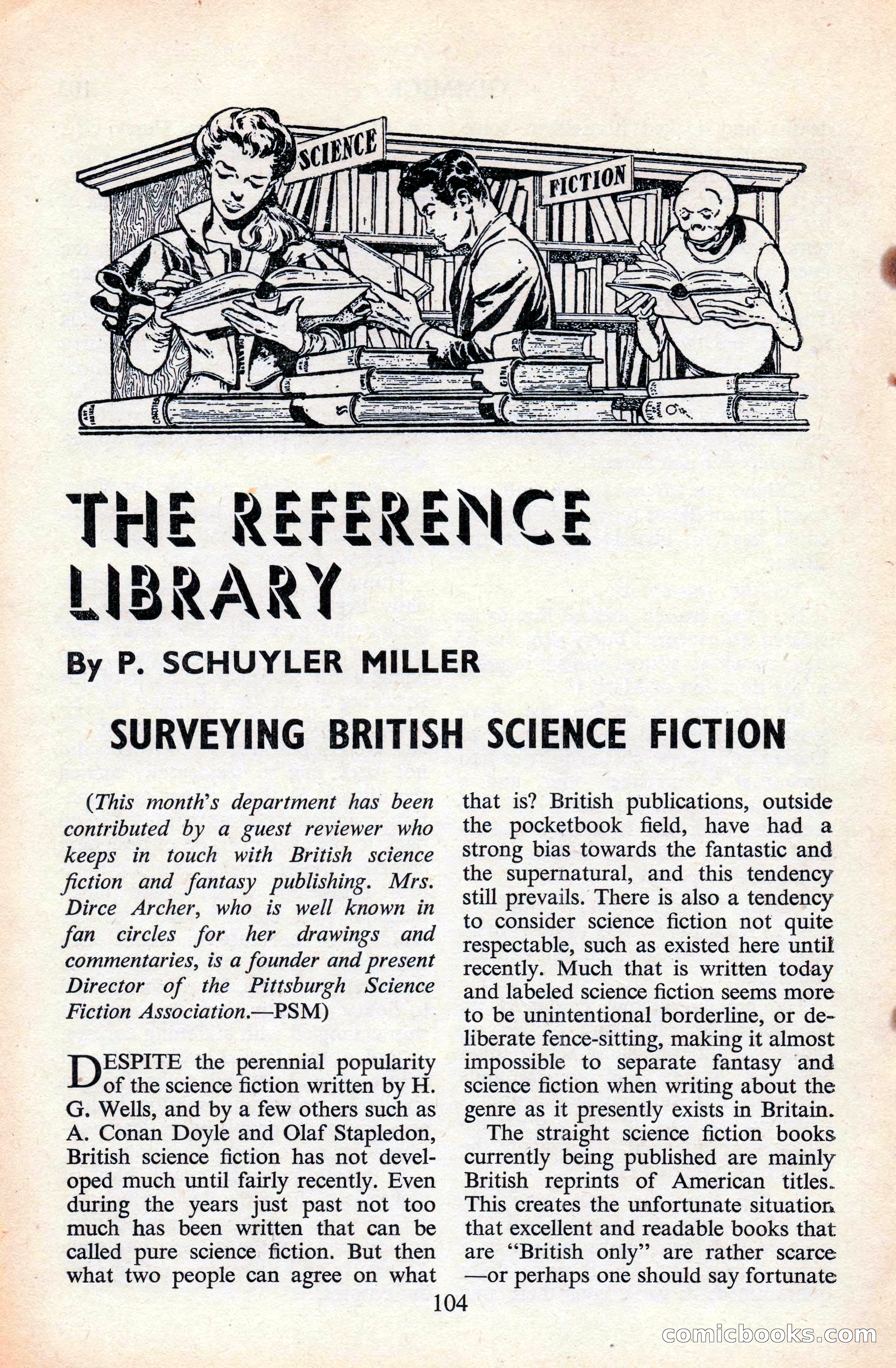
A restored page from Pulp Fiction, 1954. Page through the whole issue in the reader above.
📄 Transcribed text from this page (OCR, searchable)
Machine-transcribed from the original scan — historical spelling and the odd misread are preserved.
an r —S Trl— REE LIBRARY rad v 34.37-* SS By P. SCHUYLER MILLER SURVEYING BRITISH SCIENCE FICTION (This month's department has been contributed by a guest reviewer who Keeps in touch with British science fiction and fantasy publishing. Mrs. Dirce Archer, who is well known in fan circles for her drawings and commentaries, is a founder and present Director of the Pittsburgh Science Fiction Associationn—PSM) Be dete the perennial popularity of the science fiction written by H. G. Wells, and by a few others such as A. Conan Doyle and Olaf Stapledon, British science fiction has not devel- oped much until fairly recently. Even during the years just past not too much has been written that can be called pure science fiction. But then what two people can agree on what that is? British publications, outside the pocketbook field, have had a strong bias towards the fantastic and the supernatural, and this tendency still prevails. There is also a tendency to consider science fiction not quite respectable, such as existed here until recently. Much that is written today and labeled science fiction seems more to be unintentional borderline, or de- liberate fence-sitting, making it almost impossible to separate fantasy and science fiction when writing about the genre as it presently exists in Britain. The straight science fiction books currently being published are mainly British reprints of American titles. This creates the unfortunate situation that excellent and readable books that are “British only” are rather scarce —or perhaps one should say fortunate 104 comnniclboooks.c© nl