
Pulp Fiction, 1953 · page 10 of 132
Astounding Science Fiction, British Edition — page 10: what you’re looking at
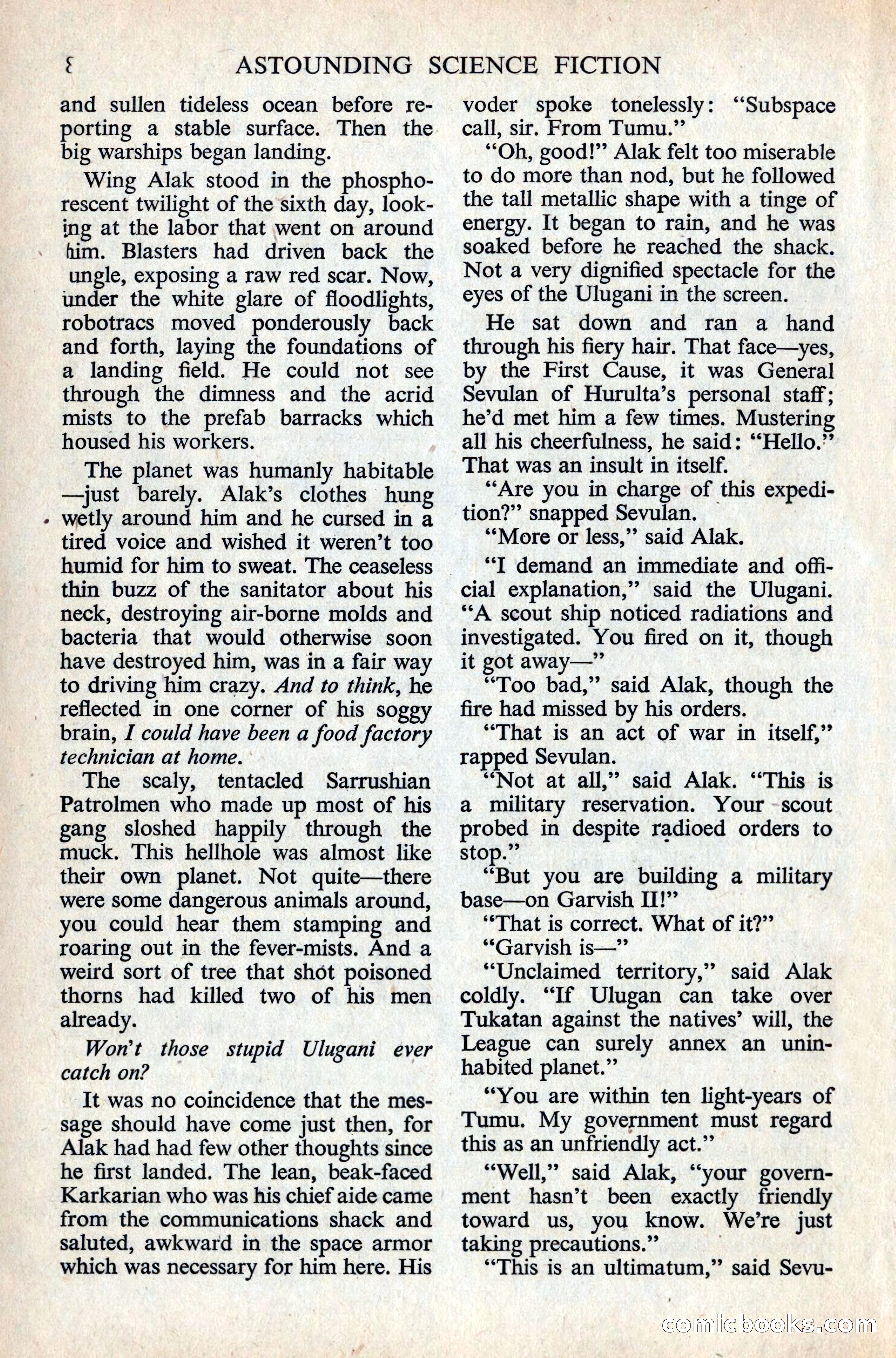
A restored page from Pulp Fiction, 1953. Page through the whole issue in the reader above.
📄 Transcribed text from this page (OCR, searchable)
Machine-transcribed from the original scan — historical spelling and the odd misread are preserved.
e é ASTOUNDING SCIENCE FICTION and sullen tideless ocean before re- porting a stable surface. Then the big warships began landing. Wing Alak stood in the phospho- rescent twilight of the sixth day, look- ing at the labor that went on around him. Blasters had driven back the ungle, exposing a raw red scar. Now, under the white glare of floodlights, robotracs moved ponderously back and forth, laying the foundations of a landing field. He could not see through the dimness and the acrid mists to the prefab barracks which housed his workers. The planet was humanly habitable —just barely. Alak’s clothes hung wetly around him and he cursed in a tired voice and wished it weren’t too humid for him to sweat. The ceaseless _ thin buzz of the sanitator about his neck, destroying air-borne molds and bacteria that would otherwise soon have destroyed him, was in a fair wa to driving him crazy. And to think, he reflected in one corner of his soggy brain, I could have been a food factory technician at home. The scaly, tentacled Sarrushian Patrolmen who made up most of his gang sloshed happily through the muck. This hellhole was almost like their own planet. Not quite—there were some dangerous animals around, you could hear them stamping and roaring out in the fever-mists. And a weird sort of tree that shot poisoned thorns had killed two of his men already. Won’t those stupid Ulugani ever catch on? It was no coincidence that the mes- sage should have come just then, for Alak had had few other thoughts since he first landed. The lean, beak-faced Karkarian who was his chief aide came from the communications shack and saluted, awkward in the space armor which was necessary for him here. His voder spoke tonelessly: “Subspace call, sir. From Tumu.”’ “Oh, good!” Alak felt too miserable to do more than nod, but he followed the tall metallic shape with a tinge of energy. It began to rain, and he was soaked before he reached the shack. Not a very dignified spectacle for the eyes of the Ulugani in the screen. He sat down and ran a hand through his fiery hair. That face—yes, by the First Cause, it was General Sevulan of Hurulta’s personal staff; he’d met him a few times. Mustering all his cheerfulness, he said: ‘‘Hello.’’ That was an insult in itself. ‘Are you in charge of this expedi- tion?” snapped Sevulan. **More or less,”’ said Alak. “IT demand an immediate and offi- cial explanation,” said the Ulugani. “A scout ship noticed radiations and investigated. You fired on it, though it got away—” “Too bad,” said Alak, though the fire had missed by his orders. “That is an act of war in itself,” rapped Sevulan. ‘‘Not at all,’ said Alak. ‘‘This is a military reservation. Your -scout probed in despite radioed orders to stop.” “But you are building a military base—on Garvish IT!’ ‘That is correct. What of it?” ““Garvish is—”’ “Unclaimed territory,” said Alak coldly. “If Ulugan can take over Tukatan against the natives’ will, the League can surely annex an unin- habited planet.”’ “You are within ten light-years of Tumu. My government must regard this as an unfriendly act.”’ “Well,” said Alak, “‘your govern- ment hasn’t been exactly friendly toward us, you know. We’re just taking precautions.” “This is an ultimatum,” said Sevu- connicloooks.co© im