
Pulp Fiction, 1953 · page 98 of 132
Astounding Science Fiction, British Edition — page 98: what you’re looking at
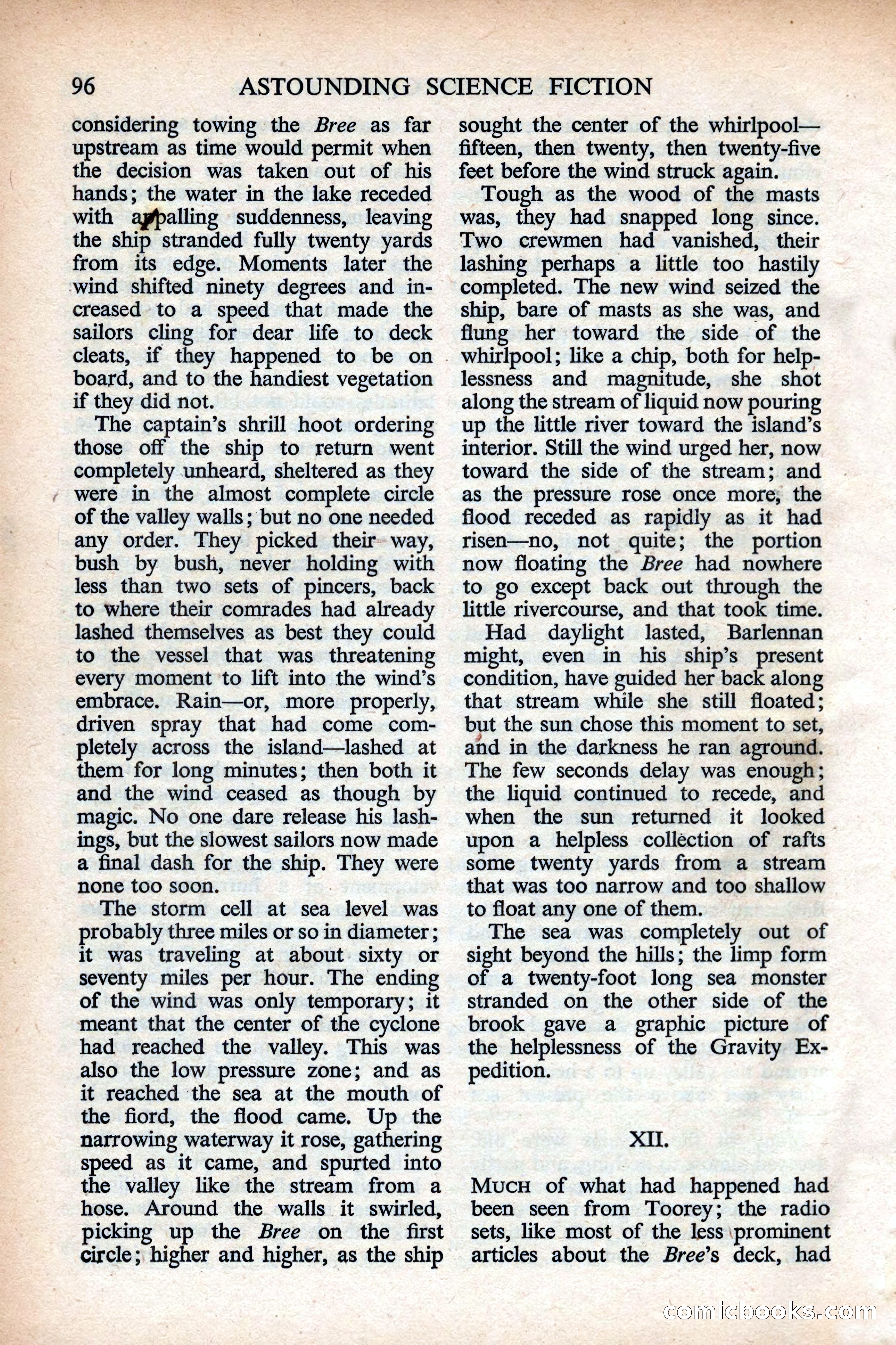
A restored page from Pulp Fiction, 1953. Page through the whole issue in the reader above.
📄 Transcribed text from this page (OCR, searchable)
Machine-transcribed from the original scan — historical spelling and the odd misread are preserved.
96 ASTOUNDING SCIENCE FICTION considering towing the Bree as far upstream as time would permit when the decision was taken out of his hands; the water in the lake receded with appalling suddenness, leaving the ship stranded fully twenty yards from its edge. Moments later the ‘wind shifted ninety degrees and in- creased to a speed that made the sailors cling for dear life to deck cleats, if they happened to be on . board, and to the handiest vegetation if they did not. The captain’s shrill hoot ordering those off the ship to return went completely unheard, sheltered as they were in the almost complete circle of the valley walls; but no one needed any order. They picked their- way, bush by bush, never holding with less than two sets of pincers, back to where their comrades had already lashed themselves as best they could to the vessel that was threatening every moment to lift into the wind’s embrace. Rain—or, more properly, driven spray that had come com- pletely across the island—lashed at them for long minutes; then both it and the wind ceased as though by magic. No one dare release his lash- ings, but the slowest sailors now made a final dash for the ship. They were none too soon. The storm cell at sea level was probably three miles or so in diameter ; it was traveling at about. sixty or seventy miles per hour. The ending of the wind was only temporary; it meant that the center of the cyclone had reached the valley. This was also the low pressure zone; and as it reached the sea at the mouth of the fiord, the flood came. Up the nalrowing waterway it rose, gathering speed as it came, and spurted into the valley like the stream from a hose. Around the walls it swirled, picking up the Bree on the first circle; higher and higher, as the ship sought the center of the whirlpool— fifteen, then twenty, then twenty-five feet before the wind struck again. Tough as the wood of the masts was, they had snapped long since. Two crewmen had vanished, their lashing perhaps a little too hastily completed. The new wind seized the ship, bare of masts as she was, and flung her toward the side of the whirlpool; like a chip, both for help- lessness and magnitude, she shot along the stream of liquid now pouring up the little river toward the island’s interior. Still the wind urged her, now toward the side of the stream; and as the pressure rosé once more, the flood receded as rapidly as it had risen—no, not quite; the portion now floating the Bree had nowhere to go except back out through the little rivercourse, and that took time. Had daylight lasted, Barlennan might, even in his ship’s present condition, have guided her back along that stream while she still floated; but the sun chose this moment to set, and in the darkness he ran aground. The few seconds delay was enough; the liquid continued to recede, and when the sun returned it looked upon a helpless collection of rafts some twenty yards from a stream that was too narrow and too shallow to float any one of them. The sea was completely out of sight beyond the hills; the limp form of a twenty-foot long sea monster stranded on the other side of the brook gave a graphic picture of the helplessness of the Gravity Ex- pedition. XII. Mucu of what had happened had been seen from Toorey; the radio sets, like most of the less prominent articles about the Bree’s deck, had comicloolks.con