
Pulp Fiction, 1953 · page 61 of 132
Astounding Science Fiction, British Edition — page 61: what you’re looking at
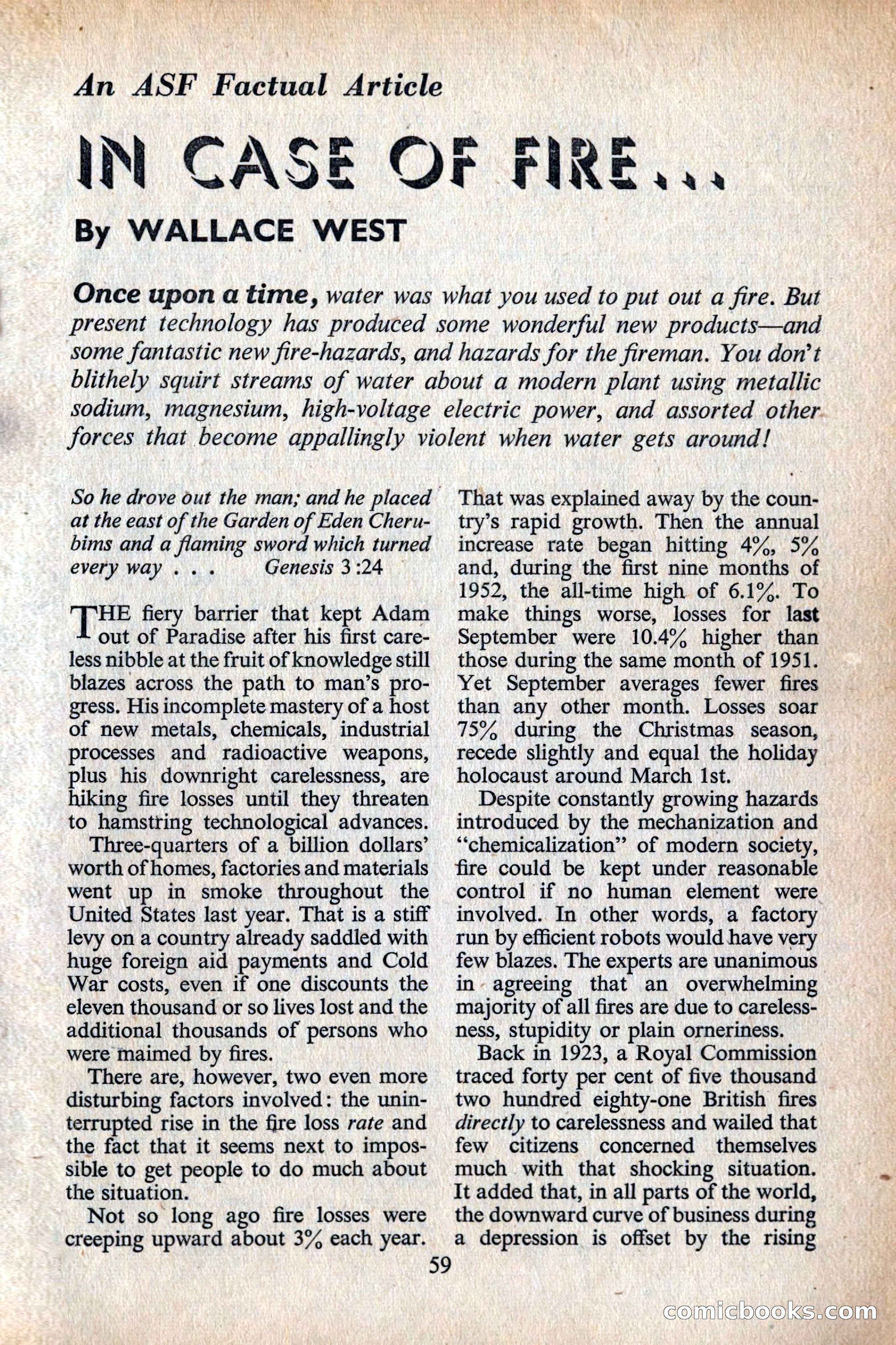
A restored page from Pulp Fiction, 1953. Page through the whole issue in the reader above.
📄 Transcribed text from this page (OCR, searchable)
Machine-transcribed from the original scan — historical spelling and the odd misread are preserved.
An ASF Factual Article IN CASE OF By WALLACE WEST pee FIRE... Once upon a time, water was what you used to put out a fire. But present technology has produced some wonderful new products—and some fantastic new fire-hazards, and hazards for the fireman. You don’t blithely squirt streams of water about a modern plant using metallic sodium, magnesium, high-voltage electric power, and assorted other. forces that become appallingly violent when water gets around! So he drove out the man; and he placed’ at the east of the Garden of Eden Cheru- bims and a flaming sword which turned every way... Genesis 3:24 B iio fiery barrier that kept Adam out of Paradise after his first care- less nibble at the fruit of knowledge still blazes across the path to man’s pro- gress. His incomplete mastery of a host of new metals, chemicals, industrial processes and radioactive weapons, plus his downright carelessness, are hiking fire losses until they threaten to hamstring technological advances. Three-quarters of a billion dollars’ worth of homes, factories and materials went up in smoke throughout the United States last year. That is a stiff levy on a country already saddled with huge foreign aid payments and Cold War costs, even if one discounts the eleven thousand or so lives lost and the additional thousands of persons who were maimed by fires. There are, however, two even more disturbing factors involved: the unin- terrupted rise in the fire loss rate and the fact that it seems next to impos- sible to get people to do much about the situation. Not so long ago fire losses were creeping upward about 3% each year. 59 That was explained away by the coun- try’s rapid growth. Then the annual increase rate began hitting 4%, 5% and, during the first nine months of 1952, the all-time high of 6.1%. To make things worse, losses for last September were 10.4% higher than those during the same month of 1951. Yet September averages fewer fires than any other month. Losses soar 75% during the Christmas season, recede slightly and equal the holiday holocaust around March Ist. Despite constantly growing hazards introduced by the mechanization and “‘chemicalization” of modern society, fire could be kept under reasonable control if no human element were involved. In other words, a factory run by efficient robots would have very few blazes. The experts are unanimous in- agreeing that an overwhelming majority of all fires are due to careless- ness, stupidity or plain orneriness. Back in 1923, a Royal Commission traced forty per cent of five thousand two hundred eighty-one British fires directly to carelessness and wailed that few citizens concerned themselves much with that shocking situation. It added that, in all parts of the world, the downward curve of business during a depression is offset by the rising CONNIE OOOKS com