
Pulp Fiction, 1953 · page 52 of 132
Astounding Science Fiction, British Edition — page 52: what you’re looking at
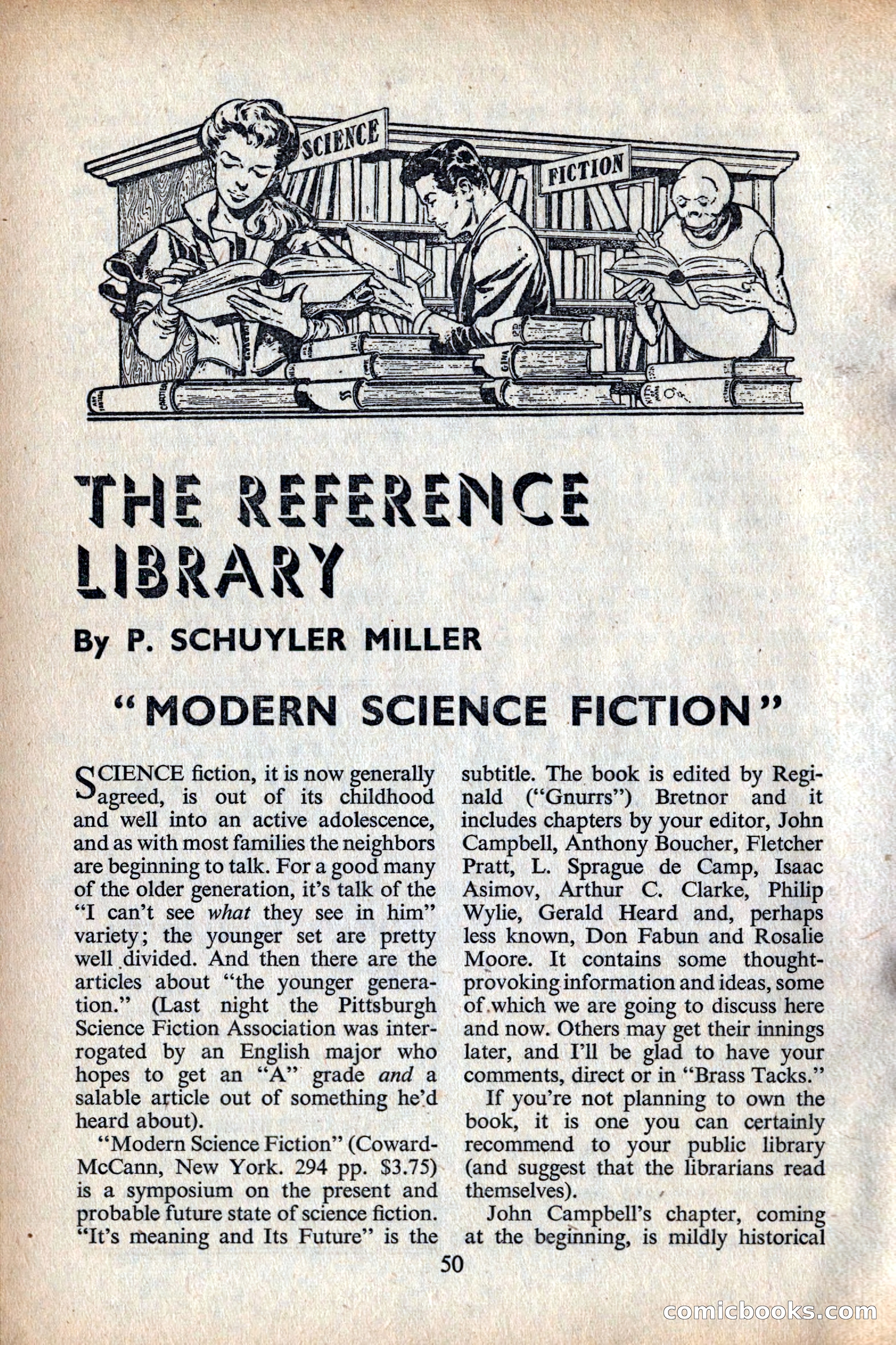
A restored page from Pulp Fiction, 1953. Page through the whole issue in the reader above.
📄 Transcribed text from this page (OCR, searchable)
Machine-transcribed from the original scan — historical spelling and the odd misread are preserved.
LIBRARY By P. SCHUYLER MILLER “MODERN SCIENCE FICTION” «Shee bya fiction, it is now generally “agreed, is out of its childhood and well into an active adolescence, and as with most families the neighbors are beginning to talk. For a good many of the older generation, it’s talk of the “I can’t see what they see in him” variety; the younger set are pretty well divided. And then there are the articles about “the younger genera- tion.” (Last night the Pittsburgh Science Fiction Association was inter- rogated by an English major who hopes to get an “A” grade and a salable article out of something he’d heard about). **Modern Science Fiction”’ (Coward- McCann, New York. 294 pp. $3.75) is a symposium on the present and probable future state of science fiction. “It’s meaning and Its Future” is the 50 subtitle. The book is edited by Regi- nald (‘‘Gnurrs”’) Bretnor and it includes chapters by your editor, John Campbell, Anthony Boucher, Fletcher Pratt, L. Sprague de Camp, Isaac Asimov, Arthur C. Clarke, Philip Wylie, Gerald Heard and, perhaps less known, Don Fabun and Rosalie Moore. It contains some thought- provoking information and ideas, some of which we are going to discuss here and now. Others may get their innings later, and I'll be glad to have your comments, direct or in “Brass Tacks.” If you’re not planning to own the book, it is one you can certainly recommend to your public library (and suggest that the librarians read themselves). , John Campbell’s chapter, coming at the beginning, is mildly historical CoOMIiGcdooks com