
Pulp Fiction, 1953 · page 129 of 132
Astounding Science Fiction, British Edition — page 129: what you’re looking at
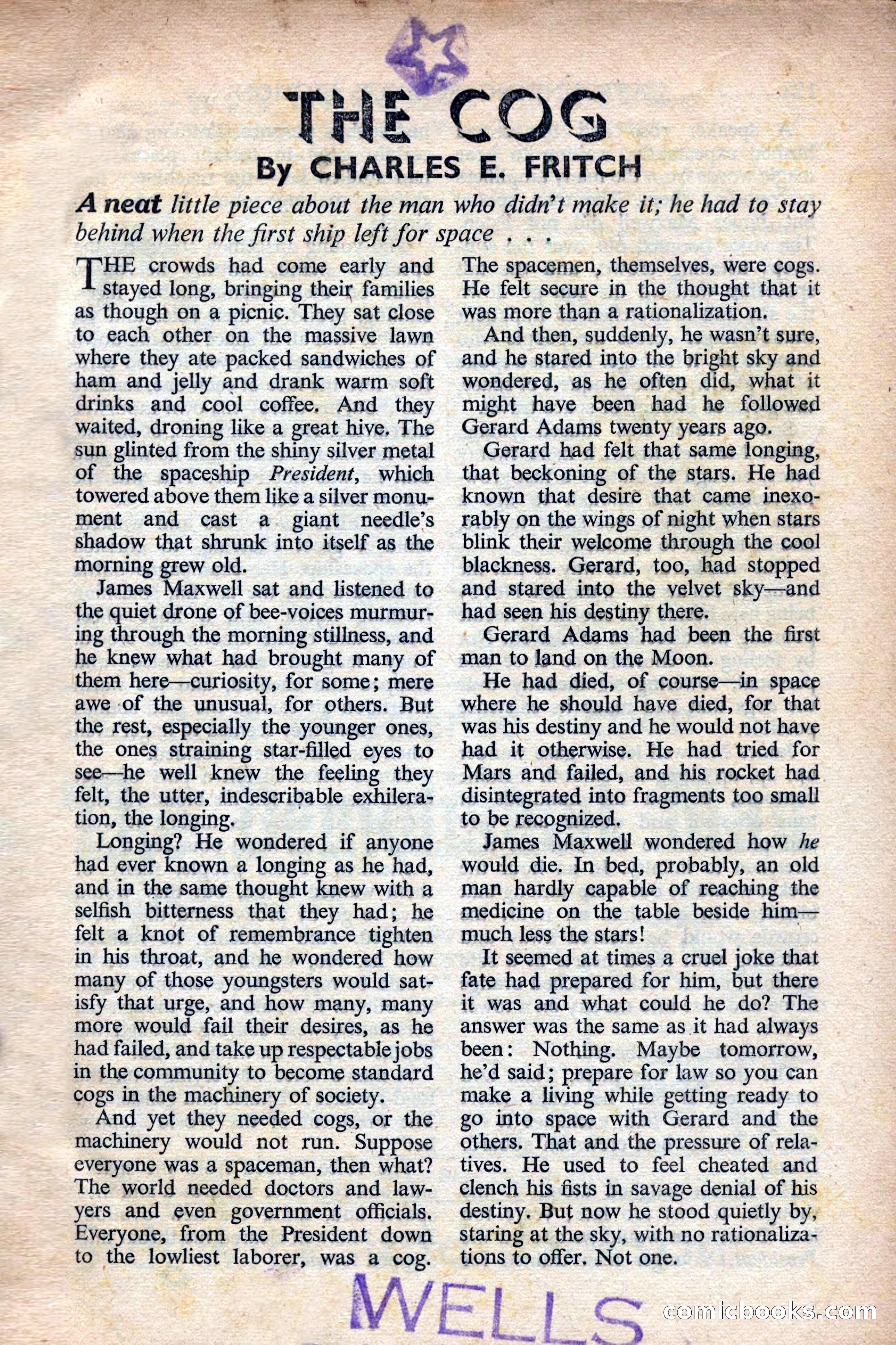
A restored page from Pulp Fiction, 1953. Page through the whole issue in the reader above.
📄 Transcribed text from this page (OCR, searchable)
Machine-transcribed from the original scan — historical spelling and the odd misread are preserved.
be Sd ee bn el eet Nowa, gets Fe ar 7 By CHARLES E. FRITCH A neat little piece about the man who didn’t make it; he had to stay behind when the first ship left for space , . . THe crowds had come early and Stayed long, bringing their families as though on a picnic. They sat close to each other on the massive lawn where they ate packed sandwiches of ham and jelly and drank warm soft drinks and cool coffee. And they waited, droning like a great hive, The sun glinted from the shiny silver metal of the spaceship President, which towered above them like a silver monu- ment and cast a giant needle’s shadow that shrunk into itself as the morning grew old. James Maxwell sat and listened to the quiet drone of bee-voices murmur- ing through the morning stillness, and he knew what had brought many of them here—curiosity, for some; mere awe of the unusual, for others. But the rest, especially the younger ones, the ones straining star-filled eyes to see—he well knew the feeling they felt, the utter, indescribable exhilera- tion, the longing. Longing? He wondered if anyone had ever known a longing as he had, and in the same thought knew with a selfish bitterness that they had; he felt a knot of remembrance tighten in his throat, and he wondered how many of those youngsters would sat- isfy that urge, and how many, many more would fail their desires, as he had failed, and take up respectable jobs in the community to become standard cogs in the machinery of society. And yet they needed cogs, or the machinery would not run. Suppose everyone was a spaceman, then what? The world needed doctors and law- yers and even government officials. Everyone, from the President down to the lowliest laborer, was a cog. The spacemen, themselves, were cogs. He felt secure in the thought that it was more than a rationalization. And then, suddenly, he wasn’t sure, and he stared into the bright sky and wondered, as he often did, what it might haye been had he followed Gerard Adams twenty years ago. Gerard had felt that same longing, that beckoning of the stars. He had known that desire that came inexo- rably on the wings of night when stars blink their welcome through the cool blackness. Gerard, too, had stopped and stared into the velvet sky—and had seen his destiny there. _ _ Gerard Adams had been the first man to land on the Moon. He had died, of course—in space where he should have died, for that was his destiny and he would not have had it otherwise. He had tried for Mars and failed, and his rocket had disintegrated into fragments too small to be recognized. James Maxwell wondered how he would die. In bed, probably, an old man hardly capable of reaching the medicine on the table beside him— much less the stars! It seemed at times a cruel joke that fate had prepared for him, but there it was and what could he do? The answer was the same as it had always been: Nothing. Maybe tomorrow, he’d said; prepare for law so you can make a living while getting ready to go into space with Gerard and the others. That and the pressure of rela- tives. He used to feel cheated and clench his fists in savage denial of his destiny. But now he stood quietly by, staring at the sky, with no rationaliza- tions to offer, Not one. € * comichbooks Se ay 4 com