
Pulp Fiction, 1922 · page 141 of 172
Argosy All-Story Weekly, January 21, 1922 — page 141: what you’re looking at
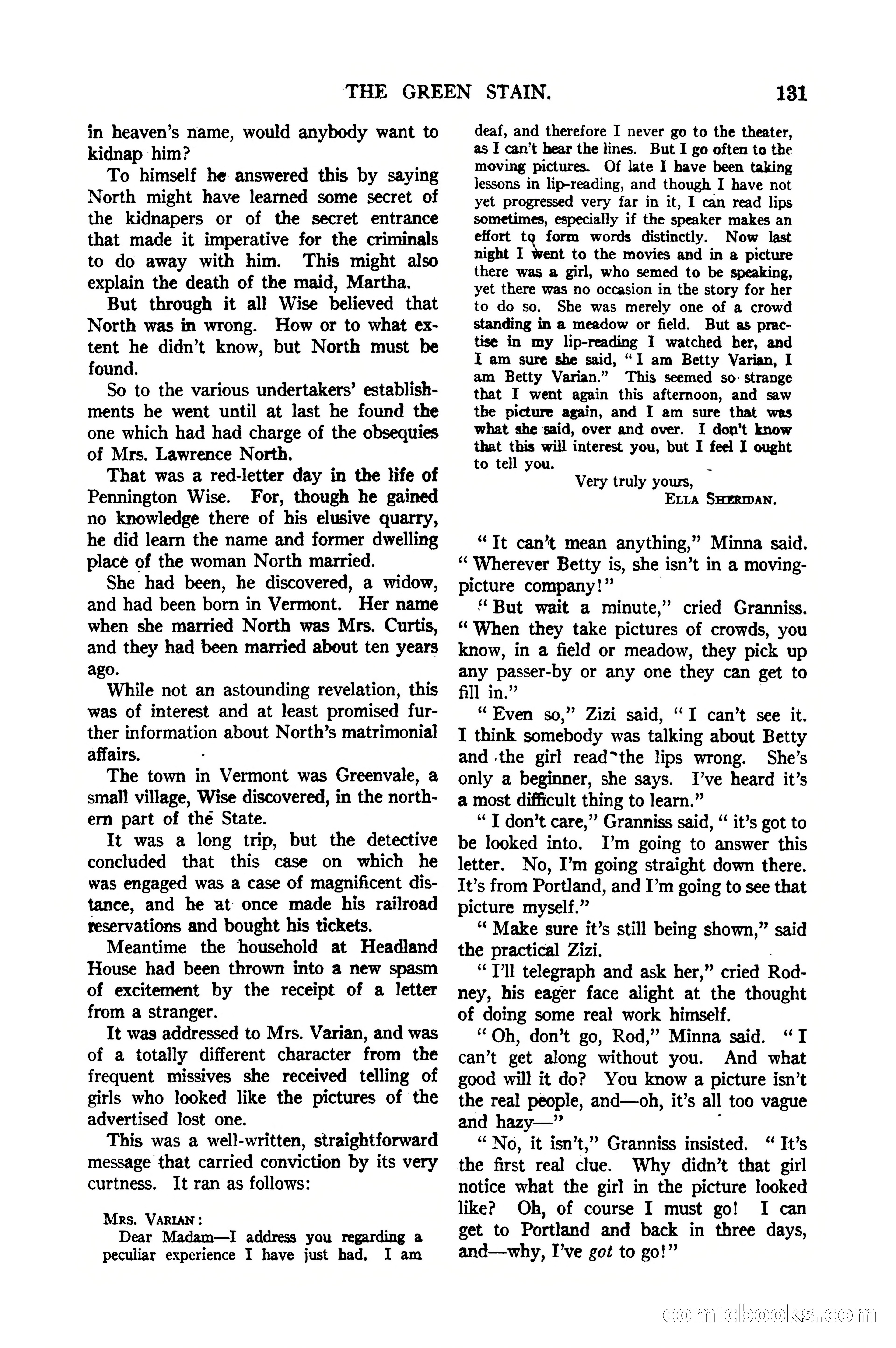
A restored page from Pulp Fiction, 1922. Page through the whole issue in the reader above.
📄 Transcribed text from this page (OCR, searchable)
Machine-transcribed from the original scan — historical spelling and the odd misread are preserved.
‘THE GREEN STAIN. in heaven’s name, would anybody want to kidnap him? To himself he answered this by saying North might have learned some secret of the kidnapers or of the secret entrance that made it imperative for the criminals to do away with him. This might also explain the death of the maid, Martha. But through it all Wise believed that North was in wrong. How or to what ex- tent he didn’t know, but North must be found. So to the various undertakers’ establish- ments he went until at last he found the one which had had charge of the obsequies of Mrs. Lawrence North. That was a red-letter day in the life of Pennington Wise. For, though he gained no knowledge there of his elusive quarry, he did learn the name and former dwelling place of the woman North married. She had been, he discovered, a widow, and had been born in Vermont. Her name when she married North was Mrs. Curtis, and they had been married about ten years ago. While not an astounding revelation, this was of interest and at least promised fur- ther information about North’s matrimonial affairs. The town in Vermont was Greenvale, a small village, Wise discovered, in the north- ern part of the State. It was a long trip, but the detective concluded that this case on which he was engaged was a case of magnificent dis- tance, and he at once made his railroad reservations and bought his tickets. Meantime the household at Headland House had been thrown into a new spasm of excitement by the receipt of a letter from a stranger. It was addressed to Mrs. Varian, and was of a totally different character from the frequent missives she received telling of girls who looked like the pictures of the advertised lost one. This was a well-written, straightforward message that carried conviction by its very curtness. It ran as follows: Mrs. VARIAN: Dear Madam—I address you regarding a peculiar experience I have just had. I am the first real clue. 131 deaf, and therefore I never go to the theater, as I can’t hear the lines. But I go often to the moving pictures. Of late I have been taking lessons in lip-reading, and though I have not yet progressed very far in it, I can read lips sometimes, especially if the speaker makes an effort tq form words distinctly. Now last night I pa to the movies and in a picture there was a girl, who semed to be speaking, yet there was no occasion in the story for her to do so. She was merely one of a crowd standing in a meadow or field. But as prac- tise in my lip-reading I watched her, and I am sure she said, “I am Betty Varian, I am Betty Varian.” This seemed so: strange that I went again this afternoon, and saw the picture again, and I am sure that wes what she said, over and over. I don’t know that this will interest you, but I feel I ought to tell you. 7 Very truly yours, ELLA SHERIDAN. “Tt can’t mean anything,” Minna said. ““ Wherever Betty is, she isn’t in a moving- picture company!” “But wait a minute,” cried Granniss. “When they take pictures of crowds, you know, in a field or meadow, they pick up any passer- -by or any one they can get to fill in.” “Even so,” Zizi said, “I can’t see it. I think somebody was talking about Betty and the girl read~the lips wrong. She’s only a beginner, she says. I’ve heard it’s a most difficult thing to learn.” ‘T don’t care,’”’ Granniss said, “ it’s got to be looked into. I’m going to answer this letter. No, I’m going straight down there. It’s from Portland, and I’m going to see that picture myself.” “‘ Make sure it’s still being shown,” said the practical Zizi. ‘“T’ll telegraph and ask her,” cried Rod- ney, his eager face alight at the thought of doing some real work himself. “Oh, don’t go, Rod,” Minna said. “TI can’t get along without you. And what good will it do? You know a picture isn’t the real people, and—oh, it’s all too vague and hazy— “No, it isn’t,” Granniss insisted. “It’s Why didn’t that girl notice what the girl in the picture looked like? Oh, of course I must go! I can get to Portland and back in three days, and—why, I’ve got to go!” comicloool C©