
Pulp Fiction, 1920 · page 147 of 164
Argosy, Vol. 122, No. 1 — page 147: what you’re looking at
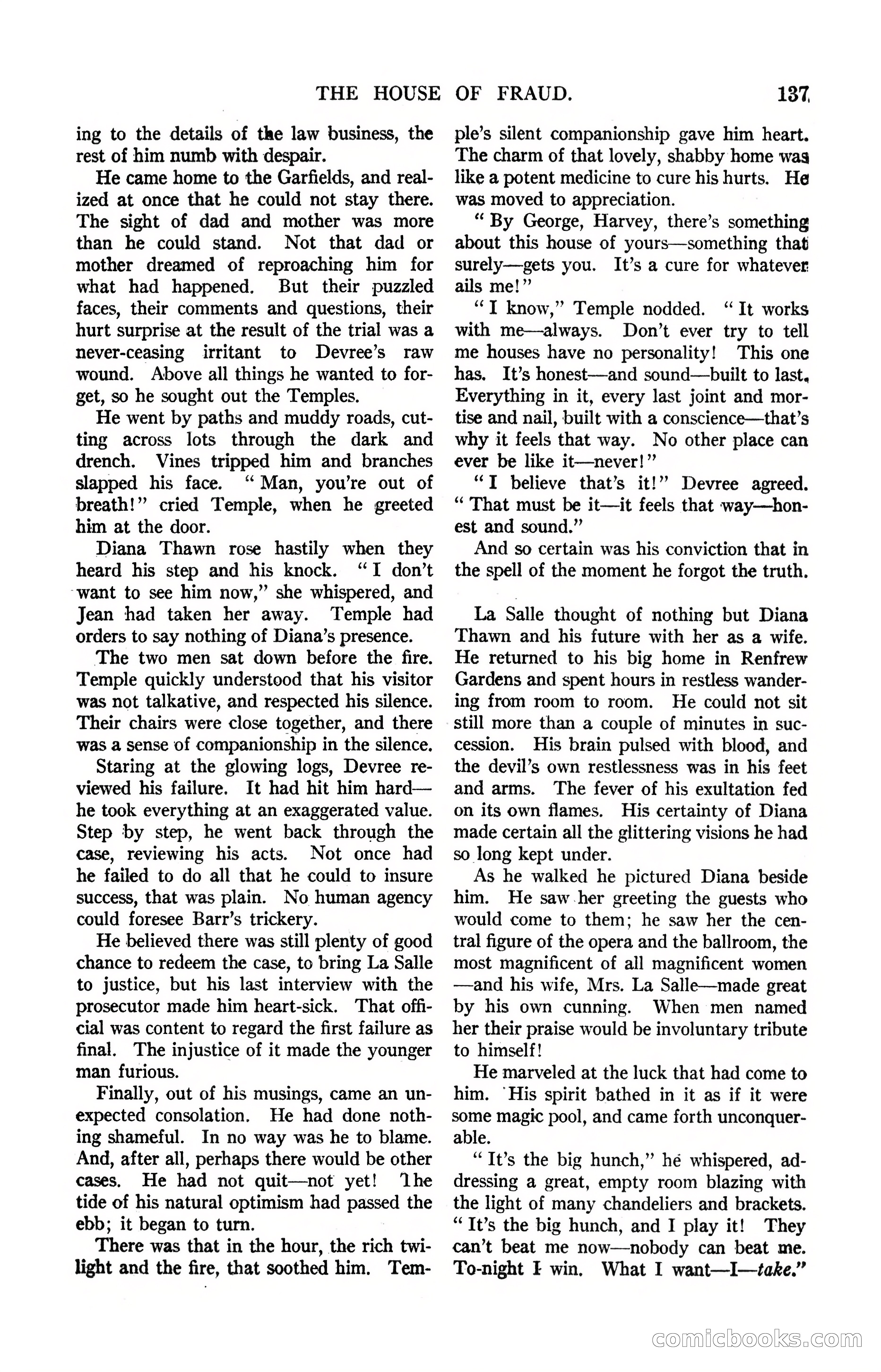
A restored page from Pulp Fiction, 1920. Page through the whole issue in the reader above.
📄 Transcribed text from this page (OCR, searchable)
Machine-transcribed from the original scan — historical spelling and the odd misread are preserved.
THE HOUSE ing to the details of the law business, the rest of him numb with despair. He came home to the Garfields, and real- ized at once that he could not stay there. The sight of dad and mother was more than he could stand. Not that dad or mother dreamed of reproaching him for what had happened. But their puzzled faces, their comments and questions, their hurt surprise at the result of the trial was a never-ceasing irritant to Devree’s raw wound. Above all things he wanted to for- get, so he sought out the Temples. He went by paths and muddy roads, cut- ting across lots through the dark and drench. Vines tripped him and branches slapped his face. ‘“ Man, you're out of breath!” cried Temple, when he greeted him at the door. Diana Thawn rose hastily when they heard his step and his knock. “I don’t “want to see him now,” she whispered, and Jean had taken her away. Temple had orders to say nothing of Diana’s presence. The two men sat down before the fire. Temple quickly understood that his visitor was not talkative, and respected his silence. Their chairs were close together, and there was a sense of companionship in the silence. Staring at the glowing logs, Devree re- viewed his failure. It had hit him hard— he took everything at an exaggerated value. Step by step, he went back through the case, reviewing his acts. Not once had he failed to do all that he could to insure success, that was plain. No human agency could foresee Barr’s trickery. He believed there was still plenty of good chance to redeem the case, to bring La Salle to justice, but his last interview with the prosecutor made him heart-sick. That offi- cial was content to regard the first failure as final. The injustice of it made the younger man furious. Finally, out of his musings, came an un- expected consolation. He had done noth- ing shameful. In no way was he to blame. And, after all, perhaps there would be other cases. He had not quit—not yet! ‘Lhe tide of his natural optimism had passea the ebb; it began to turn. There was that in the hour, the rich twi- light and the fire, that soothed him. Tem- OF FRAUD. 137, ple’s silent companionship gave him heart. The charm of that lovely, shabby home wag like a potent medicine to cure his hurts. He was moved to appreciation. “ By George, Harvey, there’s something about this house of yours—something that surely—gets you. It’s a cure for whatever ails me!” ‘““T know,” Temple nodded. “It works with me—always. Don’t ever try to tell me houses have no personality! This one has. It’s honest—and sound—built to last. Everything in it, every last joint and mor- tise and nail, built with a conscience—that’s why it feels that way. No other place can ever be like it—never!”’ “TI believe that’s it!” Devree agreed. “That must be it—it feels that way—hon- est and sound.” And so certain was his conviction that in the spell of the moment he forgot the truth. La Salle thought of nothing but Diana Thawn and his future with her as a wife. He returned to his big home in Renfrew Gardens and spent hours in restless wander- ing from room to room. He could not sit still more than a couple of minutes in suc- cession. His brain pulsed with blood, and the devil’s own restlessness was in his feet and arms. The fever of his exultation fed on its own flames. His certainty of Diana made certain all the glittering visions he had so long kept under. As he walked he pictured Diana beside him. He saw her greeting the guests who would come to them; he saw her the cen- tral figure of the opera and the ballroom, the most magnificent of all magnificent women —and his wife, Mrs. La Salle—made great by his own cunning. When men named her their praise would be involuntary tribute to himself! He marveled at the luck that had come to him. ‘His spirit bathed in it as if it were some magic pool, and came forth unconquer- able. ‘““Tt’s the big hunch,” hé whispered, ad- dressing a great, empty room blazing with the light of many chandeliers and brackets. “It’s the big hunch, and I play it! They can’t beat me now—nobody can beat me. To-night I win. What I want—I—take.” cComiclbooks.com