
Pulp Fiction, 1920 · page 108 of 180
Argosy, Vol. 118, No. 4 — page 108: what you’re looking at
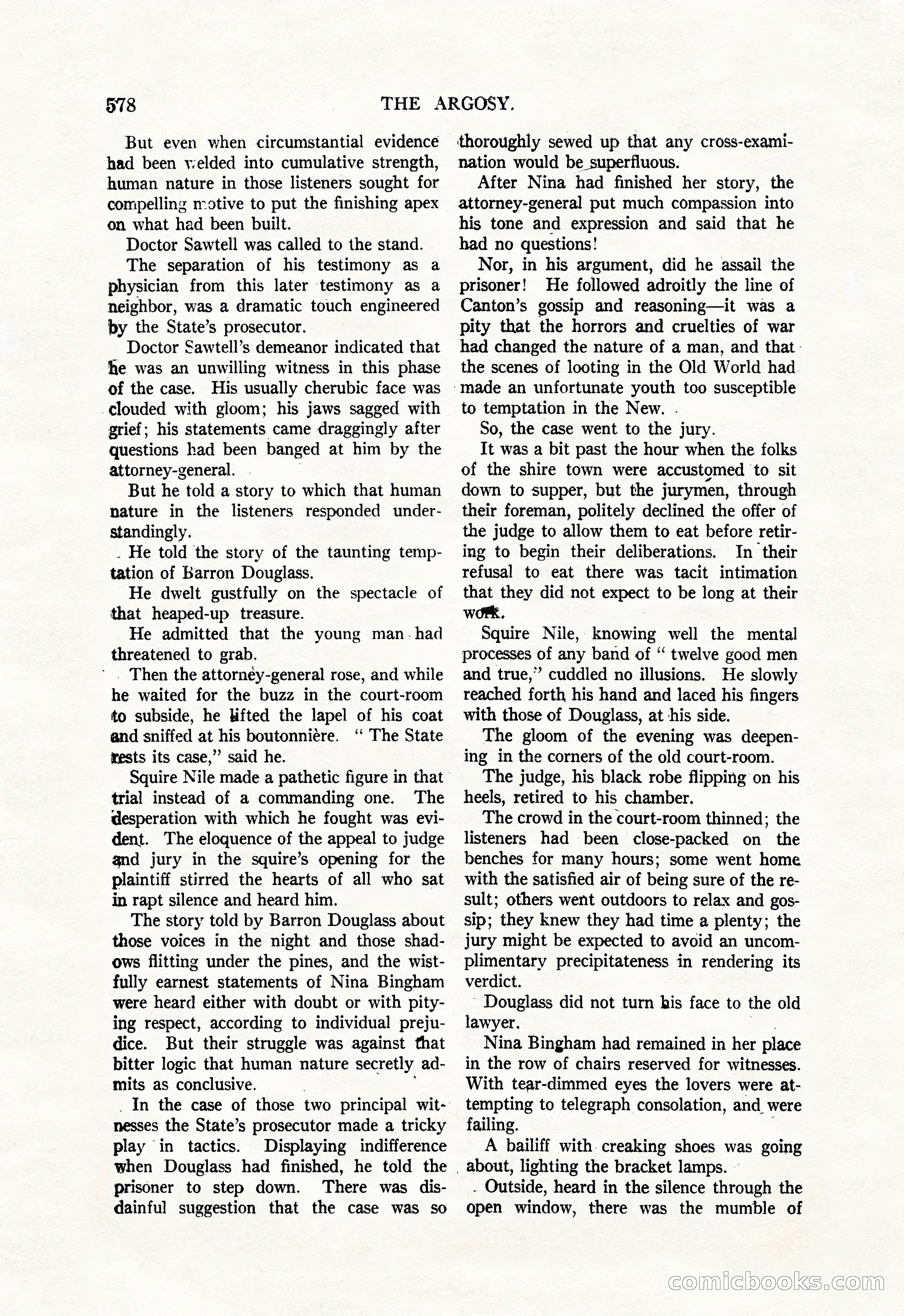
A restored page from Pulp Fiction, 1920. Page through the whole issue in the reader above.
📄 Transcribed text from this page (OCR, searchable)
Machine-transcribed from the original scan — historical spelling and the odd misread are preserved.
573 But even when circumstantial evidence had been velded into cumulative strength, human nature in those listeners sought for compelling motive to put the finishing apex on what had been built. Doctor Sawtell was called to the stand. The separation of his testimony as a physician from this later testimony as a neighbor, was a dramatic touch engineered by the State’s prosecutor. Doctor Sawtell’s demeanor indicated that fhe was an unwilling witness in this phase of the case. His usually cherubic face was Clouded with gloom; his jaws sagged with grief; his statements came draggingly after questions had been banged at him by the attorney-general. But he told a story to which that human nature in the listeners responded under- standingly. _ He told the story of the taunting temp- tation of Barron Douglass. He dwelt gustfully on the spectacle of that heaped-up treasure. He admitted that the young man. had threatened to grab. ' . Then the attorney-general rose, and while he waited for the buzz in the court-room to subside, he lifted the lapel of his coat and sniffed at his boutonniére. ‘‘ The State rests its case,” said he. Squire Nile made a pathetic figure in that trial instead of a commanding one. The desperation with which he fought was evi- dent. The eloquence of the appeal to judge and jury in the squire’s opening for the plaintiff stirred the hearts of all who sat in rapt silence and heard him. The story told by Barron Douglass about those voices in the night and those shad- ows flitting under the pines, and the wist- fully earnest statements of Nina Bingham were heard either with doubt or with pity- ing respect, according to individual preju- dice. But their struggle was against that bitter logic that human nature secretly ad- mits as conclusive. _ In the case of those two principal wit- nesses the State’s prosecutor made a tricky play in tactics. Displaying indifference when Douglass had finished, he told the prisoner to step down. There was dis- dainful suggestion that the case was so THE ARGOSY. thoroughly sewed up that any cross-exami- nation would be superfluous. After Nina had finished her story, the attorney-general put much compassion into his tone and expression and said that he had no questions! Nor, in his argument, did he assail the prisoner! He followed adroitly the line of Canton’s gossip and reasoning—it was a pity that the horrors and cruelties of war had changed the nature of a man, and that - the scenes of looting in the Old World had. ‘made an unfortunate youth too susceptible to temptation in the New. . So, the case went to the jury. It was a bit past the hour when the folks of the shire town were accustomed to sit down to supper, but the jurymen, through their foreman, politely declined the offer of the judge to allow them to eat before retir- ing to begin their deliberations. In their refusal to eat there was tacit intimation that they did not ee to be long at their work, Squire Nile, knowing well the mental processes of any band of ‘“‘ twelve good men and true,” cuddled no illusions. He slowly reached forth his hand and laced his fingers with those of Douglass, at his side. The gloom of the evening was deepen- ing in the corners of the old court-room. The judge, his black robe flipping on his heels, retired to his chamber. The crowd in the court-room thinned; the listeners had been close-packed on the benches for many hours; some went home with the satisfied air of being sure of the re- sult; others went outdoors to relax and gos- sip; they knew they had time a plenty; the jury might be expected to avoid an uncom- plimentary precipitateness in rendering its verdict. ’ Douglass did not turn his face to the old lawyer. Nina Bingham had remained in her place in the row of chairs reserved for witnesses. With tear-dimmed eyes the lovers were at- tempting to telegraph consolation, and. were failing. A bailiff with. creaking shoes was going _ about, lighting the bracket lamps. ~ - Outside, heard in the silence through the open window, there was the mumble of cConmnicloool.