
Pulp Fiction, 1909 · page 45 of 227
The Argosy for May — page 45: what you’re looking at
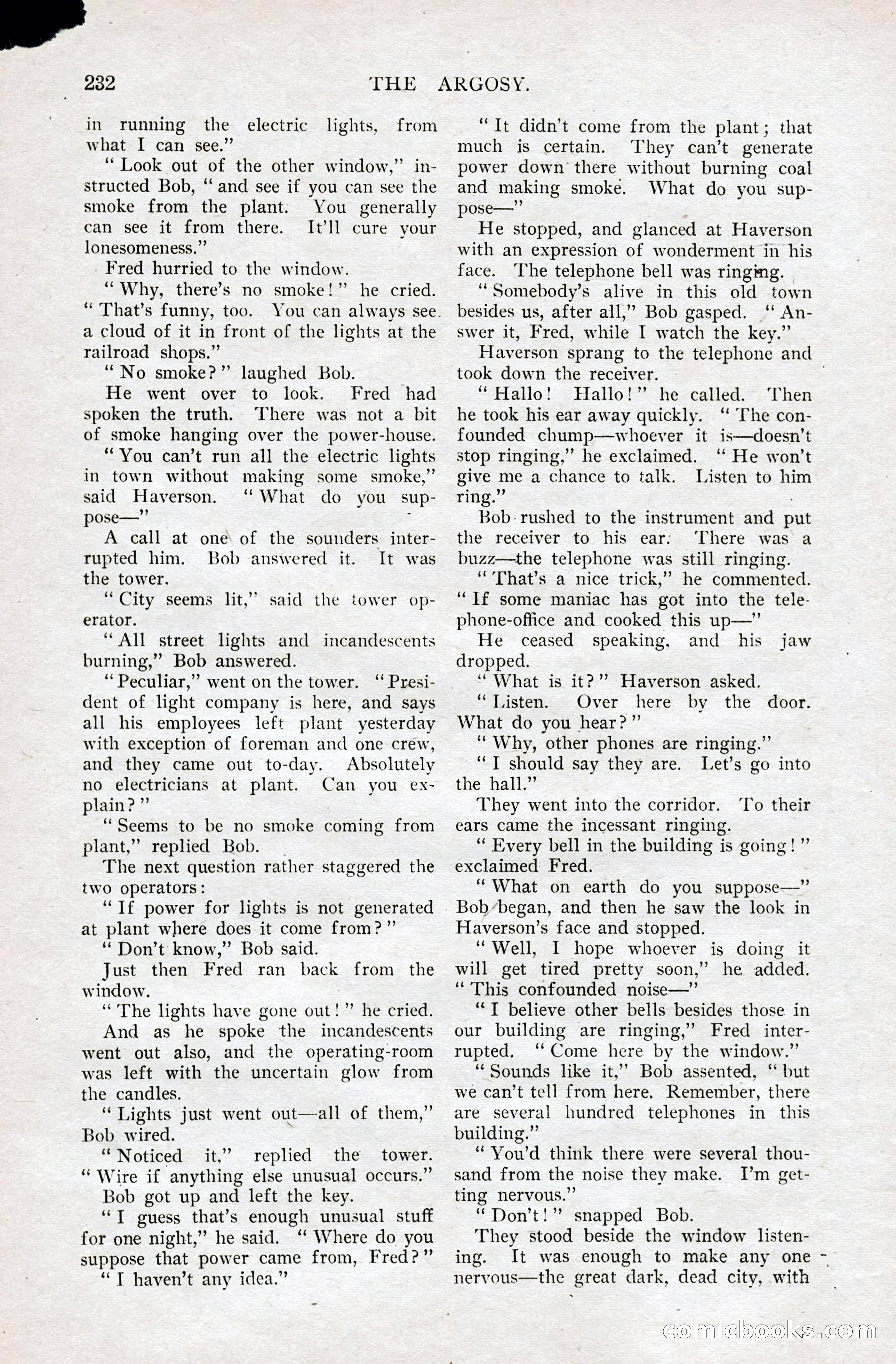
A restored page from Pulp Fiction, 1909. Page through the whole issue in the reader above.
📄 Transcribed text from this page (OCR, searchable)
Machine-transcribed from the original scan — historical spelling and the odd misread are preserved.
232 in running the electric from what I can see.” ‘Look out of the other window,” in- structed Bob, “and see if you can see the smoke from the plant. You generally can see it from there. It'll cure your lonesomeness.” _Fred hurried to the window. “Why, there’s no smoke!” he cried. “That’s funny, too. a cloud of it in front of the lights at the railroad shops.” “No smoke?” laughed Bob. He went over to look. Fred had spoken the truth. There was not a bit of smoke hanging over the power-house. “You can’t run all the electric lights in town without making some smoke,” said Haverson. ‘What do you sup- A call at one of the sounders inter- rupted him. Bob answered it. It was the tower. “ City seems lit,” said the tower op- erator. “ All street lights and incandescents burning,” Bob answered. “Peculiar,” went on the tower. ‘‘ Presi- dent of light company is here, and says all his employees left plant yesterday with exception of foreman and one crew, and they came out to-day. Absolutely no electricians at plant. Can you ex- plain?” ‘Seems to be no smoke coming from plant,” replied Bob. The next question rather staggered the two operators: ‘If power for lights is not generated at plant where does it come from?” “Don’t know,” Bob said. Just then Fred ran back from the window. “The lights have gone out!” he cried. And as he spoke the incandescents went out also, and the operating-room was left with the uncertain glow from the candles. ‘Lights just went out—all of them,” Bob wired. “Noticed it,” replied the tower. “Wire if anything else unusual occurs.” Bob got up and left the key. “T guess that’s enough unusual stuff for one night,” he said. ‘‘ Where do you suppose that power came from, Fred?” ““T haven’t any idea.” lights, b] You can always see. THE ARGOSY. “It didn’t come from the plant; that much is certain. They can’t generate power down there without burning coal and making smoke. What do you sup- pose—” | He stopped, and glanced at Haverson with an expression of wonderment in his face. ‘The telephone bell was ringing. ‘“Somebody’s alive in this old town besides us, after all,” Bob gasped. ‘‘ An- swer it, Fred, while I watch the key.” Haverson sprang to the telephone and took down the receiver. “Hallo! Hallo!” he called. Then he took his ear away quickly. ‘“ The con- founded chump—whoever it is—doesn’t stop ringing,” he exclaimed. ‘‘ He won't give me a chance to talk. Listen to him ring.” Bob-rushed to the instrument and put the receiver to his ear: ‘There was a buzz—the telephone was still ringing. ‘That’s a nice trick,” he commented. “If some maniac has got into the tele- phone-office and cooked this up—’” He ceased speaking, and his jaw dropped. “What is it?” Haverson asked. “Listen. Over here by the door. What do you hear? ”’ ‘Why, other phones are ringing. “I should say they are. Let’s go into the hall.” They went into the corridor. ears came the incessant ringing. ‘“ Every bell in the building is going!” exclaimed Fred. “What on earth do you suppose Bob/’began, and then he saw the look in Haverson’s face and stopped. “Well, I hope whoever is doing it will get tired pretty soon,” he added. ‘This confounded noise—” ‘“T believe other bells besides those in our building are ringing,’ Fred inter- rupted. ‘Come here by the window.” ‘Sounds like it,’ Bob assented, ‘‘ but we can’t tell from here. Remember, there are several hundred telephones in this building.” “You'd think there were several thou- sand from the noise they make. I’m get- ting nervous.” “Don’t!” snapped Bob. They stood beside the window listen- ing. nervous—the great dark, dead city, with 2) To their ) Cc S It was enough to make any one - (C@ COMIGCLOO©