
Pulp Fiction, 1955 · page 32 of 146
Argosy: The Short Story Magazine — page 32: what you’re looking at
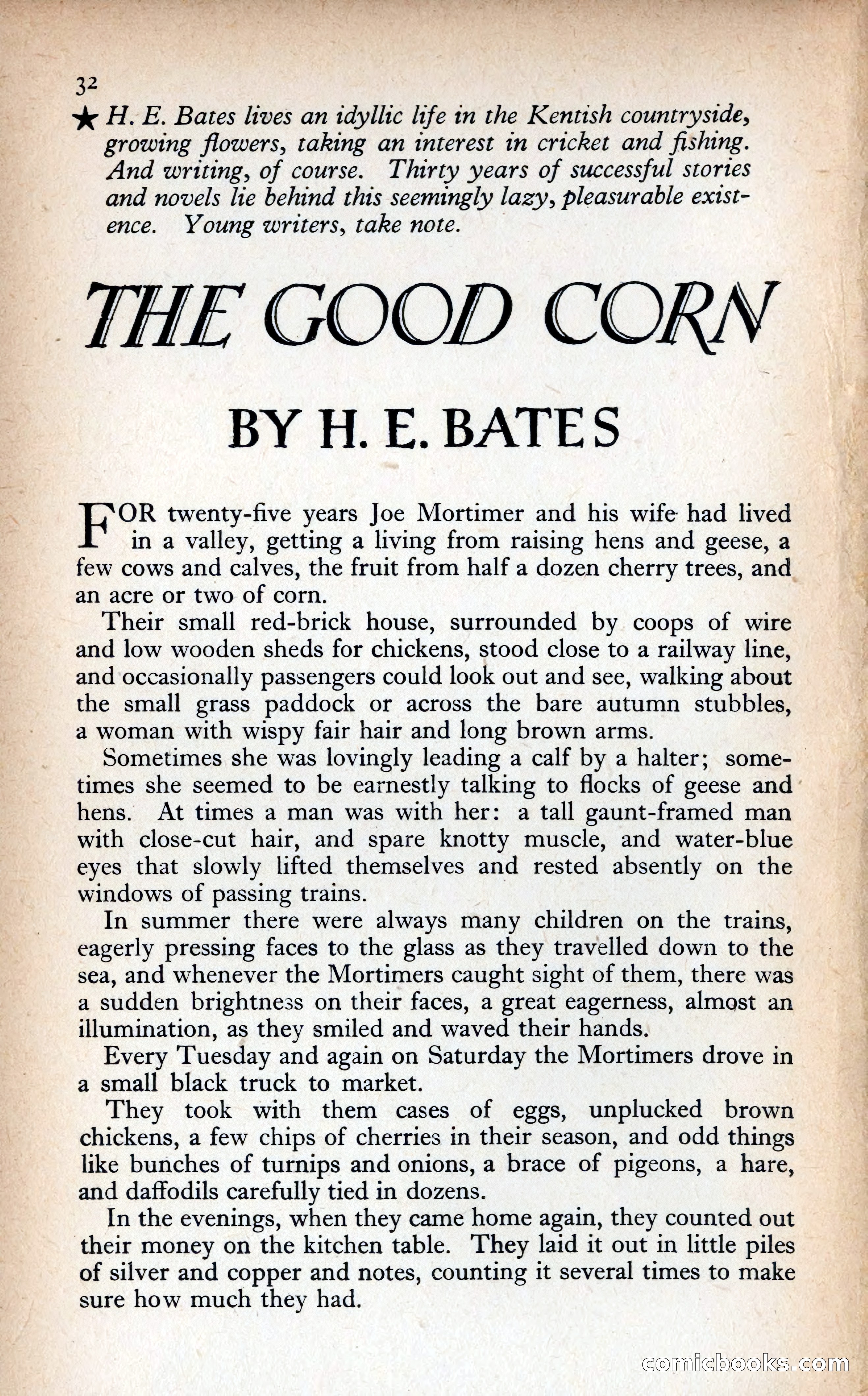
A restored page from Pulp Fiction, 1955. Page through the whole issue in the reader above.
📄 Transcribed text from this page (OCR, searchable)
Machine-transcribed from the original scan — historical spelling and the odd misread are preserved.
oe gee : “— FP |. oS te - - % Se. TSUN at ee to ee TEAS ae a on Cee ena | te Fe ee ae ’ : . ~ ng . ‘2 * H.E. Bates lives an idyllic life in the Kentish countryside, growing flowers, taking an interest in cricket and fishing. And writing, of course. Thirty years of successful stortes and novels lie behind this seemingly lazy, pleasurable exist- ence. Young writers, take note. THE GOOD CORN BY H. E. BATES OR twenty-five years Joe Mortimer and his wife had lived in a valley, getting a living from raising hens and geese, a few cows and calves, the fruit from half a dozen cherry trees, and ; an acre or two of corn. : Their small red-brick house, surrounded by coops of wire and low wooden sheds for chickens, stood close to a railway line, and occasionally passengers could look out and see, walking about the small grass paddock or across the bare autumn stubbles, a woman with wispy fair hair and long brown arms. Sometimes she was lovingly leading a calf by a halter; some-- times she seemed to be earnestly talking to flocks of geese and hens. At times a man was with her: a tall gaunt-framed man with close-cut hair, and spare knotty muscle, and water-blue eyes that slowly lifted themselves and rested absently on the windows of passing trains. In summer there were always many children on the trains, eagerly pressing faces to the glass as they travelled down to the sea, and whenever the Mortimers caught sight of them, there was a sudden brightness on their faces, a great eagerness, almost an illumination, as they smiled and waved their hands. Every Tuesday and again on Saturday the Mortimers drove in a small black truck to market. They took with them cases of eggs, unplucked brown chickens, a few chips of cherries in their season, and odd things like bunches of turnips and onions, a brace of pigeons, a hare, and daffodils carefully tied in dozens. In the evenings, when they came home again, they counted out their money on the kitchen table. They laid it out in little piles of silver and copper and notes, counting it several times to make sure how much they had. comiclooks.comn -