
Pulp Fiction, 1865 · page 343 of 399
The Argosy — page 343: what you’re looking at
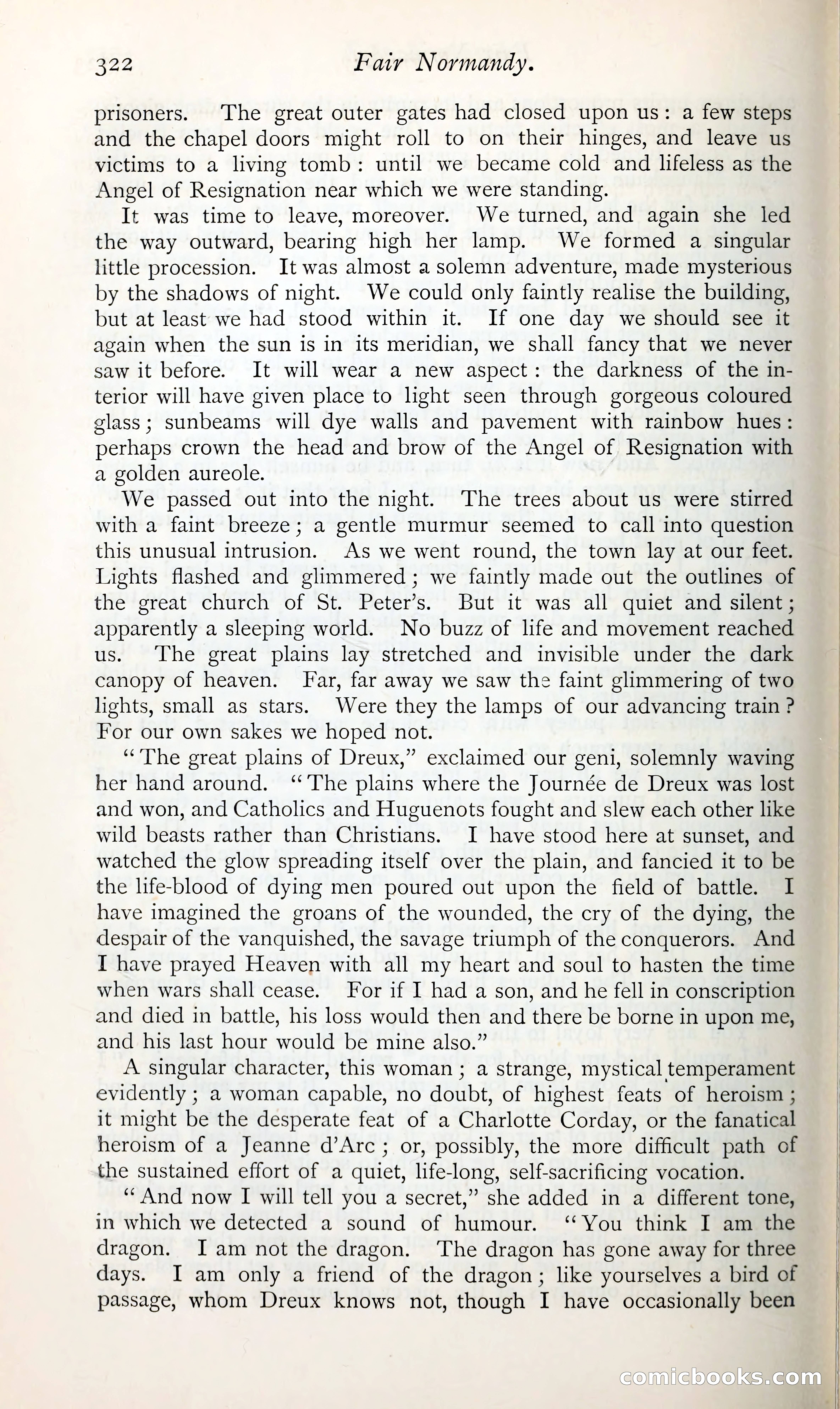
A restored page from Pulp Fiction, 1865. Page through the whole issue in the reader above.
📄 Transcribed text from this page (OCR, searchable)
Machine-transcribed from the original scan — historical spelling and the odd misread are preserved.
322 Far Normandy. prisoners. The great outer gates had closed upon us: a few steps and the chapel doors might roll to on their hinges, and leave us victims to a living tomb: until we became cold and lifeless as the Angel of Resignation near which we were standing. It was time to leave, moreover. We turned, and again she led the way outward, bearing high her lamp. We formed a singular little procession. It was almost a solemn adventure, made mysterious by the shadows of night. We could only faintly realise the building, but at least we had stood within it. If one day we should see it again when the sun is in its meridian, we shall fancy that we never saw it before. It will wear a new aspect: the darkness of the in- terior will have given place to light seen through gorgeous coloured glass; sunbeams will dye walls and pavement with rainbow hues: perhaps crown the head and brow of the Angel of Resignation with a golden aureole. We passed out into the night. The trees about us were stirred with a faint breeze; a gentle murmur seemed to call into question this unusual intrusion. As we went round, the town lay at our feet. Lights flashed and glimmered; we faintly made out the outlines of the great church of St. Peter’s. But it was all quiet and silent; apparently a sleeping world. No buzz of life and movement reached us. The great plains lay stretched and invisible under the dark canopy of heaven. Far, far away we saw the faint glimmering of two hghts, small as stars. Were they the lamps of our advancing train ? For our own sakes we hoped not. “The great plains of Dreux,” exclaimed our geni, solemnly waving her hand around. ‘The plains where the Journée de Dreux was lost and won, and Catholics and Huguenots fought and slew each other like wild beasts rather than Christians. I have stood here at sunset, and watched the glow spreading itself over the plain, and fancied it to be the lfe-blood of dying men poured out upon the field of battle. I have imagined the groans of the wounded, the cry of the dying, the despair of the vanquished, the savage triumph of the conquerors. And I have prayed Heaven with all my heart and soul to hasten the time when wars shall cease. For if I had a son, and he fell in conscription and died in battle, his loss would then and there be borne in upon me, and his last hour would be mine also.” A singular character, this woman ; a strange, mystical temperament evidently ; a woman capable, no doubt, of highest feats of heroism ; it might be the desperate feat of a Charlotte Corday, or the fanatical heroism of a Jeanne d’Arc ; or, possibly, the more difficult path of the sustained effort of a quiet, life-long, self-sacrificing vocation. ‘““And now I will tell you a secret,” she added in a different tone, in which we detected a sound of humour. ‘‘ You think I am the dragon. Jam not the dragon. The dragon has gone away for three days. JI am only a friend of the dragon; like yourselves a bird of passage, whom Dreux knows not, though I have occasionally been Gomicbooks.co