
Pulp Fiction, 1865 · page 342 of 399
The Argosy — page 342: what you’re looking at
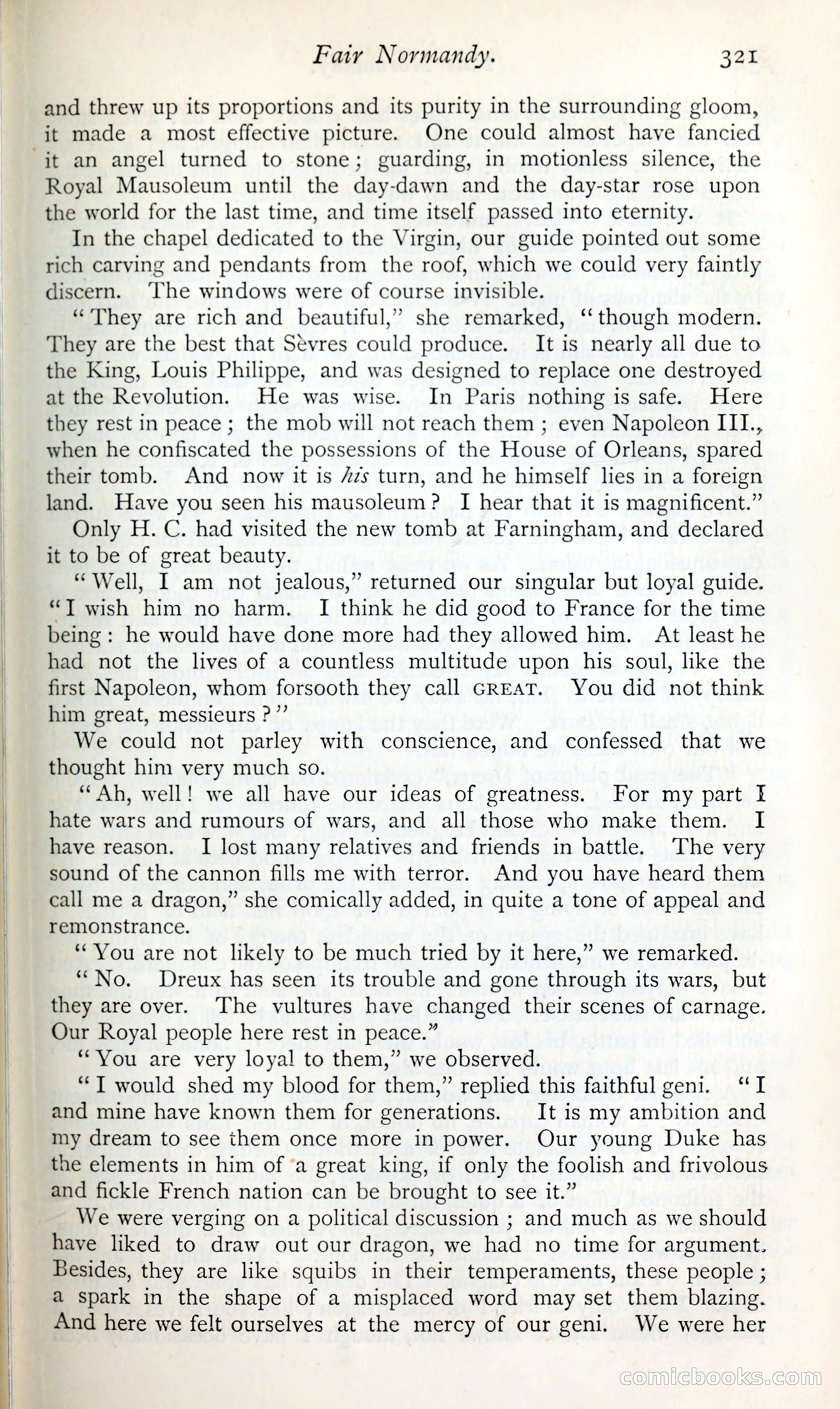
A restored page from Pulp Fiction, 1865. Page through the whole issue in the reader above.
📄 Transcribed text from this page (OCR, searchable)
Machine-transcribed from the original scan — historical spelling and the odd misread are preserved.
Far Normandy. 321 and threw up its proportions and its purity in the surrounding gloom, it made a most effective picture. One could almost have fancied it an angel turned to stone; guarding, in motionless silence, the Royal Mausoleum until the day-dawn and the day-star rose upon the world for the last time, and time itself passed into eternity. In the chapel dedicated to the Virgin, our guide pointed out some rich carving and pendants from the roof, which we could very faintly discern. ‘The windows were of course invisible. “They are rich and beautiful,’ she remarked, ‘though modern. They are the best that Sevres could produce. It is nearly all due to the King, Louis Philippe, and was designed to replace one destroyed at the Revolution. He was wise. In Paris nothing 1s safe. Here they rest in peace; the mob will not reach them ; even Napoleon III., when he confiscated the possessions of the House of Orleans, spared their tomb. And now it is zs turn, and he himself lies in a foreign land. Have you seen his mausoleum? [I hear that it is magnificent.” Only H. C. had visited the new tomb at Farningham, and declared it to be of great beauty. “Well, I am not jealous,” returned our singular but loyal guide. “YT wish him no harm. I think he did good to France for the time being: he would have done more had they allowed him. At least he had not the lives of a countless multitude upon his soul, like the first Napoleon, whom forsooth they call GREAT. You did not think him great, messieurs ?”’ We could not parley with conscience, and confessed that we thought him very much so. “Ah, well! we all have our ideas of greatness. For my part | hate wars and rumours of wars, and all those who make them. I have reason. I lost many relatives and friends in battle. ‘The very sound of the cannon fills me with terror. And you have heard them call me a dragon,” she comically added, in quite a tone of appeal and remonstrance. “You are not likely to be much tried by it here,” we remarked. ““No. Dreux has seen its trouble and gone through its wars, but they are over. The vultures have changed their scenes of carnage. Our Royal people here rest in peace.” ‘You are very loyal to them,” we observed. “TY would shed my blood for them,” replied this faithful geni. “I and mine have known them for generations. It is my ambition and my dream to see them once more in power. Our young Duke has the elements in him of ‘a great king, if only the foolish and frivolous and fickle French nation can be brought to see it.” We were verging on a political discussion ; and much as we should have liked to draw out our dragon, we had no time for argument. Besides, they are like squibs in their temperaments, these people ; a spark in the shape of a misplaced word may set them blazing. And here we felt ourselves at the mercy of our geni. We were her GoOmiilGaooks (CO) am