
Pulp Fiction, 1865 · page 257 of 399
The Argosy — page 257: what you’re looking at
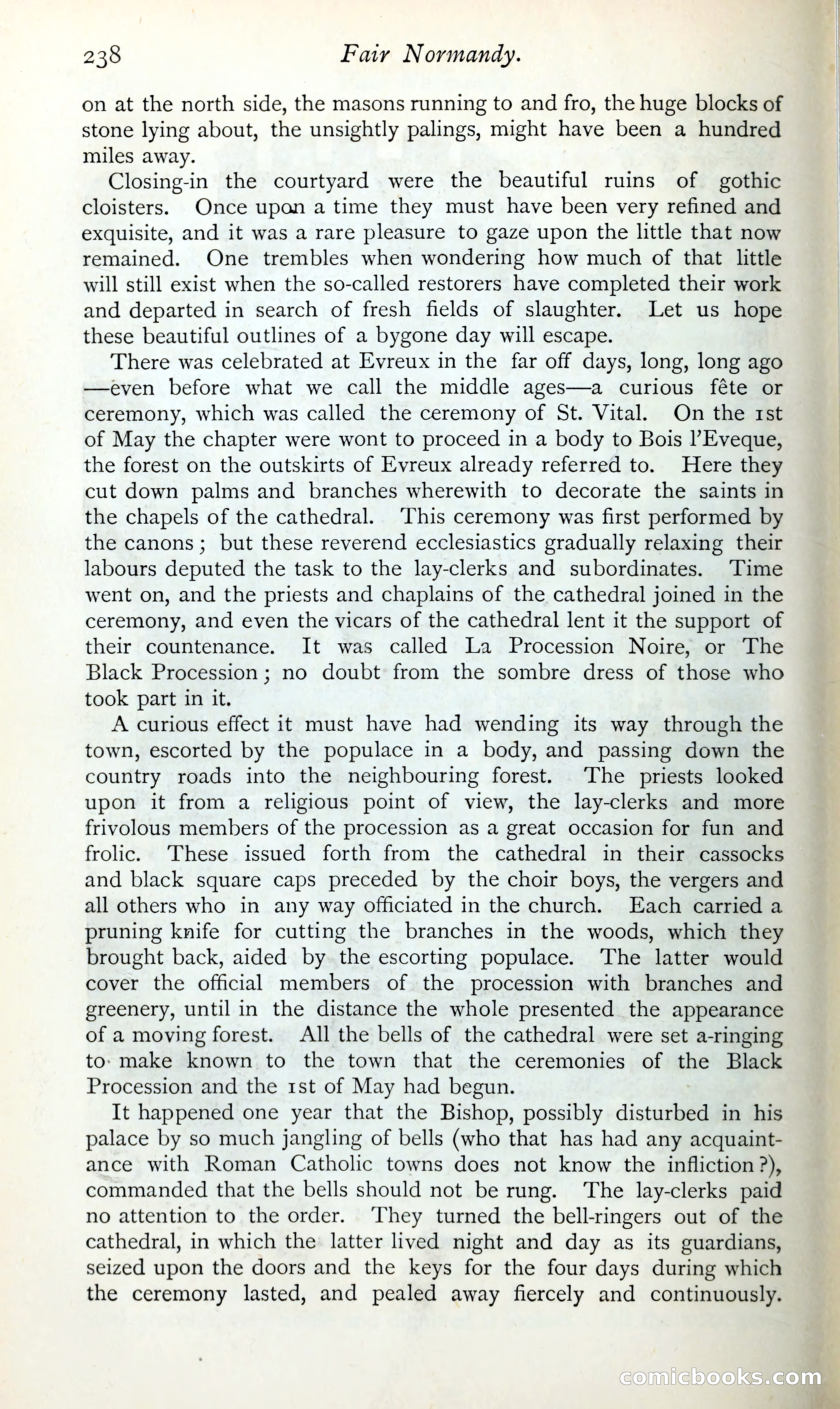
A restored page from Pulp Fiction, 1865. Page through the whole issue in the reader above.
📄 Transcribed text from this page (OCR, searchable)
Machine-transcribed from the original scan — historical spelling and the odd misread are preserved.
238 Far Normandy. on at the north side, the masons running to and fro, the huge blocks of stone lying about, the unsightly palings, might have been a hundred miles away. Closing-in the courtyard were the beautiful ruins of gothic cloisters. Once upan a time they must have been very refined and exquisite, and it was a rare pleasure to gaze upon the little that now remained. One trembles when wondering how much of that little will still exist when the so-called restorers have completed their work and departed in search of fresh fields of slaughter. Let us hope these beautiful outlines of a bygone day will escape. There was celebrated at Evreux in the far off days, long, long ago —even before what we call the middle ages—a curious féte or ceremony, which was called the ceremony of St. Vital. On the rst of May the chapter were wont to proceed in a body to Bois l’Eveque, the forest on the outskirts of Evreux already referred to. Here they cut down palms and branches wherewith to decorate the saints in the chapels of the cathedral. ‘This ceremony was first performed by the canons; but these reverend ecclesiastics gradually relaxing their labours deputed the task to the lay-clerks and subordinates. ‘Time went on, and the priests and chaplains of the cathedral joined in the ceremony, and even the vicars of the cathedral lent it the support of their countenance. It was called La Procession Noire, or The Black Procession; no doubt from the sombre dress of those who took part in it. A curious effect it must have had wending its way through the town, escorted by the populace in a body, and passing down the country roads into the neighbouring forest. The priests looked upon it from a religious point of view, the lay-clerks and more frivolous members of the procession as a great occasion for fun and frolic. ‘These issued forth from the cathedral in their cassocks and black square caps preceded by the choir boys, the vergers and all others who in any way officiated in the church. Each carried a pruning knife for cutting the branches in the woods, which they brought back, aided by the escorting populace. The latter would cover the official members of the procession with branches and greenery, until in the distance the whole presented the appearance of a moving forest. All the bells of the cathedral were set a-ringing to: make known to the town that the ceremonies of the Black Procession and the 1st of May had begun. It happened one year that the Bishop, possibly disturbed in his palace by so much jangling of bells (who that has had any acquaint- ance with Roman Catholic towns does not know the infliction ?), commanded that the bells should not be rung. The lay-clerks paid no attention to the order. ‘They turned the bell-ringers out of the cathedral, in which the latter hved night and day as its guardians, seized upon the doors and the keys for the four days during which the ceremony lasted, and pealed away fiercely and continuously. Gomicbooks.co