
Pulp Fiction, 1865 · page 214 of 399
The Argosy — page 214: what you’re looking at
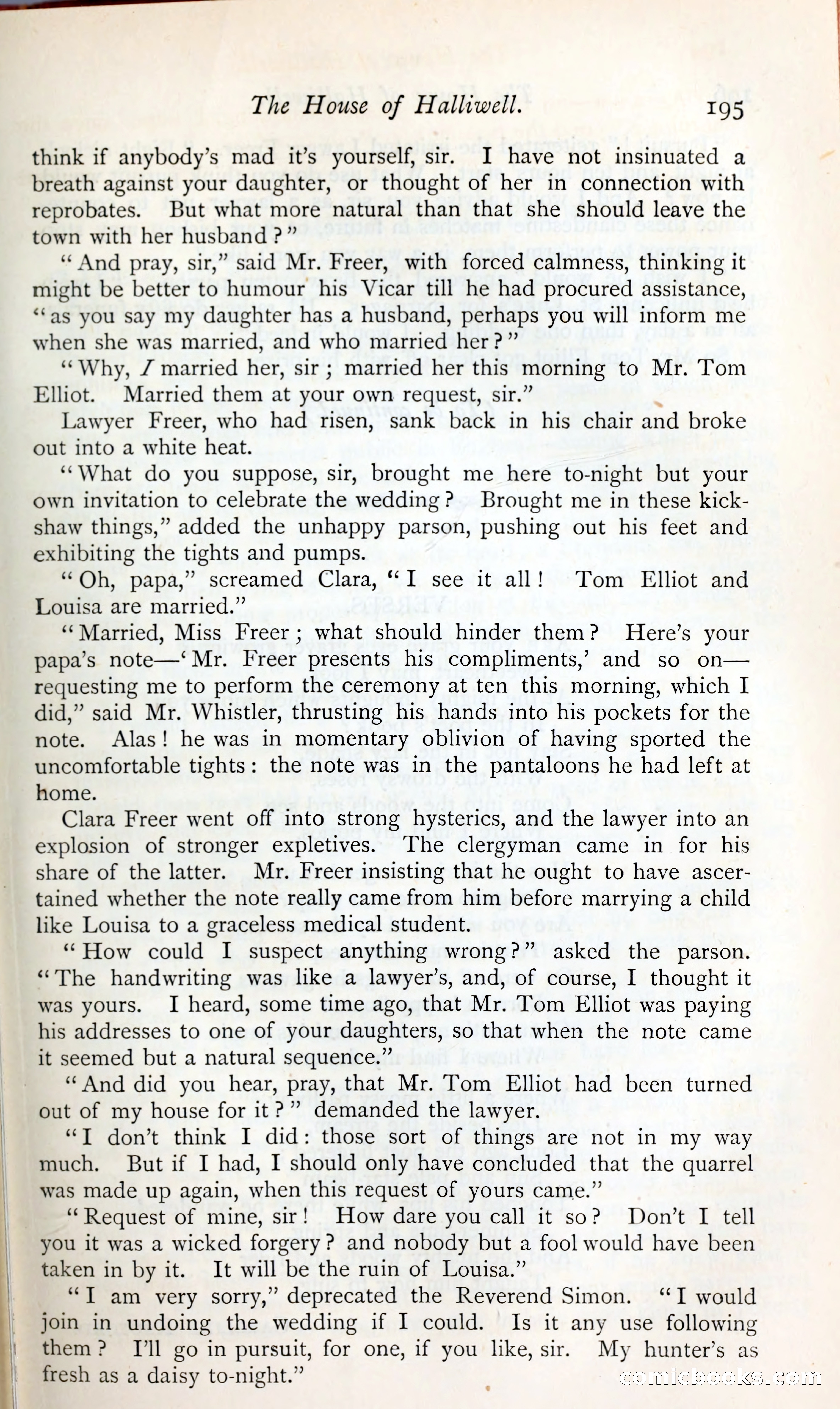
A restored page from Pulp Fiction, 1865. Page through the whole issue in the reader above.
📄 Transcribed text from this page (OCR, searchable)
Machine-transcribed from the original scan — historical spelling and the odd misread are preserved.
The House of Halliwell. 195 think if anybody’s mad it’s yourself, sir. I have not insinuated a breath against your daughter, or thought of her in connection with reprobates. But what more natural than that she should leave the town with her husband ?” ‘“‘ And pray, sir,” said Mr. Freer, with forced calmness, thinking it might be better to humour his Vicar till he had procured assistance, ‘fas you say my daughter has a husband, perhaps you will inform me when she was married, and who married her ?” ‘“Why, Z married her, sir ; married her this morning to Mr. Tom Elliot. Married them at your own request, sir.” : Lawyer Freer, who had risen, sank back in his chair and broke out into a white heat. ‘“What do you suppose, sir, brought me here to-night but your own invitation to celebrate the wedding? Brought me in these kick- shaw things,” added the unhappy parson, pushing out his feet and exhibiting the tights and pumps. mam, papa,” screamed Clara, “I see it all! -Tom Elliot and Louisa are married.” ‘Married, Miss Freer ; what should hinder them? Here’s your papa’s note—‘ Mr. Freer presents his compliments,’ and so on— requesting me to perform the ceremony at ten this morning, which I did,” said Mr. Whistler, thrusting his hands into his pockets for the note. Alas! he was in momentary oblivion of having sported the uncomfortable tights: the note was in the pantaloons he had left at home. Clara Freer went off into strong hysterics, and the lawyer into an explosion of stronger expletives. The clergyman came in for his share of the latter. Mr. Freer insisting that he ought to have ascer- tained whether the note really came from him before marrying a child like Louisa to a graceless medical student. “ How could I suspect anything wrong?” asked the parson. “The handwriting was like a lawyer’s, and, of course, I thought it was yours. I heard, some time ago, that Mr. Tom Elhot was paying his addresses to one of your daughters, so that when the note came it seemed but a natural sequence.” “And did you hear, pray, that Mr. Tom Elliot had been turned out of my house for it ?” demanded the lawyer. “T don’t think I did: those sort of things are not in my way much. But if I had, I should only have concluded that the quarrel was made up again, when this request of yours came.” ‘Request of mine, sir! How dare you call it so? Don’t I tell you it was a wicked forgery ? and nobody but a fool would have been taken in by it. It will be the ruin of Louisa.” “I am very sorry,” deprecated the Reverend Simon. ‘“TI would join in undoing the wedding if I could. Is it any use following them? I'll go in pursuit, for one, if you like, sir. My hunter’s as fresh as a daisy to-night.” COMmlcelDOOkKS im