
Pulp Fiction, 1865 · page 213 of 399
The Argosy — page 213: what you’re looking at
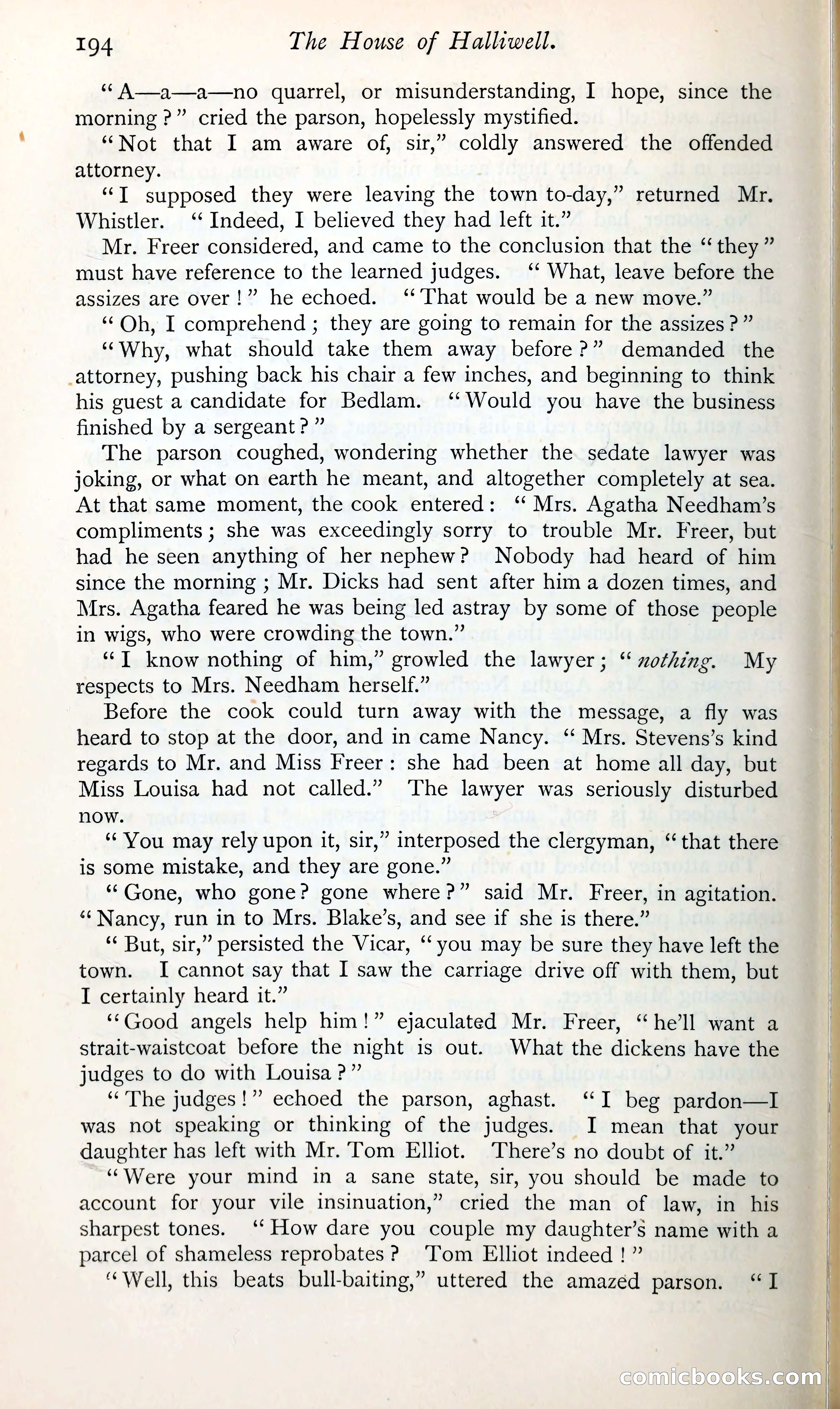
A restored page from Pulp Fiction, 1865. Page through the whole issue in the reader above.
📄 Transcribed text from this page (OCR, searchable)
Machine-transcribed from the original scan — historical spelling and the odd misread are preserved.
194 The House of Halliwell. ‘¢ A—-a—a—no quarrel, or misunderstanding, I hope, since the morning ?” cried the parson, hopelessly mystified. “Not that I am aware of, sir,” coldly answered the offended attorney. “T supposed they were leaving the town to-day,” returned Mr. Whistler. ‘* Indeed, I believed they had left it.” Mr. Freer considered, and came to the conclusion that the “they ” must have reference to the learned judges. ‘‘ What, leave before the assizes are over!” he echoed. ‘“ That would be a new move.” ‘‘Oh, I comprehend ; they are going to remain for the assizes ?” | ‘Why, what should take them away before?” demanded the | attorney, pushing back his chair a few inches, and beginning to think his guest a candidate for Bedlam. ‘‘ Would you have the business finished by a sergeant ? ” The parson coughed, wondering whether the sedate lawyer was joking, or what on earth he meant, and altogether completely at sea. At that same moment, the cook entered: ‘‘ Mrs. Agatha Needham’s | compliments ; she was exceedingly sorry to trouble Mr. Freer, but ! had he seen anything of her nephew? Nobody had heard of him since the morning ; Mr. Dicks had sent after him a dozen times, and Mrs. Agatha feared he was being led astray by some of those people in wigs, who were crowding the town.” “TI know nothing of him,” growled the lawyer; “ zothing. My respects to Mrs. Needham herself.” | Before the cook could turn away with the message, a fly was | heard to stop at the door, and in came Nancy. “ Mrs. Stevens’s kind I regards to Mr. and Miss Freer: she had been at home all day, but Miss Louisa had not called.” ‘The lawyer was seriously disturbed now. ‘You may rely upon it, sir,” interposed the clergyman, “that there is some mistake, and they are gone.” ‘Gone, who gone? gone where?” said Mr. Freer, in agitation. ‘Nancy, run in to Mrs. Blake’s, and see if she is there.” ‘* But, sir,” persisted the Vicar, ‘‘you may be sure they have left the town. I cannot say that I saw the carriage drive off with them, but I certainly heard it.” ‘Good angels help him!” ejaculated Mr. Freer, “he’ll want a Strait-waistcoat before the night is out. What the dickens have the judges to do with Louisa ?” “The judges!” echoed the parson, aghast. “I beg pardon—I was not speaking or thinking of the judges. I mean that your daughter has left with Mr. Tom Elliot. There’s no doubt of it.” ‘Were your mind in a sane state, sir, you should be made to account for your vile insinuation,” cried the man of law, in his sharpest tones. ‘‘ How dare you couple my daughter’s name with a parcel of shameless reprobates ? ‘Tom Elliot indeed ! ” ‘Well, this beats bull-baiting,” uttered the amazéd parson. “I | Eom (@) JOOKS- com)