
Pulp Fiction, 1865 · page 191 of 399
The Argosy — page 191: what you’re looking at
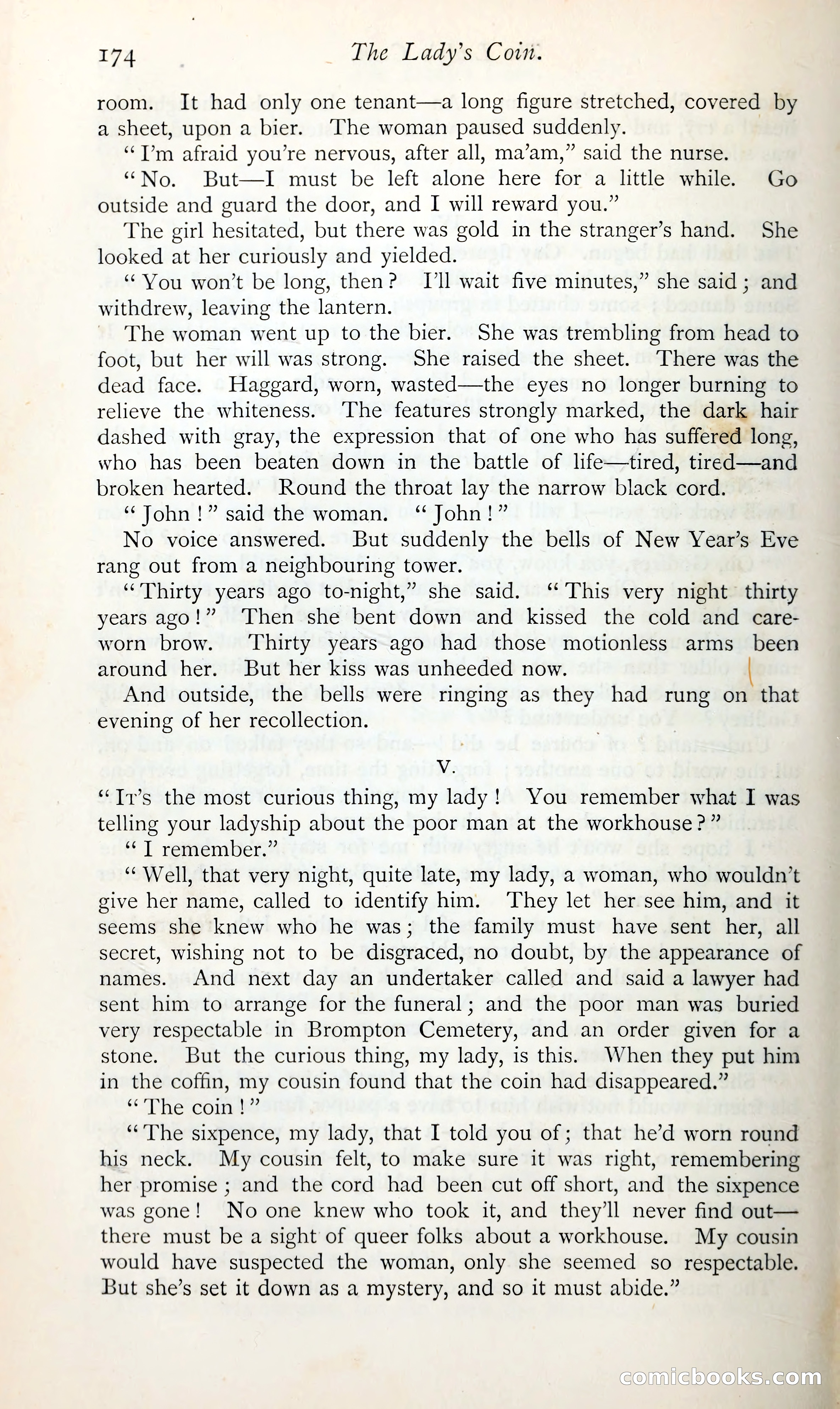
A restored page from Pulp Fiction, 1865. Page through the whole issue in the reader above.
📄 Transcribed text from this page (OCR, searchable)
Machine-transcribed from the original scan — historical spelling and the odd misread are preserved.
174 The Lady’s Cow. room. It had only one tenant—a long figure stretched, covered by a sheet, upon a bier. ‘The woman paused suddenly. “Tm afraid you’re nervous, after all, ma’am,” said the nurse. ‘No. But—I must be left alone here for a little while. Go outside and guard the door, and I will reward you.” The girl hesitated, but there was gold in the stranger’s hand. She looked at her curiously and yielded. “You won’t be long, then? I'l wait five minutes,” she said ; and withdrew, leaving the lantern. The woman went up to the bier. She was trembling from head to foot, but her will was strong. She raised the sheet. ‘There was the dead face. Haggard, worn, wasted—the eyes no longer burning to relieve the whiteness. ‘The features strongly marked, the dark hair dashed with gray, the expression that of one who has suffered long, who has been beaten down in the battle of life—tired, tired—and broken hearted. Round the throat lay the narrow black cord. “John!” said the woman. “ John!” No voice answered. But suddenly the bells of New Year’s Eve rang out from a neighbouring tower. ‘Thirty years ago to-night,” she said. ‘‘ This very night thirty years ago!” Then she bent down and kissed the cold and care- worn brow. Thirty years ago had those motionless arms been around her. But her kiss was unheeded now. And outside, the bells were ringing as they had rung on that evening of her recollection. Wi; “Tr’s the most curious thing, my lady! You remember what I was telling your ladyship about the poor man at the workhouse ?” ‘“T remember.” “Well, that very night, quite late, my lady, a woman, who wouldn’t give her name, called to identify him. They let her see him, and it seems she knew who he was; the family must have sent her, all secret, wishing not to be disgraced, no doubt, by the appearance of names. And next day an undertaker called and said a lawyer had sent him to arrange for the funeral; and the poor man was buried very respectable in Brompton Cemetery, and an order given for a stone. But the curious thing, my lady, is this. When they put him in the coffin, my cousin found that the coin had disappeared.” “The coma? “The sixpence, my lady, that I told you of; that he’d worn round his neck. My cousin felt, to make sure it was right, remembering her promise ; and the cord had been cut off short, and the sixpence was gone! No one knew who took it, and they’ll never find out— there must be a sight of queer folks about a workhouse. My cousin would have suspected the woman, only she seemed so respectable. But she’s set it down as a mystery, and so it must abide.” GEomichivooks.co m