
Pulp Fiction, 1865 · page 14 of 399
The Argosy — page 14: what you’re looking at
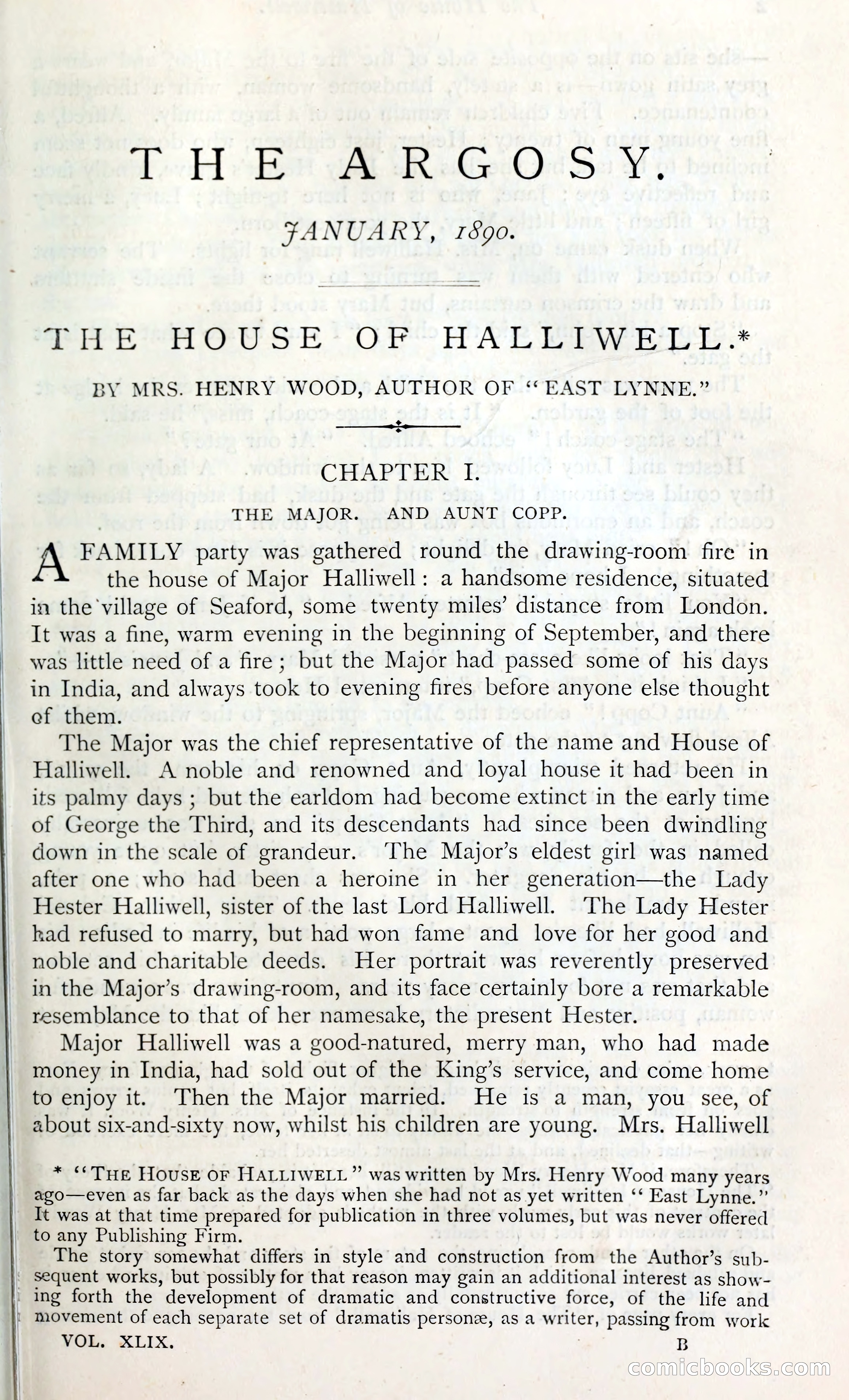
A restored page from Pulp Fiction, 1865. Page through the whole issue in the reader above.
📄 Transcribed text from this page (OCR, searchable)
Machine-transcribed from the original scan — historical spelling and the odd misread are preserved.
Re Tr eee Oe ¥ ¥ANUARY, 1800. = ——— THE HOUSE OF HALLIWELL.* BY MRS. HENRY WOOD, AUTHOR OF “EAST LYNNE.” a Sd CHAPTER I. THE MAJOR. AND AUNT COPP. FAMILY party was gathered round the drawing-room fire in the house of Major Halliwell: a handsome residence, situated in the village of Seaford, some twenty miles’ distance from London. It was a fine, warm evening in the beginning of September, and there was little need of a fire; but the Major had passed some of his days in India, and always took to evening fires before anyone else thought ef them. The Major was the chief representative of the name and House of Halliwell. A noble and renowned and loyal house it had been in its palmy days ; but the earldom had become extinct in the early time of George the Third, and its descendants had since been dwindling down in the scale of grandeur. ‘The Major’s eldest girl was named after one who had been a heroine in her generation—the Lady Hester Halliwell, sister of the last Lord Halliwell. The Lady Hester had refused to marry, but had won fame and love for her good and noble and charitable deeds. Her portrait was reverently preserved in the Major’s drawing-room, and its face certainly bore a remarkable resemblance to that of her namesake, the present Hester. Major Halliwell was a good-natured, merry man, who had made money in India, had sold out of the King’s service, and come home to enjoy it. Then the Major married. He is a man, you see, of about six-and-sixty now, whilst his children are young. Mrs. Halliwell * *“THE HOUSE OF HALLIWELL ” was written by Mrs. Henry Wood many years ago—even as far back as the days when she had not as yet written ‘‘ East Lynne.” It was at that time prepared for publication in three volumes, but was never offered _ to any Publishing Firm. The story somewhat differs in style and construction from the Author’s sub- | sequent works, but possibly for that reason may gain an additional interest as show- _ ing forth the development of dramatic and constructive force, of the life and | movement of each separate set of dramatis personze, as a writer, passing from work VOL. XLIX. | B ECORnnicloooks (C©)