
Pulp Fiction, 1865 · page 71 of 399
The Argosy — page 71: what you’re looking at
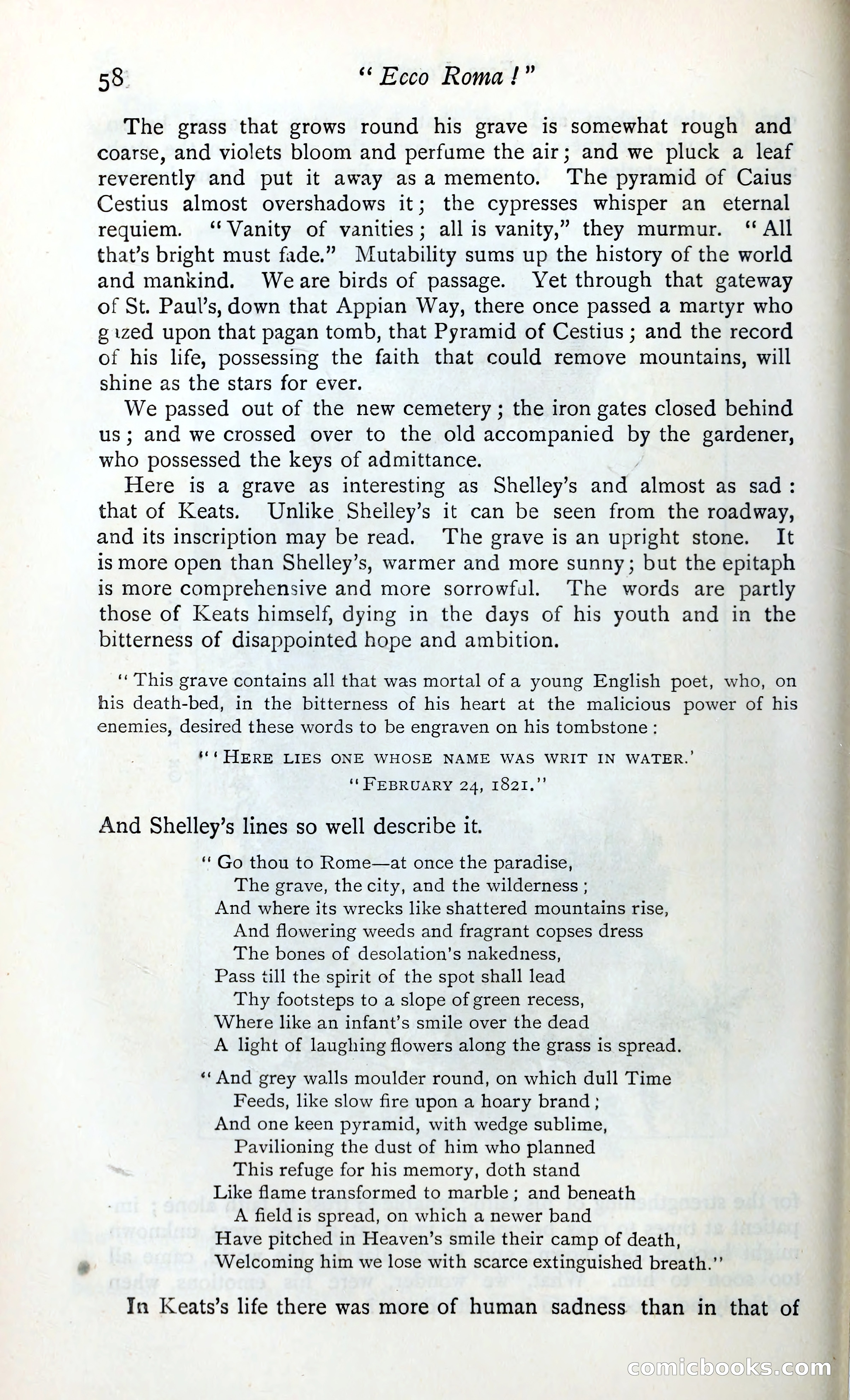
A restored page from Pulp Fiction, 1865. Page through the whole issue in the reader above.
📄 Transcribed text from this page (OCR, searchable)
Machine-transcribed from the original scan — historical spelling and the odd misread are preserved.
58 “ Ecco Roma!” The grass that grows round his grave is somewhat rough and coarse, and violets bloom and perfume the air; and we pluck a leaf reverently and put it away asa memento. The pyramid of Caius Cestius almost overshadows it; the cypresses whisper an eternal requiem. ‘' Vanity of vanities; all is vanity,” they murmur. “ All that’s bright must fade.” Mutability sums up the history of the world and mankind. Weare birds of passage. Yet through that gateway of St. Paul’s, down that Appian Way, there once passed a martyr who sized upon that pagan tomb, that Pyramid of Cestius ; and the record of his life, possessing the faith that could remove mountains, will shine as the stars for ever. We passed out of the new cemetery ; the iron gates closed behind us ; and we crossed over to the old accompanied by the gardener, who possessed the keys of admittance. Here is a grave as interesting as Shelley’s and almost as sad: that of Keats. Unlike Sheiley’s it can be seen from the roadway, and its inscription may be read. The grave is an upright stone. It is more open than Shelley’s, warmer and more sunny; but the epitaph is more comprehensive and more sorrowful. The words are partly those of Keats himself, dying in the days of his youth and in the bitterness of disappointed hope and ambition. ‘ 4q . | i § : ‘This grave contains all that was mortal of a young English poet, who, on his death-bed, in the bitterness of his heart at the malicious power of his enemies, desired these words to be engraven on his tombstone : ‘** FTERE LIES ONE WHOSE NAME WAS WRIT IN WATER.’ ‘‘ PEBRUARY 24, 1821,” And Shelley’s lines so well describe it. ‘Go thou to Rome—at once the paradise, The grave, the city, and the wilderness ; And where its wrecks like shattered mountains rise, And flowering weeds and fragrant copses dress The bones of desolation’s nakedness, Pass till the spirit of the spot shall lead Thy footsteps to a slope of green recess, Where like an infant’s smile over the dead A light of laughing flowers along the grass is spread. ‘*And grey walls moulder round, on which dull Time Feeds, like slow fire upon a hoary brand ; And one keen pyramid, with wedge sublime, Pavilioning the dust of him who planned This refuge for his memory, doth stand Like flame transformed to marble; and beneath A field is spread, on which a newer band Have pitched in Heaven’s smile their camp of death, Welcoming him we lose with scarce extinguished breath.’’ Ya Keats’s life there was more of human sadness than in that of CORNICE OO KS ACO (@)