
Pulp Fiction, 1865 · page 205 of 399
The Argosy — page 205: what you’re looking at
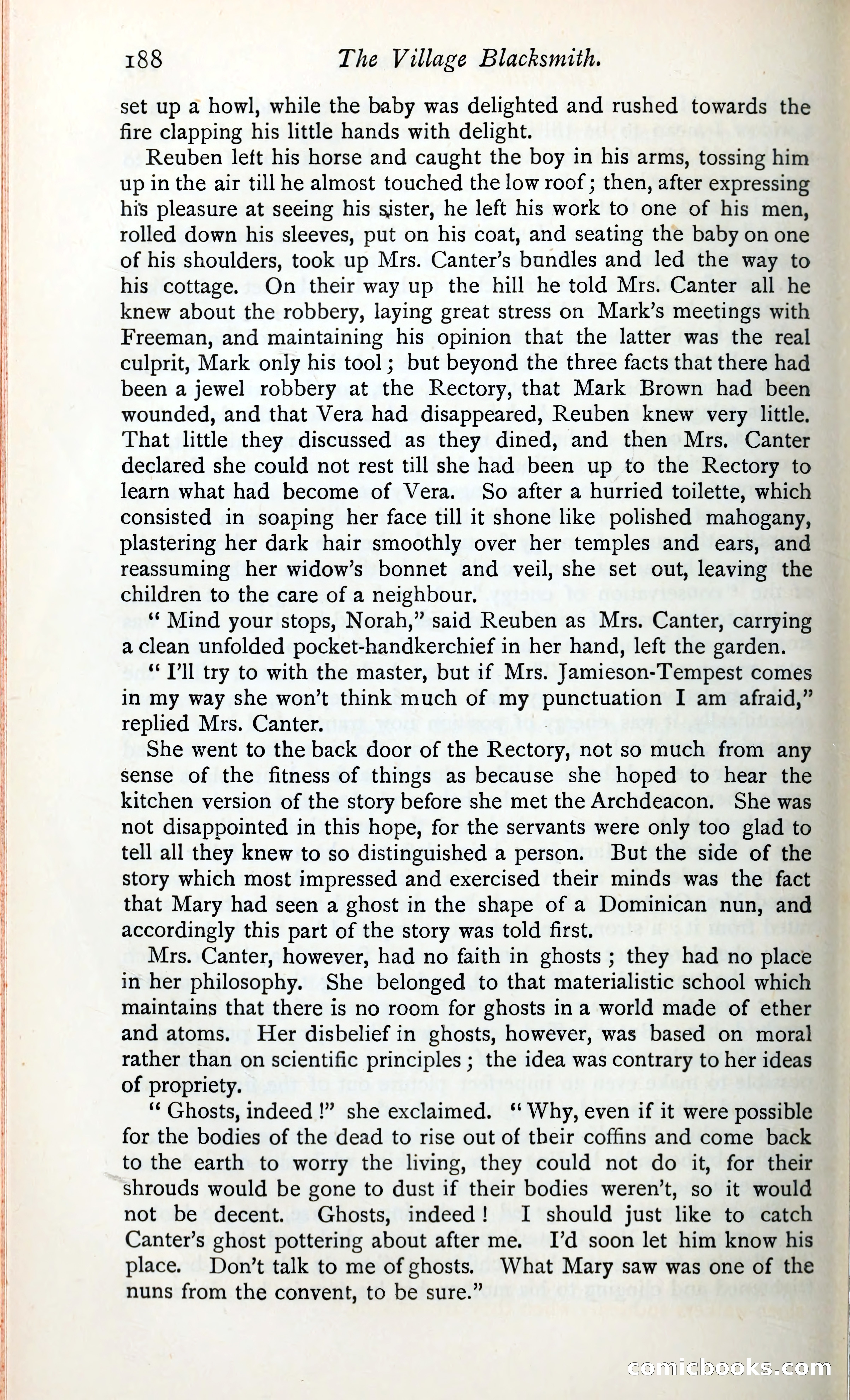
A restored page from Pulp Fiction, 1865. Page through the whole issue in the reader above.
📄 Transcribed text from this page (OCR, searchable)
Machine-transcribed from the original scan — historical spelling and the odd misread are preserved.
188 The Village Blacksmith. set up a howl, while the baby was delighted and rushed towards the fire clapping his little hands with delight. Reuben left his horse and caught the boy in his arms, tossing him up in the air till he almost touched the low roof ; then, after expressing his pleasure at seeing his sister, he left his work to one of his men, rolled down his sleeves, put on his coat, and seating the baby on one of his shoulders, took up Mrs. Canter’s bundles and led the way to his cottage. On their way up the hill he told Mrs. Canter all he knew about the robbery, laying great stress on Mark’s meetings with Freeman, and maintaining his opinion that the latter was the real culprit, Mark only his tool; but beyond the three facts that there had been a jewel robbery at the Rectory, that Mark Brown had been wounded, and that Vera had disappeared, Reuben knew very little. That little they discussed as they dined, and then Mrs. Canter declared she could not rest till she had been up to the Rectory to learn what had become of Vera. So after a hurried toilette, which consisted in soaping her face till it shone like polished mahogany, plastering her dark hair smoothly over her temples and ears, and reassuming her widow’s bonnet and veil, she set out, leaving the children to the care of a neighbour. ‘* Mind your stops, Norah,” said Reuben as Mrs. Canter, carrying a clean unfolded pocket-handkerchief in her hand, left the garden. *‘ T’ll try to with the master, but if Mrs. Jamieson-Tempest comes in my way she won’t think much of my punctuation I am afraid,” replied Mrs. Canter. She went to the back door of the Rectory; not so much from any sense of the fitness of things as because she hoped to hear the kitchen version of the story before she met the Archdeacon. She was not disappointed in this hope, for the servants were only too glad to tell all they knew to so distinguished a person. But the side of the story which most impressed and exercised their minds was the fact that Mary had seen a ghost in the shape of a Dominican nun, and accordingly this part of the story was told first. Mrs. Canter, however, had no faith in ghosts ; they had no place in her philosophy. She belonged to that materialistic school which maintains that there is no room for ghosts in a world made of ether and atoms. Her disbelief in ghosts, however, was based on moral rather than on scientific principles ; the idea was contrary to her ideas of propriety. ‘* Ghosts, indeed !” she exclaimed. ‘‘ Why, even if it were possible for the bodies of the dead to rise out of their coffins and come back to the earth to worry the living, they could not do it, for their shrouds would be gone to dust if their bodies weren’t, so it would not be decent. Ghosts, indeed! I should just like to catch Canter’s ghost pottering about after me. I’d soon let him know his place. Don’t talk to me of ghosts. What Mary saw was one of the nuns from the convent, to be sure.” GomilGcbooks.co —E—— - —— a