
Pulp Fiction, 1865 · page 202 of 399
The Argosy — page 202: what you’re looking at
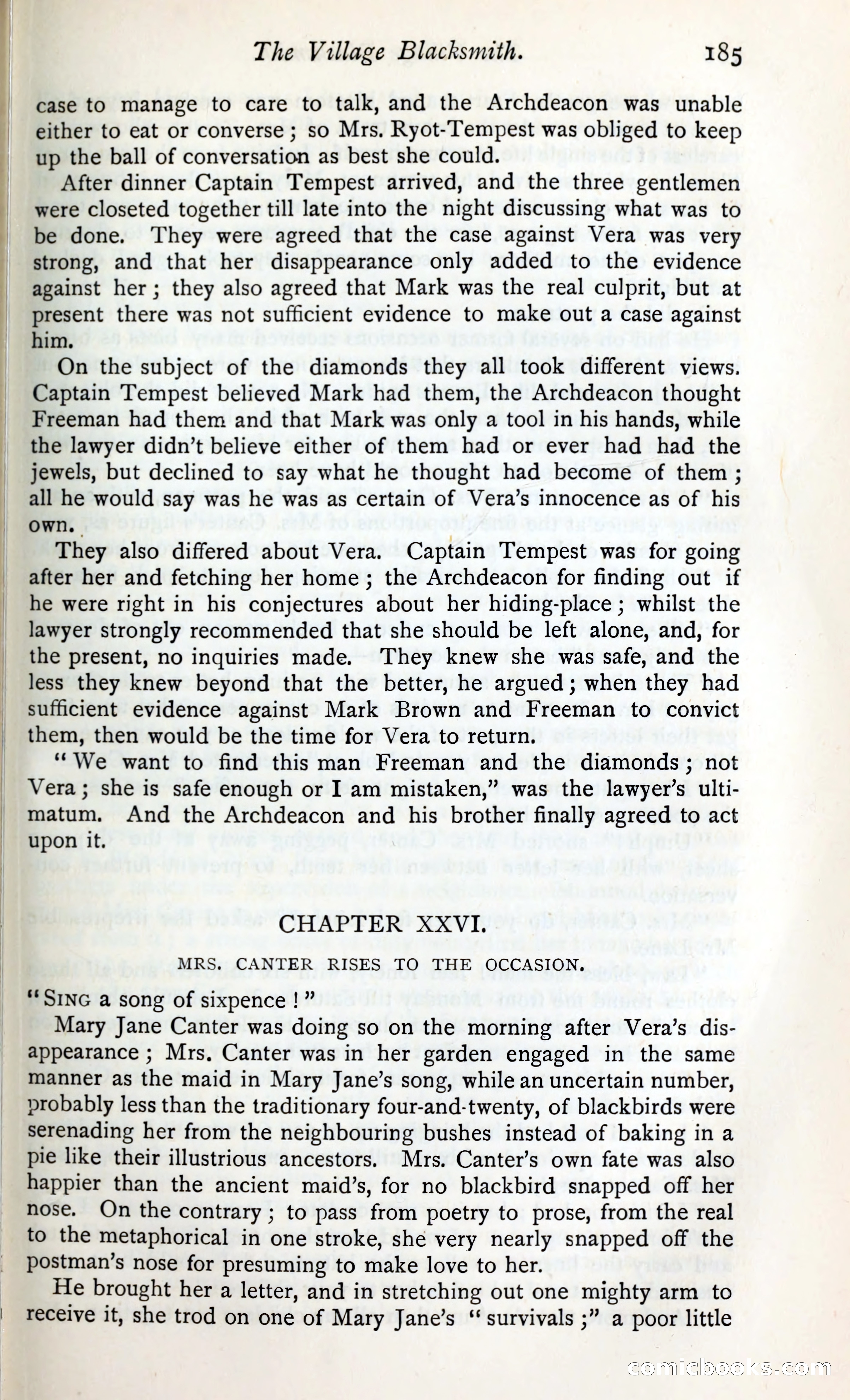
A restored page from Pulp Fiction, 1865. Page through the whole issue in the reader above.
📄 Transcribed text from this page (OCR, searchable)
Machine-transcribed from the original scan — historical spelling and the odd misread are preserved.
The Village Blacksmith. 185 case to manage to care to talk, and the Archdeacon was unable either to eat or converse ; so Mrs. Ryot-Tempest was obliged to keep up the ball of conversation as best she could. After dinner Captain Tempest arrived, and the three gentlemen were closeted together till late into the night discussing what was to be done. They were agreed that the case against Vera was very strong, and that her disappearance only added to the evidence against her; they also agreed that Mark was the real culprit, but at present there was not sufficient evidence to make out a case against him. On the subject of the diamonds they all took different views. Captain Tempest believed Mark had them, the Archdeacon thought Freeman had them and that Mark was only a tool in his hands, while the lawyer didn’t believe either of them had or ever had had the jewels, but declined to say what he thought had become of them ; all he would say was he was as certain of Vera’s innocence as of his own. They also differed about Vera. Captain Tempest was for going after her and fetching her home; the Archdeacon for finding out if he were right in his conjectures about her hiding-place ; whilst the lawyer strongly recommended that she should be left alone, and, for the present, no inquiries made. ‘They knew she was safe, and the less they knew beyond that the better, he argued; when they had sufficient evidence against Mark Brown and Freeman to convict them, then would be the time for Vera to return. ‘“We want to find this man Freeman and the diamonds; not Vera; she is safe enough or I am mistaken,” was the lawyer’s ulti- matum. And the Archdeacon and his brother finally agreed to act upon it. CHAPTER XXVI. MRS. CANTER RISES TO THE OCCASION, “SING a song of sixpence! ” Mary Jane Canter was doing so on the morning after Vera’s dis- appearance ; Mrs, Canter was in her garden engaged in the same manner as the maid in Mary Jane’s song, while an uncertain number, probably less than the traditionary four-and-twenty, of blackbirds were serenading her from the neighbouring bushes instead of baking in a pie like their illustrious ancestors. Mrs. Canter’s own fate was also happier than the ancient maid’s, for no blackbird snapped off her nose. On the contrary; to pass from poetry to prose, from the real to the metaphorical in one stroke, she very nearly snapped off the postman’s nose for presuming to make love to her. He brought her a letter, and in stretching out one mighty arm to receive it, she trod on one of Mary Jane’s “survivals ;” a poor little CORNICLIOO cs) (SO) im