
Pulp Fiction, 1865 · page 163 of 399
The Argosy — page 163: what you’re looking at
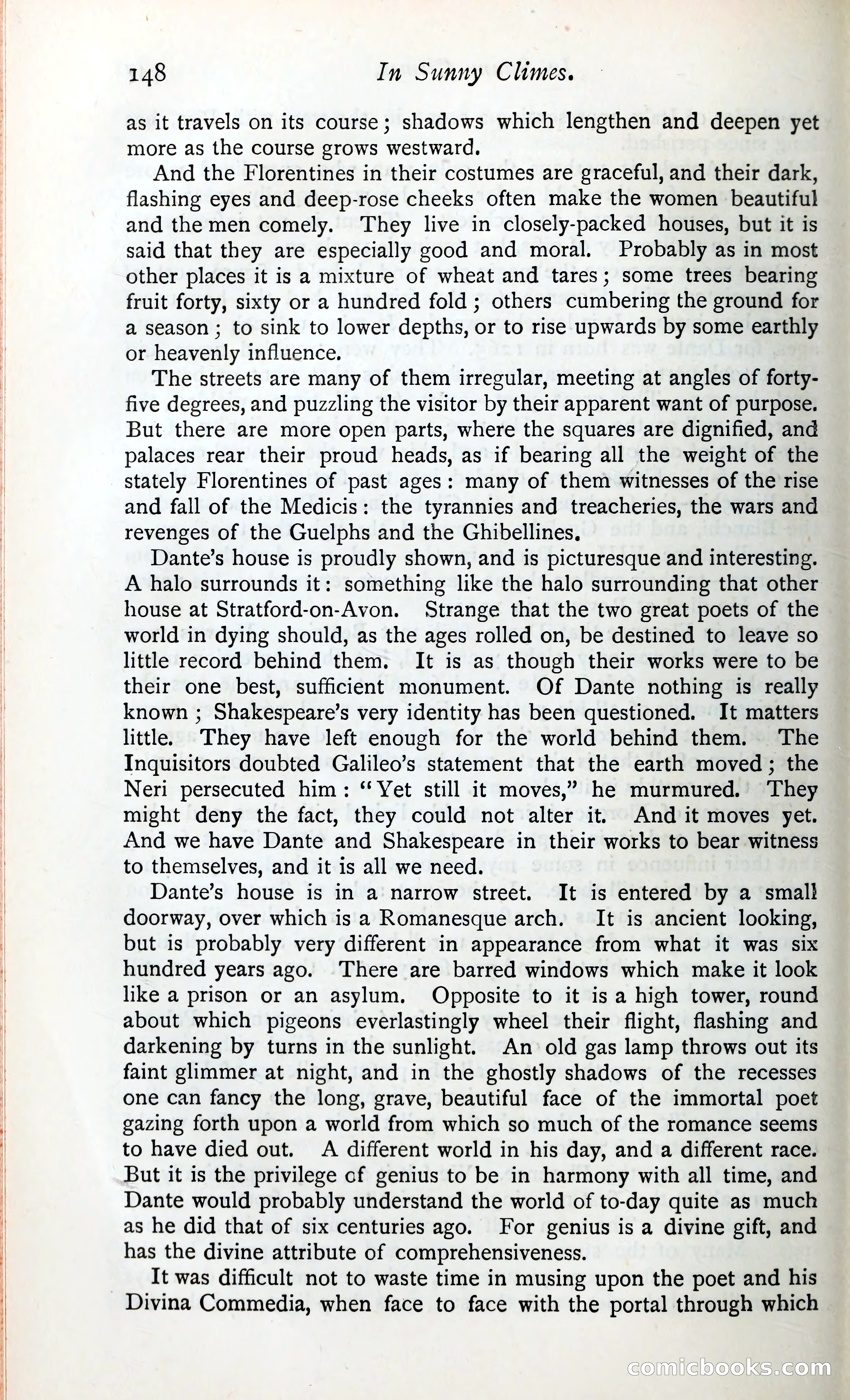
A restored page from Pulp Fiction, 1865. Page through the whole issue in the reader above.
📄 Transcribed text from this page (OCR, searchable)
Machine-transcribed from the original scan — historical spelling and the odd misread are preserved.
148 In Sunny Climes. as it travels on its course; shadows which lengthen and deepen yet more as the course grows westward. And the Florentines in their costumes are graceful, and their dark, flashing eyes and deep-rose cheeks often make the women beautiful and the men comely. ‘They live in closely-packed houses, but it is said that they are especially good and moral. Probably as in most other places it is a mixture of wheat and tares; some trees bearing fruit forty, sixty or a hundred fold ; others cumbering the ground for a season ; to sink to lower depths, or to rise upwards by some earthly or heavenly influence. The streets are many of them irregular, meeting at angles of forty- five degrees, and puzzling the visitor by their apparent want of purpose. But there are more open parts, where the squares are dignified, and palaces rear their proud heads, as if bearing all the weight of the stately Florentines of past ages: many of them witnesses of the rise and fall of the Medicis: the tyrannies and treacheries, the wars and revenges of the Guelphs and the Ghibellines, Dante’s house is proudly shown, and is picturesque and interesting. A halo surrounds it: something like the halo surrounding that other house at Stratford-on-Avon. Strange that the two great poets of the world in dying should, as the ages rolled on, be destined to leave so little record behind them. It is as though their works were to be their one best, sufficient monument. Of Dante nothing is really known ; Shakespeare’s very identity has been questioned. It matters little. They have left enough for the world behind them. The Inquisitors doubted Galileo’s statement that the earth moved; the Neri persecuted him: ‘Yet still it moves,” he murmured. They might deny the fact, they could not alter it. And it moves yet. ‘nd we have Dante and Shakespeare in their works to bear witness to themselves, and it is all we need. Dante’s house is in a narrow street. It is entered by a small doorway, over which is a Romanesque arch. It is ancient looking, but is probably very different in appearance from what it was six hundred years ago. There are barred windows which make it look like a prison or an asylum. Opposite to it is a high tower, round about which pigeons everlastingly wheel their flight, flashing and darkening by turns in the sunlight. An old gas lamp throws out its faint glimmer at night, and in the ghostly shadows of the recesses one can fancy the long, grave, beautiful face of the immortal poet gazing forth upon a world from which so much of the romance seems to have died out. A different world in his day, and a different race. But it is the privilege cf genius to be in harmony with all time, and Dante would probably understand the world of to-day quite as much as he did that of six centuries ago. For genius is a divine gift, and has the divine attribute of comprehensiveness. It was difficult not to waste time in musing upon the poet and his Divina Commedia, when face to face with the portal through which CORNICE OOO SACO