
Pulp Fiction, 1865 · page 85 of 400
The Argosy — page 85: what you’re looking at
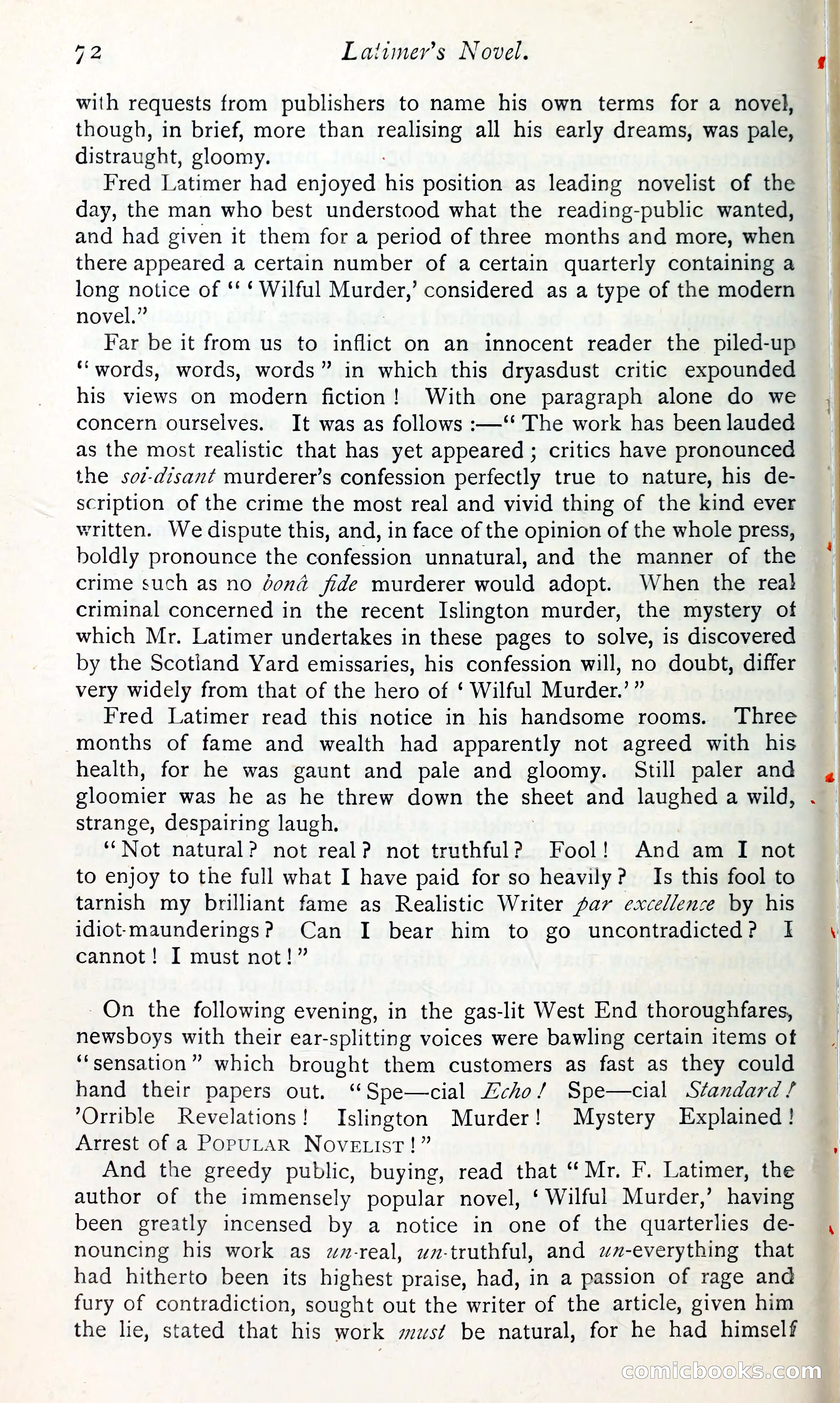
A restored page from Pulp Fiction, 1865. Page through the whole issue in the reader above.
📄 Transcribed text from this page (OCR, searchable)
Machine-transcribed from the original scan — historical spelling and the odd misread are preserved.
42 Laitmer’s Novel. with requests from publishers to name his own terms for a novel, though, in brief, more than ae all his early dreams, was pale, distraught, gloomy. Fred Latimer had enjoyed pe position as leading novelist of the day, the man who best understood what the reading-public wanted, and had given it them for a period of three months and more, when there appeared a certain number of a certain quarterly containing a long notice of ‘‘ ‘ Wilful Murder,’ considered as a type of the modern novel.” Far be it from us to inflict on an innocent reader the piled-up “words, words, words” in which this dryasdust critic expounded his views on modern fiction! With one paragraph alone do we concern ourselves. It was as follows :—‘‘ The work has been lauded as the most realistic that has yet appeared ; critics have pronounced the sot-disan¢ murderer’s confession perfectly true to nature, his de- scription of the crime the most real and vivid thing of the kind ever written. We dispute this, and, in face of the opinion of the whole press, boldly pronounce the confession unnatural, and the manner of the crime such as no dona fide murderer would adopt. When the real Criminal concerned in the recent Islington murder, the mystery of which Mr. Latimer undertakes in these pages to solve, is discovered by the Scotland Yard emissaries, his confession will, no doubt, differ very widely from that of the hero of ‘ Wilful Murder.’ ” Fred Latimer read this notice in his handsome rooms. Three months of fame and wealth had apparently not agreed with his health, for he was gaunt and pale and gloomy. Still paler and gloomier was he as he threw down the sheet and laughed a wild, strange, despairing laugh. “Not natural? not real? not truthful? Fool! And am [I not to enjoy to the full what I have paid for so heavily? Is this fool to tarnish my brilliant fame as Realistic Writer par excellence by his idiot-maunderings? Can I bear him to go uncontradicted? I cannot! I must not!” On the following evening, in the gas-lit West End thoroughfares, newsboys with their ear-splitting voices were bawling certain items of “sensation” which brought them customers as fast as they could hand their papers out. ‘“Spe—cial Zcho/ Spe—cial Standard / ‘Orrible Revelations! Islington Murder! Mystery Explained! Arrest of a PopULAR NOoveELisT!” And the greedy public, buying, read that ‘“‘ Mr. F. Latimer, the author of the immensely popular novel, ‘ Wilful Murder,’ having been greatly incensed by a notice in one of the quarterlies de- nouncing his work as wzz-real, un-truthful, and wv-everything that had hitherto been its highest praise, had, in a passion of rage and fury of contradiction, sought out the writer of the article, given him the lie, stated that his work must be natural, for he had himself ECONNIECLOOKS.EO) (9) m