
Pulp Fiction, 1865 · page 84 of 400
The Argosy — page 84: what you’re looking at
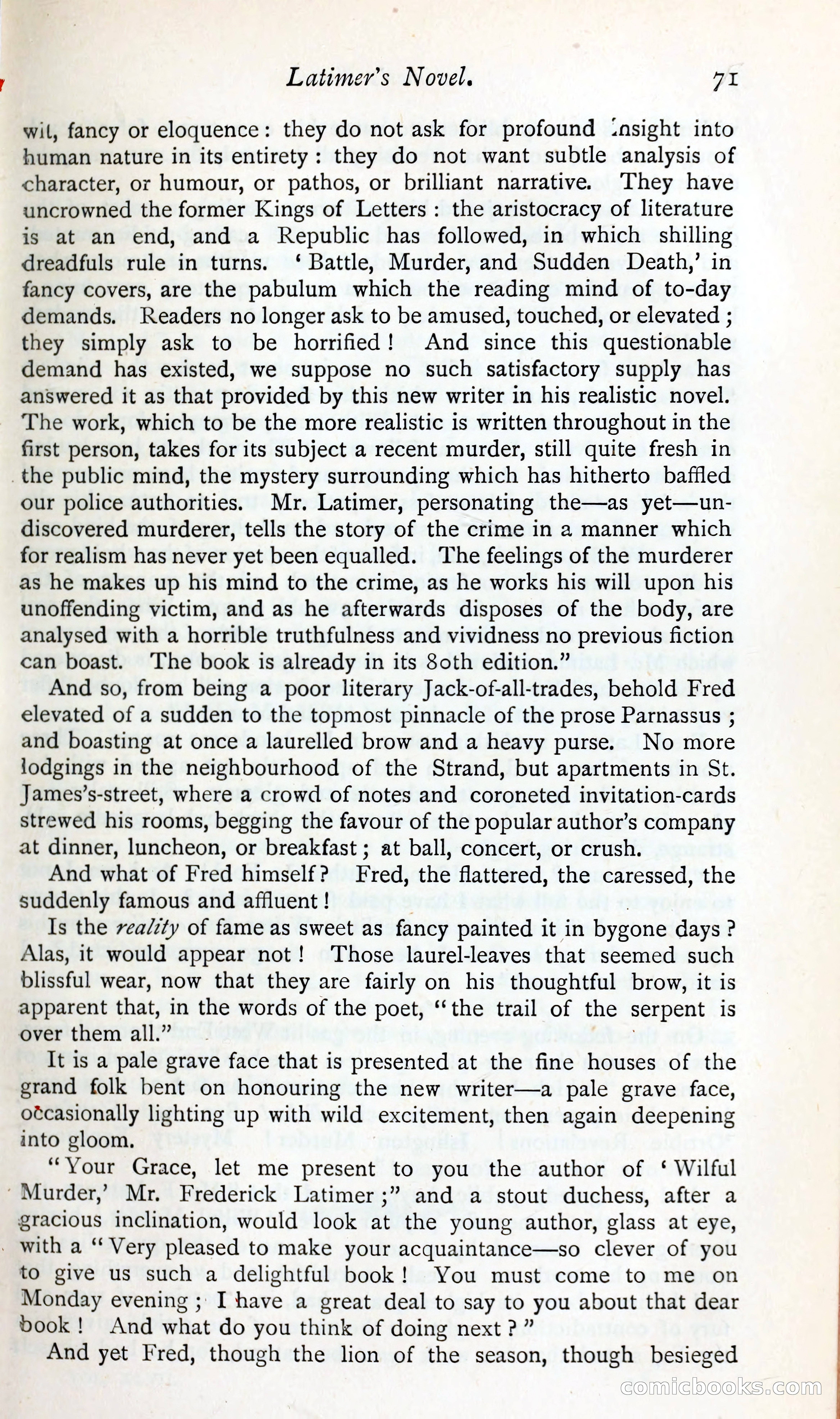
A restored page from Pulp Fiction, 1865. Page through the whole issue in the reader above.
📄 Transcribed text from this page (OCR, searchable)
Machine-transcribed from the original scan — historical spelling and the odd misread are preserved.
Latimer’s Novel. aX wil, fancy or eloquence: they do not ask for profound cnsight into human nature in its entirety: they do not want subtle analysis of character, or humour, or pathos, or brilliant narrative. They have uncrowned the former Kings of Letters: the aristocracy of literature is at an end, and a Republic has followed, in which shilling dreadfuls rule in turns. ‘ Battle, Murder, and Sudden Death,’ in fancy covers, are the pabulum which the reading mind of to-day demands. Readers no longer ask to be amused, touched, or elevated ; they simply ask to be horrified! And since this questionable demand has existed, we suppose no such satisfactory supply has answered it as that provided by this new writer in his realistic novel. The work, which to be the more realistic is written throughout in the first person, takes for its subject a recent murder, still quite fresh in _the public mind, the mystery surrounding which has hitherto baffled our police authorities. Mr. Latimer, personating the—as yet—un- discovered murderer, tells the story of the crime in a manner which for realism has never yet been equalled. The feelings of the murderer as he makes up his mind to the crime, as he works his will upon his unoffending victim, and as he afterwards disposes of the body, are analysed with a horrible truthfulness and vividness no previous fiction can boast. ‘The book is already in its 80th edition.” And so, from being a poor literary Jack-of-all-trades, behold Fred elevated of a sudden to the topmost pinnacle of the prose Parnassus ; and boasting at once a laurelled brow and a heavy purse. No more lodgings in the neighbourhood of the Strand, but apartments in St. James’s-street, where a crowd of notes and coroneted invitation-cards strewed his rooms, begging the favour of the popular author’s company at dinner, luncheon, or breakfast ; at ball, concert, or crush. And what of Fred himself? Fred, the flattered, the caressed, the suddenly famous and affluent ! Is the veality of fame as sweet as fancy painted it in bygone days ? Alas, it would appear not! Those laurel-leaves that seemed such blissful wear, now that they are fairly on his thoughtful brow, it is apparent that, in the words of the poet, “the trail of the serpent 1S over them all.” It is a pale grave face that is presented at the fine houses of the grand folk bent on honouring the new writer—a pale grave face, otcasionally lighting up with wild excitement, then again deepening into gloom. “Your Grace, let me present to you the author of ‘ Wilful ' Murder,’ Mr. Frederick Latimer ;” and a stout duchess, after a gracious inclination, would look at the young author, glass at eye, _ with a “ Very pleased to make your acquaintance—so clever of you to give us such a delightful book! You must come to me on Monday evening ; I have a great deal to say to you about that dear Dook! And what do you think of doing next ?” And yet Fred, though the lion of the season, though besieged COMIC OOO SS (©) im