
Pulp Fiction, 1865 · page 68 of 400
The Argosy — page 68: what you’re looking at
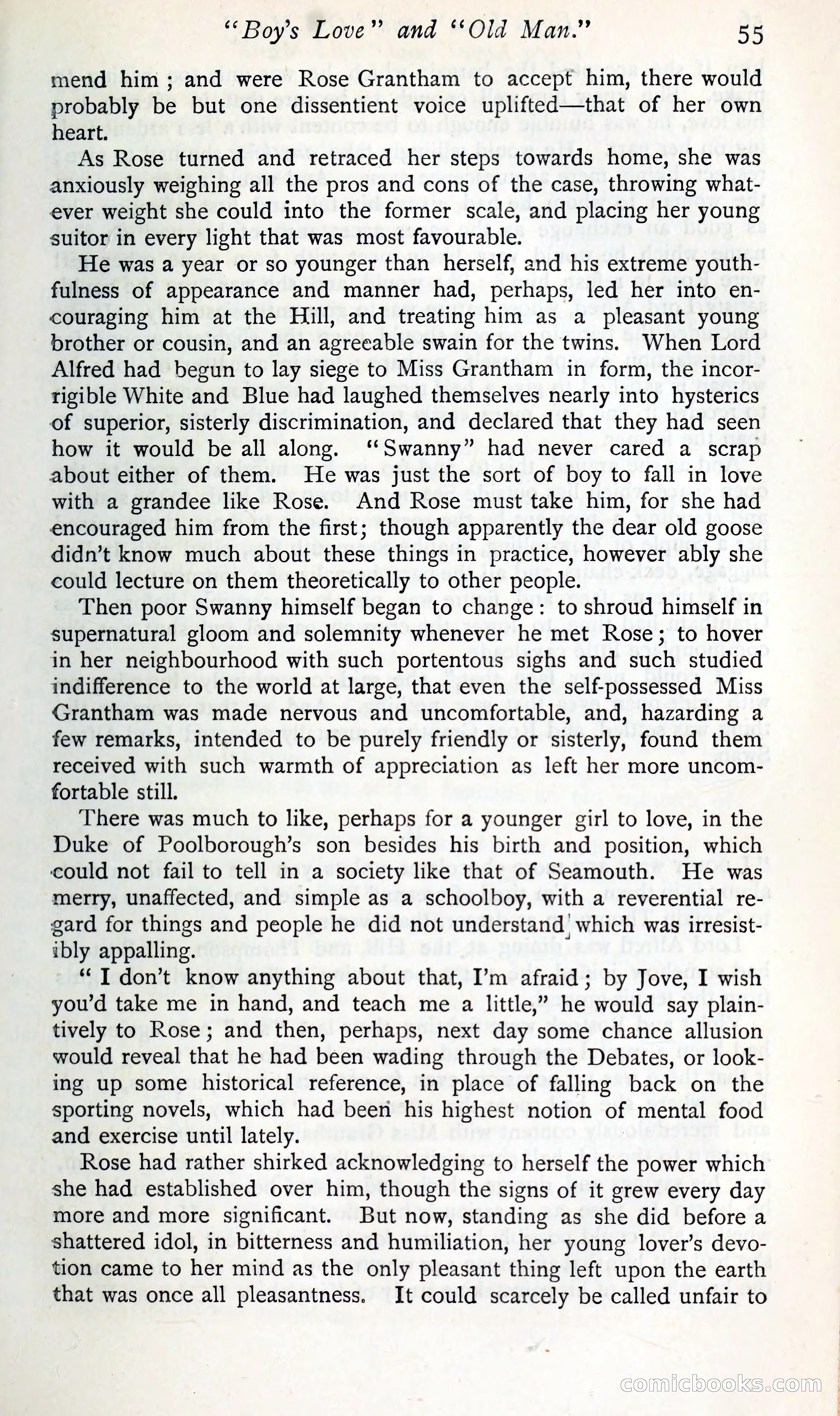
A restored page from Pulp Fiction, 1865. Page through the whole issue in the reader above.
📄 Transcribed text from this page (OCR, searchable)
Machine-transcribed from the original scan — historical spelling and the odd misread are preserved.
“Boys Love” and ‘**Old Man.” 55 mend him; and were Rose Grantham to accept him, there would probably be but one dissentient voice uplifted—that of her own heart. As Rose turned and retraced her steps towards home, she was anxiously weighing all the pros and cons of the case, throwing what- ever weight she could into the former scale, and placing her young suitor in every light that was most favourable. He was a year or so younger than herself, and his extreme youth- fulness of appearance and manner had, perhaps, led her into en- couraging him at the Hill, and treating him as a pleasant young brother or cousin, and an agreeable swain for the twins. When Lord Alfred had begun to lay siege to Miss Grantham in form, the incor- rigible White and Blue had laughed themselves nearly into hysterics of superior, sisterly discrimination, and declared that they had seen how it would be all along. ‘“‘Swanny” had never cared a scrap about either of them. He was just the sort of boy to fall in love with a grandee like Rose. And Rose must take him, for she had encouraged him from the first; though apparently the dear old goose didn’t know much about these things in practice, however ably she could lecture on them theoretically to other people. Then poor Swanny himself began to change: to shroud himself in supernatural gloom and solemnity whenever he met Rose; to hover in her neighbourhood with such portentous sighs and such studied indifference to the world at large, that even the self-possessed Miss Grantham was made nervous and uncomfortable, and, hazarding a few remarks, intended to be purely friendly or sisterly, found them received with such warmth of appreciation as left her more uncom- fortable still. There was much to like, perhaps for a younger girl to love, in the Duke of Poolborough’s son besides his birth and position, which could not fail to tell in a society like that of Seamouth. He was merry, unaffected, and simple as a schoolboy, with a reverential re- gard for things and people he did not understand which was irresist- ibly appalling. “I don’t know anything about that, I’m afraid; by Jove, I wish you'd take me in hand, and teach me a little,” he would say plain- tively to Rose; and then, perhaps, next day some chance allusion would reveal that he had been wading through the Debates, or look- ing up some historical reference, in place of falling back on the sporting novels, which had been his highest notion of mental food and exercise until lately. Rose had rather shirked acknowledging to herself the power which she had established over him, though the signs of it grew every day more and more significant. But now, standing as she did before a shattered idol, in bitterness and humiliation, her young lover’s devo- tion came to her mind as the only pleasant thing left upon the earth that was once all pleasantness. It could scarcely be called unfair to connicloooks (C(O)