
Pulp Fiction, 1865 · page 329 of 400
The Argosy — page 329: what you’re looking at
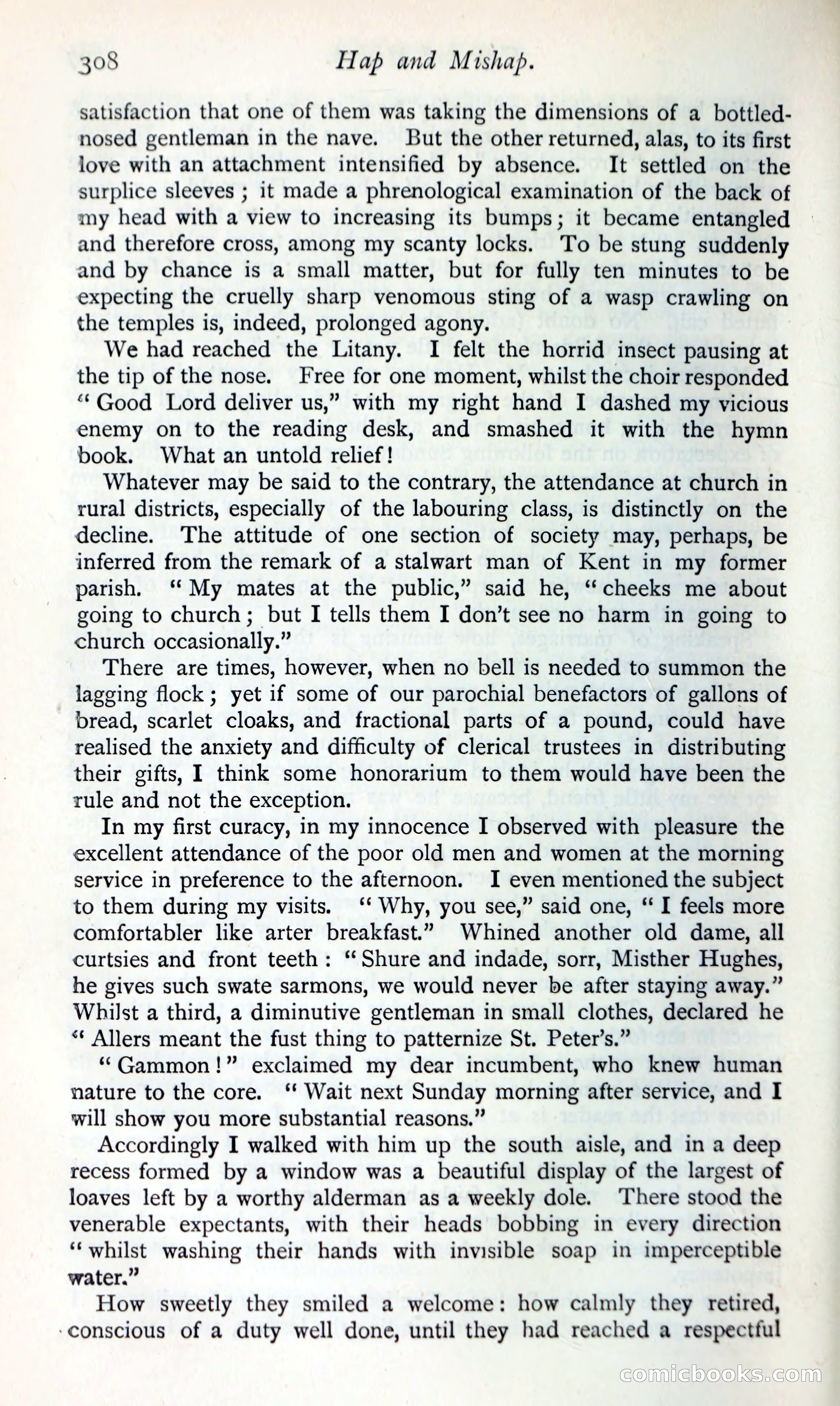
A restored page from Pulp Fiction, 1865. Page through the whole issue in the reader above.
📄 Transcribed text from this page (OCR, searchable)
Machine-transcribed from the original scan — historical spelling and the odd misread are preserved.
308 Hap and Mishap. satisfaction that one of them was taking the dimensions of a bottled- nosed gentleman in the nave. But the other returned, alas, to its first love with an attachment intensified by absence. It settled on the surplice sleeves ; it made a phrenological examination of the back of my head with a view to increasing its bumps; it became entangled and therefore cross, among my scanty locks. To be stung suddenly and by chance is a small matter, but for fully ten minutes to be expecting the cruelly sharp venomous sting of a wasp crawling on the temples is, indeed, prolonged agony. We had reached the Litany. I felt the horrid insect pausing at the tip of the nose. Free for one moment, whilst the choir responded “Good Lord deliver us,” with my right hand I dashed my vicious enemy on to the reading desk, and smashed it with the hymn book. What an untold relief! Whatever may be said to the contrary, the attendance at church in rural districts, especially of the labouring class, is distinctly on the decline. The attitude of one section of society may, perhaps, be inferred from the remark of a stalwart man of Kent in my former parish. ‘* My mates at the public,” said he, “‘ cheeks me about going to church; but I tells them I don’t see no harm in going to church occasionally.” There are times, however, when no bell is needed to summon the lagging flock; yet if some of our parochial benefactors of gallons of bread, scarlet cloaks, and fractional parts of a pound, could have realised the anxiety and difficulty of clerical trustees in distributing their gifts, I think some honorarium to them would have been the rule and not the exception. In my first curacy, in my innocence I observed with pleasure the excellent attendance of the poor old men and women at the morning service in preference to the afternoon. I even mentioned the subject to them during my visits. ‘‘ Why, you see,” said one, “ I feels more comfortabler like arter breakfast.” Whined another old dame, all curtsies and front teeth: ‘‘ Shure and indade, sorr, Misther Hughes, he gives such swate sarmons, we would never be after staying away.” Whilst a third, a diminutive gentleman in small clothes, declared he ** Allers meant the fust thing to patternize St. Peter’s.” “Gammon!” exclaimed my dear incumbent, who knew human nature to the core. ‘* Wait next Sunday morning after service, and I will show you more substantial reasons.” Accordingly I walked with him up the south aisle, and in a deep recess formed by a window was a beautiful display of the largest of loaves left by a worthy alderman as a weekly dole. ‘There stood the venerable expectants, with their heads bobbing in every direction ‘‘whilst washing their hands with invisible soap in imperceptible water.” How sweetly they smiled a welcome: how calmly they retired, ‘conscious of a duty well done, until they had reached a respectful ECONMMIELOOOKS.E@)