
Pulp Fiction, 1865 · page 293 of 400
The Argosy — page 293: what you’re looking at
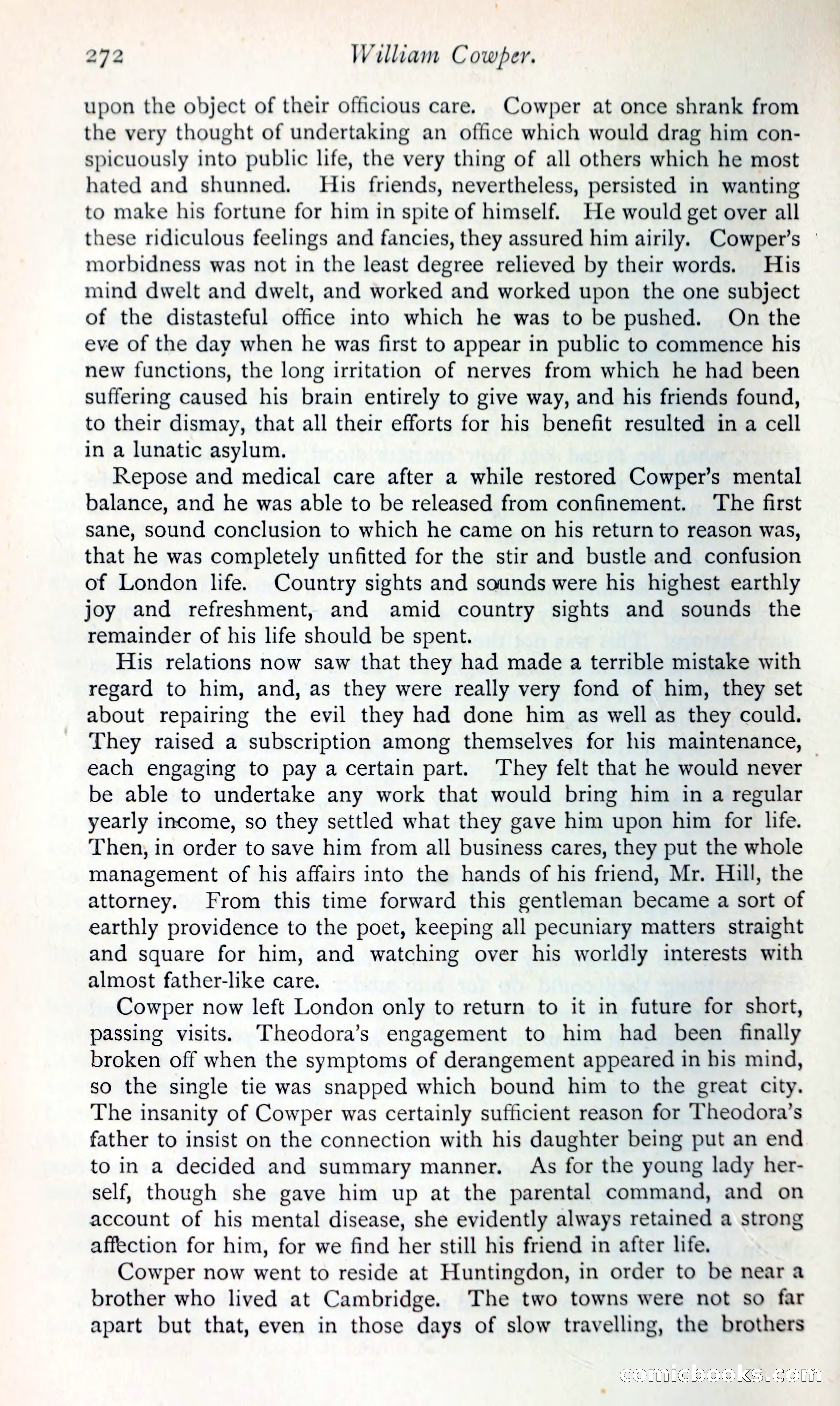
A restored page from Pulp Fiction, 1865. Page through the whole issue in the reader above.
📄 Transcribed text from this page (OCR, searchable)
Machine-transcribed from the original scan — historical spelling and the odd misread are preserved.
272 William Cowper. upon the object of their officious care. Cowper at once shrank from the very thought of undertaking an office which would drag him con- spicuously into public life, the very thing of all others which he most hated and shunned. His friends, nevertheless, persisted in wanting to make his fortune for him in spite of himself. He would get over all these ridiculous feelings and fancies, they assured him airily. Cowper’s » morbidness was not in the least degree relieved by their words. His mind dwelt and dwelt, and worked and worked upon the one subject of the distasteful office into which he was to be pushed. On the eve of the day when he was first to appear in public to commence his new functions, the long irritation of nerves from which he had been suffering caused his brain entirely to give way, and his friends found, to their dismay, that all their efforts for his benefit resulted in a cell in a lunatic asylum. Repose and medical care after a while restored Cowper’s mental balance, and he was able to be released from confinement. ‘The first Sane, sound conclusion to which he came on his return to reason was, that he was completely unfitted for the stir and bustle and confusion of London life. Country sights and sounds were his highest earthly joy and refreshment, and amid country sights and sounds the remainder of his life should be spent. His relations now saw that they had made a terrible mistake with regard to him, and, as they were really very fond of him, they set about repairing the evil they had done him as well as they could. They raised a subscription among themselves for his maintenance, ~ each engaging to pay a certain part. ‘They felt that he would never be able to undertake any work that would bring him in a regular yearly income, so they settled what they gave him upon him for life. Then, in order to save him from all business cares, they put the whole management of his affairs into the hands of his friend, Mr. Hill, the attorney. From this time forward this gentleman became a sort of earthly providence to the poet, keeping all pecuniary matters straight and square for him, and watching over his worldly interests with almost father-like care. Cowper now left London only to return to it in future for short, passing visits. ‘Theodora’s engagement to him had been finally broken off when the symptoms of derangement appeared in bis mind, so the single tie was snapped which bound him to the great city. The insanity of Cowper was certainly sufficient reason for Theodora’s father to insist on the connection with his daughter being put an end to in a decided and summary manner. As for the young lady her- self, though she gave him up at the parental command, and on account of his mental disease, she evidently always retained a strong affection for him, for we find her still his friend in after life. Cowper now went to reside at Huntingdon, in order to be near a brother who lived at Cambridge. The two towns were not so far apart but that, even in those days of slow travelling, the brothers ECOMMIECLOOOKS COTM