
Pulp Fiction, 1865 · page 321 of 400
The Argosy — page 321: what you’re looking at
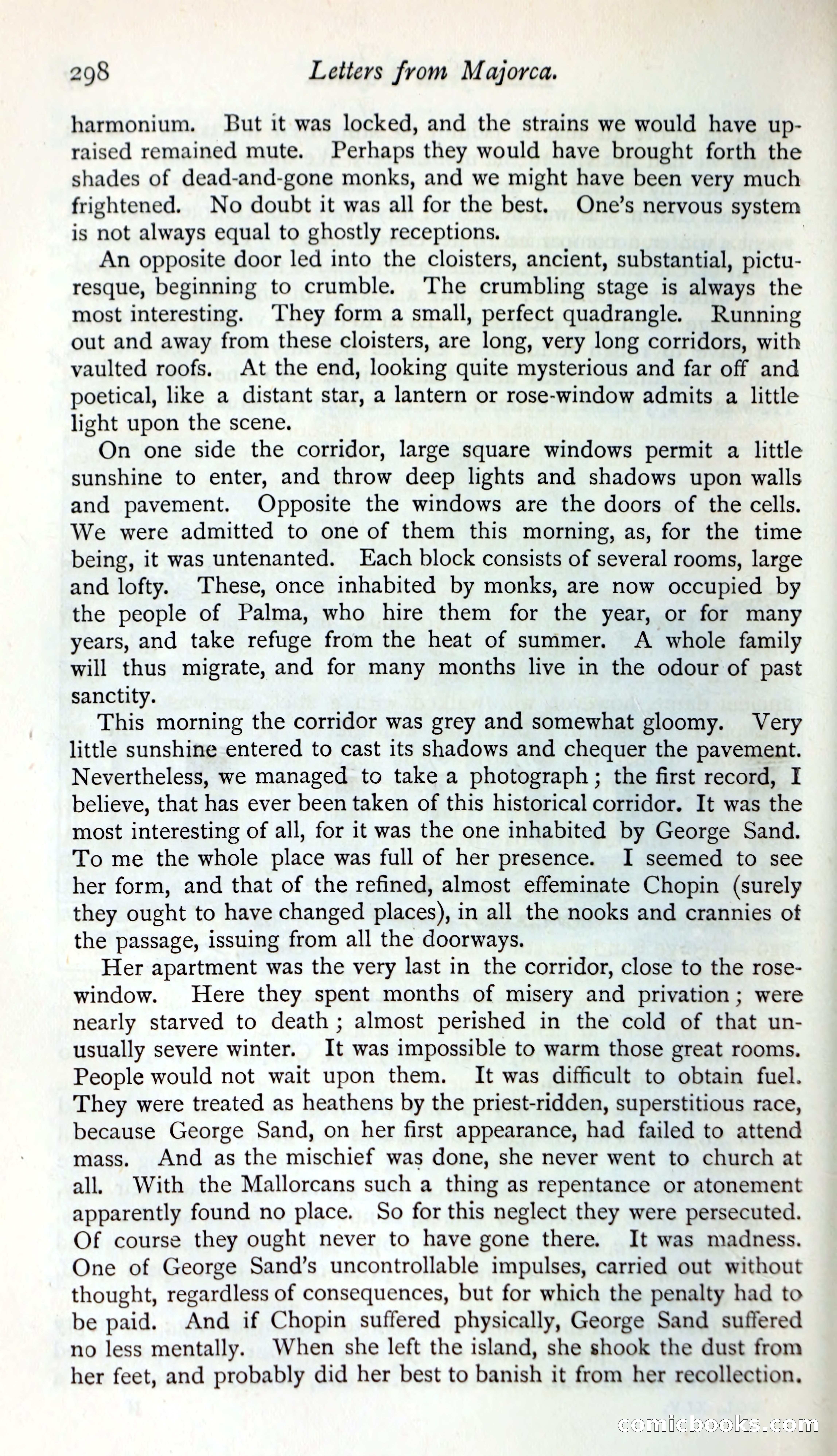
A restored page from Pulp Fiction, 1865. Page through the whole issue in the reader above.
📄 Transcribed text from this page (OCR, searchable)
Machine-transcribed from the original scan — historical spelling and the odd misread are preserved.
298 Letters from Majorca. harmonium. SBut it was locked, and the strains we would have up- raised remained mute. Perhaps they would have brought forth the shades of dead-and-gone monks, and we might have been very much frightened. No doubt it was all for the best. One’s nervous system is not always equal to ghostly receptions. | An opposite door led into the cloisters, ancient, substantial, pictu- resque, beginning to crumble. ‘The crumbling stage is always the most interesting. ‘They form a small, perfect quadrangle. Running out and away from these cloisters, are long, very long corridors, with vaulted roofs. At the end, looking quite mysterious and far off and poetical, like a distant star, a lantern or rose-window admits a little light upon the scene. On one side the corridor, large square windows permit a little sunshine to enter, and throw deep lights and shadows upon walls and pavement. Opposite the windows are the doors of the cells. We were admitted to one of them this morning, as, for the time being, it was untenanted. Each block consists of several rooms, large and lofty. These, once inhabited by monks, are now occupied by the people of Palma, who hire them for the year, or for many years, and take refuge from the heat of summer. <A whole family will thus migrate, and for many months live in the odour of past sanctity. This morning the corridor was grey and somewhat gloomy. Very little sunshine entered to cast its shadows and chequer the pavement. Nevertheless, we managed to take a photograph; the first record, I believe, that has ever been taken of this historical corridor. It was the most interesting of all, for it was the one inhabited by George Sand. To me the whole place was full of her presence. I seemed to see her form, and that of the refined, almost effeminate Chopin (surely they ought to have changed places), in all the nooks and crannies of the passage, issuing from all the doorways. Her apartment was the very last in the corridor, close to the rose- window. Here they spent months of misery and privation; were nearly starved to death ; almost perished in the cold of that un- usually severe winter. It was impossible to warm those great rooms. People would not wait upon them. It was difficult to obtain fuel. They were treated as heathens by the priest-ridden, superstitious race, because George Sand, on her first appearance, had failed to attend mass. And as the mischief was done, she never went to church at all. With the Mallorcans such a thing as repentance or atonement apparently found no place. So for this neglect they were persecuted. Of course they ought never to have gone there. It was madness. One of George Sand’s uncontrollable impulses, carried out without thought, regardless of consequences, but for which the penalty had to be paid. And if Chopin suffered physically, George Sand suffered no less mentally. When she left the island, she shook the dust from her feet, and probably did her best to banish it from her recollection. CORNICLMOOOKS. CO