
Pulp Fiction, 1865 · page 116 of 400
The Argosy — page 116: what you’re looking at
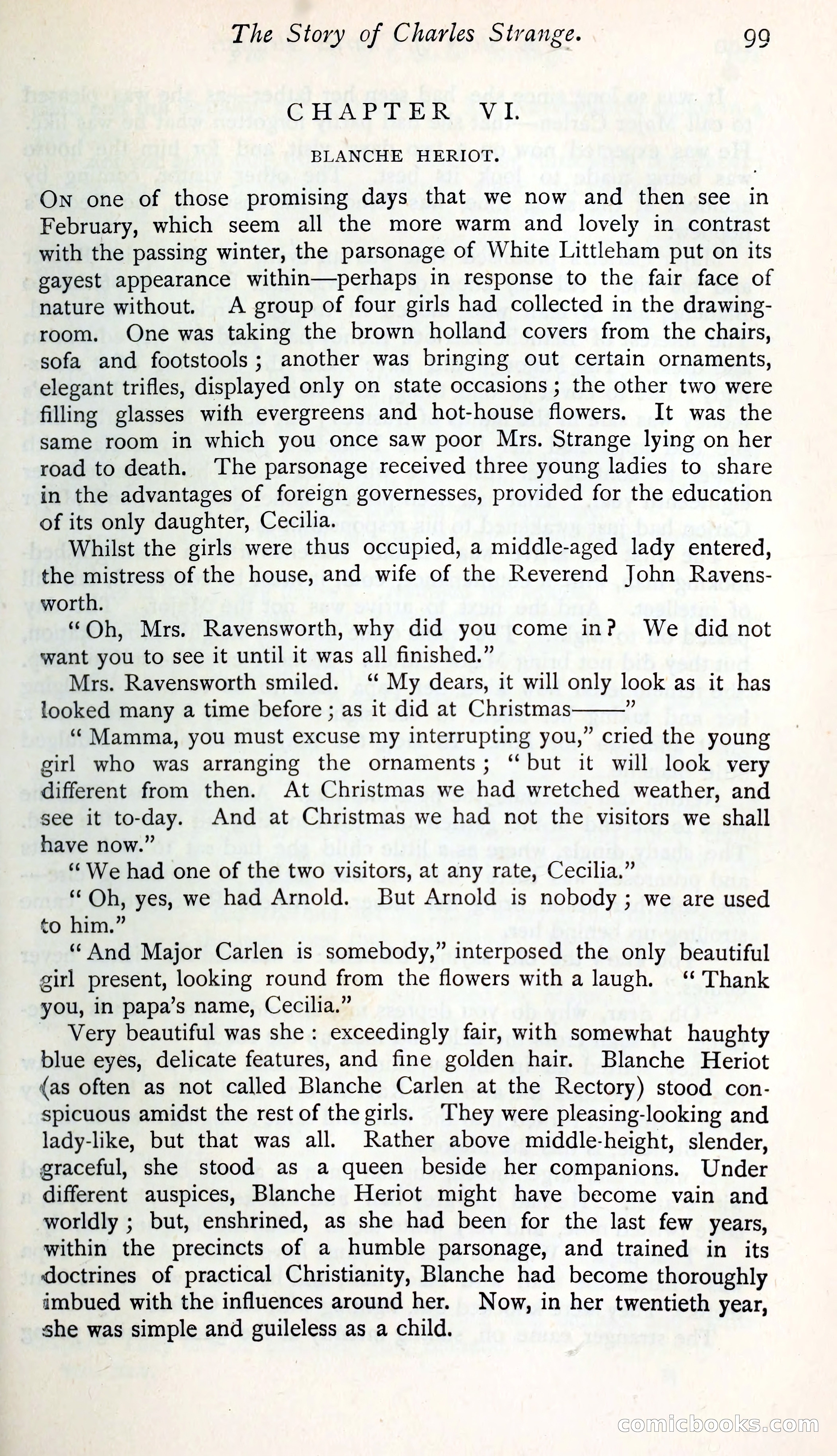
A restored page from Pulp Fiction, 1865. Page through the whole issue in the reader above.
📄 Transcribed text from this page (OCR, searchable)
Machine-transcribed from the original scan — historical spelling and the odd misread are preserved.
The Story of Charles Strange. gQ GHAP TER... Vv.1. BLANCHE HERIOT. On one of those promising days that we now and then see in February, which seem all the more warm and lovely in contrast with the passing winter, the parsonage of White Littleham put on its gayest appearance within—perhaps in response to the fair face of nature without. <A group of four girls had collected in the drawing- room. One was taking the brown holland covers from the chairs, sofa and footstools; another was bringing out certain ornaments, elegant trifles, displayed only on state occasions; the other two were filling glasses with evergreens and hot-house flowers. It was the same room in which you once saw poor Mrs. Strange lying on her road to death. ‘The parsonage received three young ladies to share in the advantages of foreign governesses, provided for the education of its only daughter, Cecilia. Whilst the girls were thus occupied, a middle-aged lady entered, the mistress of the house, and wife of the Reverend John Ravens- worth. “Oh, Mrs. Ravensworth, why did you come in? We did not want you to see it until it was all finished.” Mrs. Ravensworth smiled. ‘* My dears, it will only look as it has looked many a time before ; as it did at Christmas Y “Mamma, you must excuse my interrupting you,” cried the young girl who was arranging the ornaments; “but it will look very different from then. At Christmas we had wretched weather, and see it to-day. And at Christmas we had not the visitors we shall have now.” ‘We had one of the two visitors, at any rate, Cecilia,” “Oh, yes, we had Arnold. But Arnold is nobody ; we are used to him.” “And Major Carlen is somebody,” interposed the only beautiful girl present, looking round from the flowers with a laugh. ‘ Thank you, in papa’s name, Cecilia.” Very beautiful was she: exceedingly fair, with somewhat haughty blue eyes, delicate features, and fine golden hair. Blanche Heriot (as often as not called Blanche Carlen at the Rectory) stood con- spicuous amidst the rest of the girls. ‘They were pleasing-looking and lady-like, but that was all. Rather above middle-height, slender, graceful, she stood as a queen beside her companions. Under different auspices, Blanche Heriot might have become vain and worldly ; but, enshrined, as she had been for the last few years, within the precincts of a humble parsonage, and trained in its doctrines of practical Christianity, Blanche had become thoroughly imbued with the influences around her. Now, in her twentieth year, she was simple and guileless as a child. COMICOOOKS.C©