
Pulp Fiction, 1865 · page 345 of 400
The Argosy — page 345: what you’re looking at
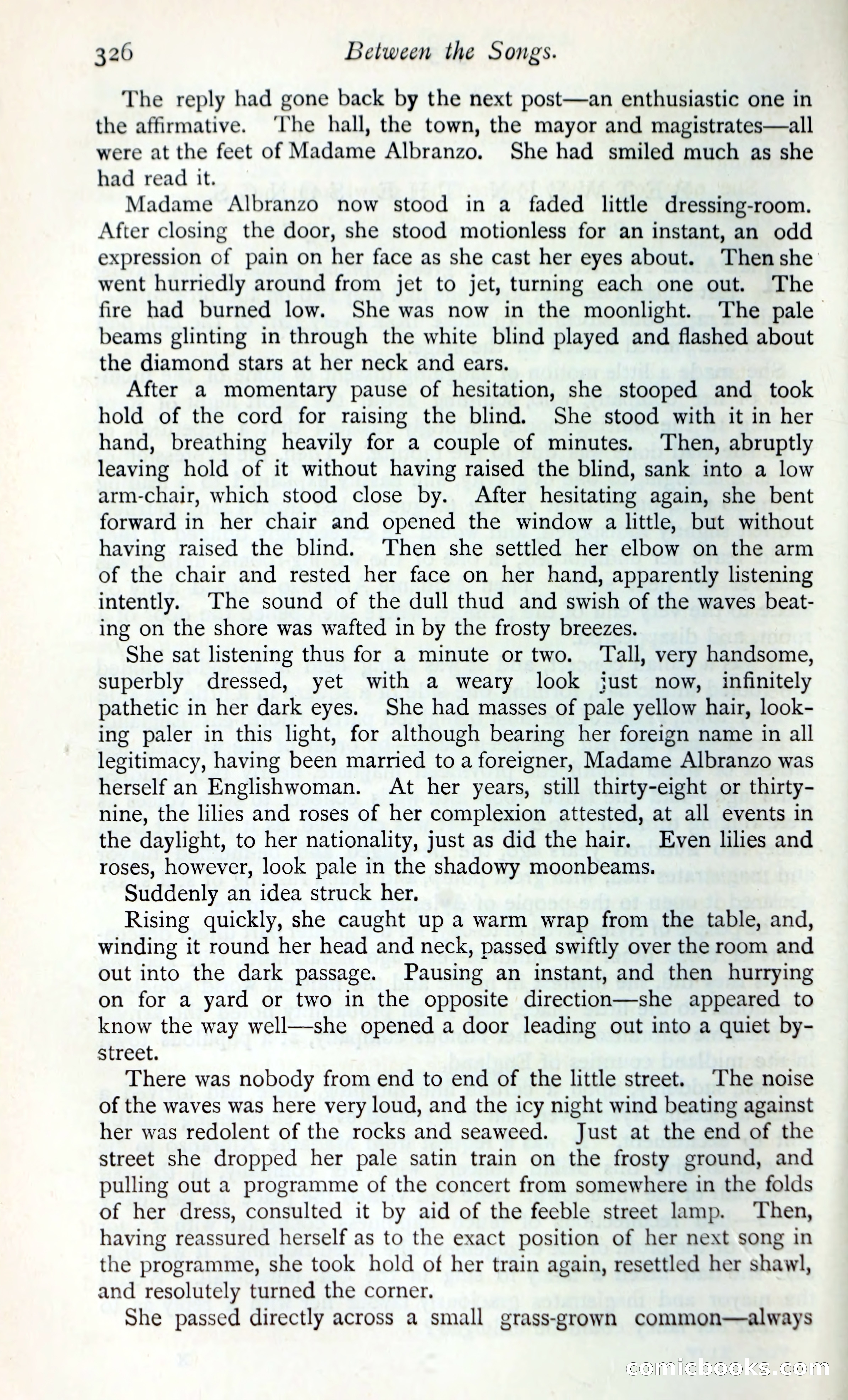
A restored page from Pulp Fiction, 1865. Page through the whole issue in the reader above.
📄 Transcribed text from this page (OCR, searchable)
Machine-transcribed from the original scan — historical spelling and the odd misread are preserved.
326 Between the Songs. The reply had gone back by the next post—an enthusiastic one in the affirmative. ‘The hall, the town, the mayor and magistrates—all were at the feet of Madame Albranzo. She had smiled much as she had read it. Madame Albranzo now stood in a faded little dressing-room. After closing the door, she stood motionless for an instant, an odd expression of pain on her face as she cast her eyes about. Thenshe went hurriedly around from jet to jet, turning each one out. The fire had burned low. She was now in the moonlight. ‘The pale beams glinting in through the white blind played and flashed about the diamond stars at her neck and ears. After a momentary pause of hesitation, she stooped and took hold of the cord for raising the blind. She stood with it in her hand, breathing heavily for a couple of minutes. Then, abruptly leaving hold of it without having raised the blind, sank into a low arm-chair, which stood close by. After hesitating again, she bent forward in her chair and opened the window a little, but without having raised the blind. ‘Then she settled her elbow on the arm of the chair and rested her face on her hand, apparently listening intently. The sound of the dull thud and swish of the waves beat- ing on the shore was wafted in by the frosty breezes. She sat listening thus for a minute or two. ‘Tall, very handsome, superbly dressed, yet with a weary look just now, infinitely pathetic in her dark eyes. She had masses of pale yellow hair, look- ing paler in this light, for although bearing her foreign name in all legitimacy, having been married to a foreigner, Madame Albranzo was herself an Englishwoman. At her years, still thirty-eight or thirty- nine, the lilies and roses of her complexion attested, at all events in the daylight, to her nationality, just as did the hair. Even lilies and roses, however, look pale in the shadowy moonbeams. Suddenly an idea struck her. Rising quickly, she caught up a warm wrap from the table, and, winding it round her head and neck, passed swiftly over the room and out into the dark passage. Pausing an instant, and then hurrying on for a yard or two in the opposite direction—she appeared to know the way well—she opened a door leading out into a quiet by- Street. There was nobody from end to end of the little street. The noise of the waves was here very loud, and the icy night wind beating against her was redolent of the rocks and seaweed. Just at the end of the street she dropped her pale satin train on the frosty ground, and pulling out a programme of the concert from somewhere in the folds of her dress, consulted it by aid of the feeble street lamp. ‘Then, having reassured herself as to the exact position of her next song in the programme, she took hold of her train again, resettled her shawl, and resolutely turned the corner. She passed directly across a small grass-grown common—always ECORNIELIOOKS Com